Model Answer:
Mahatma Gandhi’s Trusteeship principle posits that authority and resources are held in moral trust for societal welfare, transforming bureaucratic power from dominion into ethical custodianship.
Pathways to Apply Trusteeship for Fair Governance
- Fiduciary Resource Allocation: Prioritizing the last person in fiscal and welfare delivery, operationalizing the Gandhian Talisman (e.g., Antyodaya-focused PDS delivery).
- Power-Sharing via Co-Governance: Devolving decision-making to local communities and enabling institutional transparency (e.g., Social Audits in MGNREGA).
- Stewardship of Common Goods: Protecting public natural resources from elite capture as an intergenerational trustee (e.g., Public Trust Doctrine in water bodies).
- Compassionate Administrative Discretion: Exercising procedural flexibilities to prevent denial of entitlements to marginalized citizens (e.g., NFSA inclusion drives without biometrics).
- Ethical Selflessness (Aparigraha): Renouncing bureaucratic rent-seeking and elitism to preserve institutional credibility (e.g., Armstrong Pame crowdsourcing the “People’s Road”).
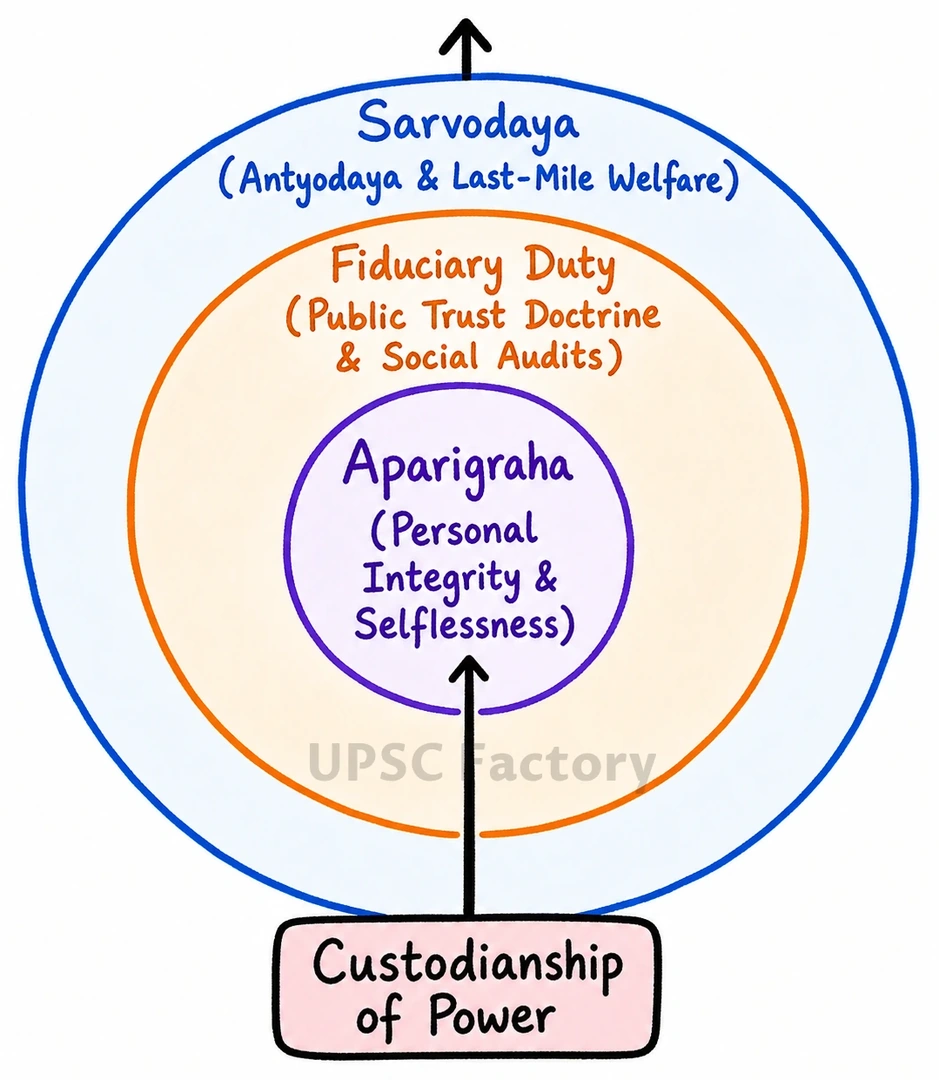
Internalizing trusteeship bridges the ruler–ruled divide, institutionalizing constitutional morality, selflessness (Nolan Principles), and Sarvodaya (universal upliftment) in public administration.