Model Answer:
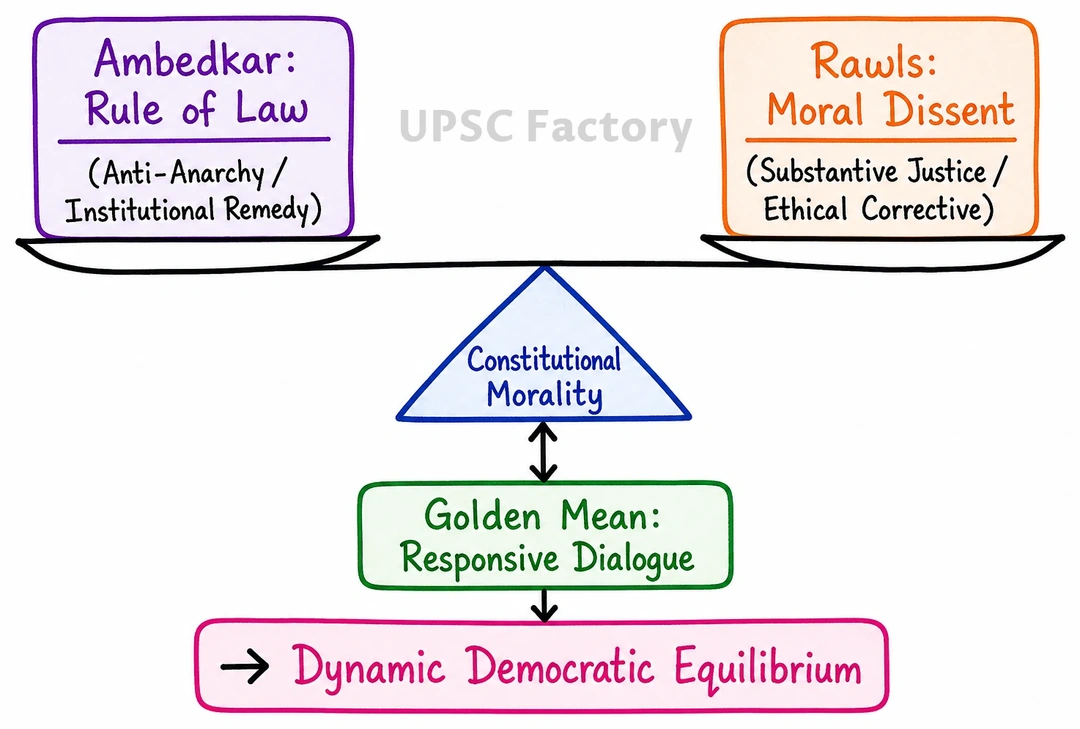
Dr. Ambedkar cautioned that extra-constitutional protests become the “grammar of anarchy,” whereas John Rawls defended civil disobedience as an ethical corrective against unjust laws.
1. Ethical Tension: Constitutional Order vs. Substantive Justice
- Ambedkar’s Legalism: Extra-constitutional agitations risk institutional decay when legitimate constitutional remedies exist for grievance redressal.
- Conscientious Objection: Peaceful dissent exposes moral blindspots within formally valid legislation (e.g., Chipko Movement).
2. Ethical Roadmap to Navigate Civil Disobedience
- Deliberative Preemption: Institutionalize Rawlsian “public reason” through robust pre-legislative consultations to address ethical concerns early.
- Proportional Engagement: Uphold peaceful assembly (Article 19(1)(b)) while checking violent disruption through graded, non-coercive policing (Amit Sahni Case).
- Institutional Mediation: Utilize judicial committees and statutory bodies as dialogic bridges rather than deploying immediate executive force (e.g., Supreme Court mediation panels).
- Responsive Constitutionalism: Treat peaceful civil disobedience as an ethical diagnostic tool for legislative reform rather than subversion.
Balancing constitutional discipline with empathetic dialogue prevents democracies from devolving into either authoritarian rigidity or lawless anarchy.