Model Answer:
Tradition and Modernity in India
Classical sociologists viewed tradition and modernity as antithetical. However, in India, they engage in a dynamic amalgamation, blending orthogenetic (internal) and heterogenetic (external) changes (Yogendra Singh).
Dialectics of Tradition and Modernity
- Adaptive Coexistence: L.I. & S.H. Rudolph (The Modernity of Tradition) argue traditional structures adapt to modern democracy, seen in castes functioning as modern pressure groups.
- Compartmentalization: Milton Singer observed Indian industrialists separating traditional domestic rituals (purity) from rational workplace behaviors.
- Paradoxical Mobility: M.N. Srinivas noted the simultaneous occurrence of Sanskritization among lower castes and Westernization among upper castes.
- “Mistaken Modernity”: Dipankar Gupta highlights that India adopted modern technology and consumerism but lacks modern values (universalism), allowing orthodox traditions to persist.
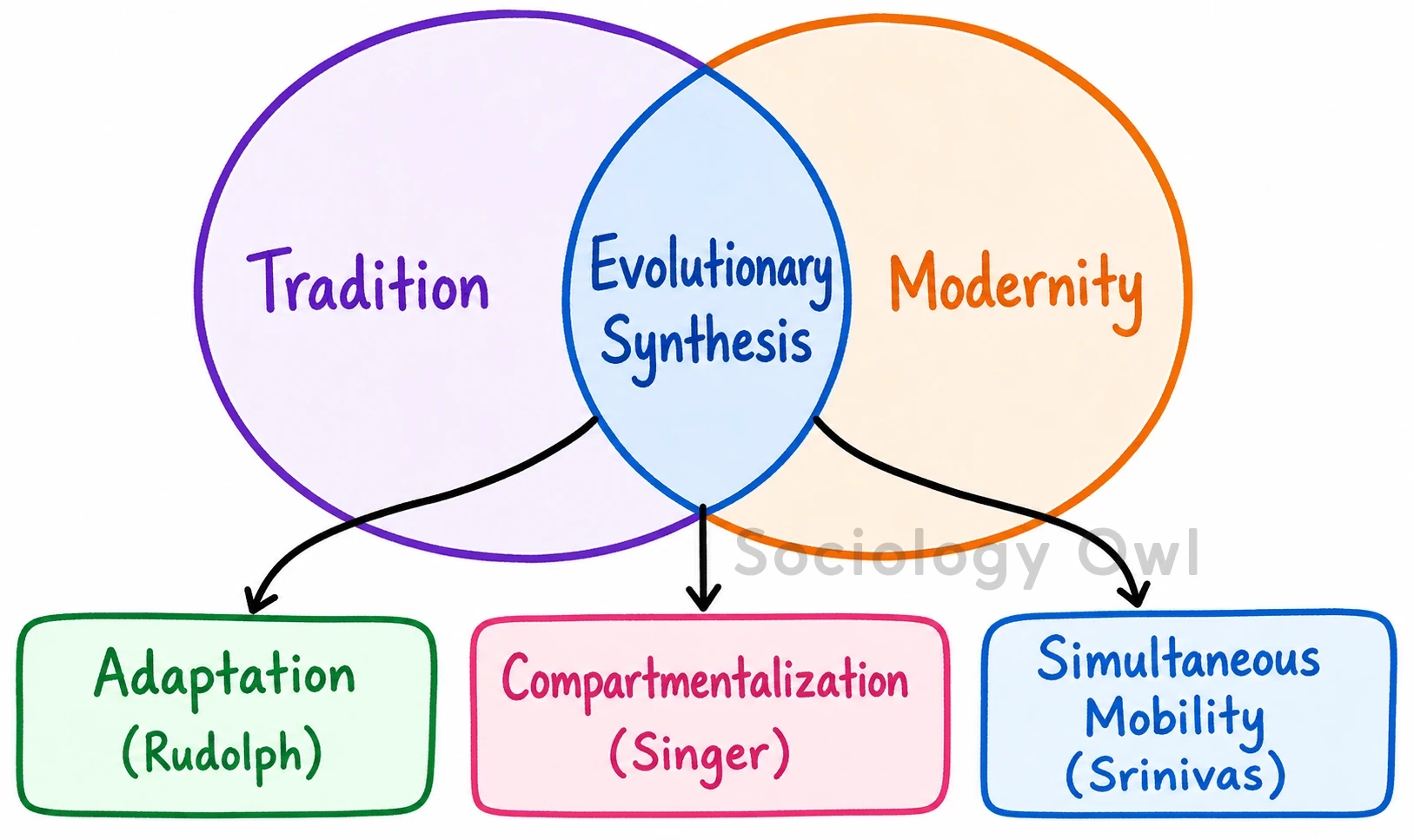
ISRO scientists performing traditional rituals before space launches, or AI-driven matrimonial apps filtering matches by traditional caste lines, perfectly illustrate this synthesis.
Conclusion
In India, modernity does not eradicate tradition. Instead, tradition acts as a filter through which modernity is processed, leading to a unique “evolutionary synthesis” (Yogendra Singh) that ensures continuity amid change.