Model Answer:
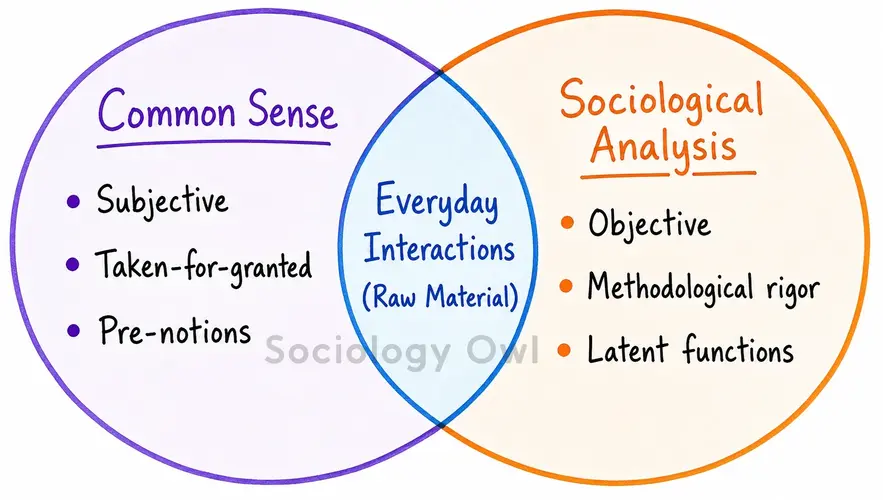
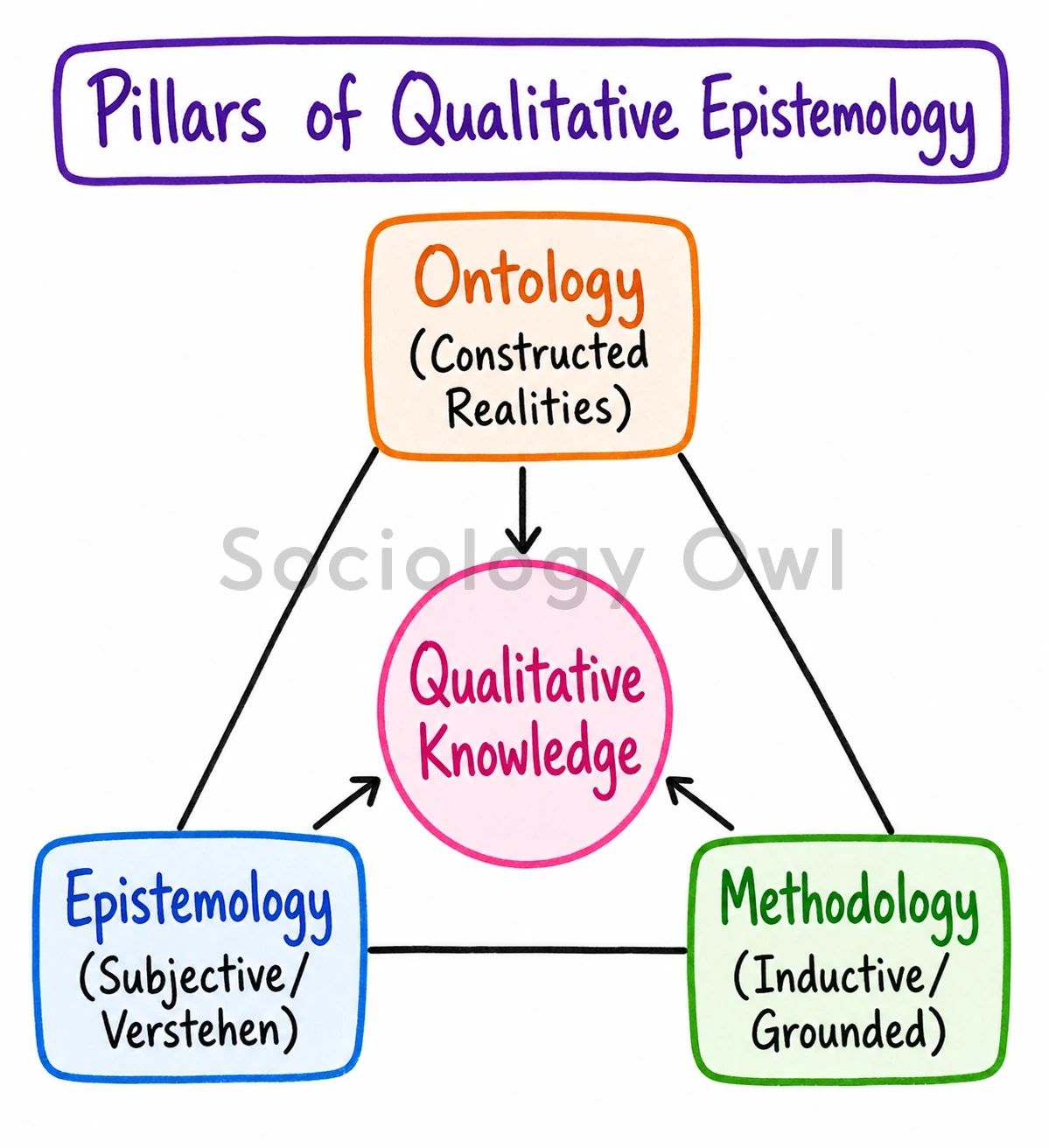
Epistemology (“how we know”) in qualitative research rejects Positivism’s search for objective laws. Rooted in Interpretivism, it argues that social reality is multiple and subjectively constructed.
Core Epistemological Principles
- Interpretive Meaning: Max Weber’s Verstehen mandates the empathetic understanding of actors’ motives.
- Constructed Knowledge: Symbolic Interactionism (G.H. Mead) asserts that knowledge emerges from context-bound, everyday interactions.
- Inductive Logic: Rather than testing hypotheses, knowledge is generated bottom-up, exemplifying the Grounded Theory of Glaser and Strauss.
- Reflexivity: Feminist sociologists like Ann Oakley argue that the researcher’s positionality inherently shapes knowledge production.
Epistemological Critiques
- Positivist View: Emile Durkheim criticized qualitative epistemology for lacking reliability, generalizability, and objectivity.
- Postmodern View: Highlights a “crisis of representation,” questioning whether researchers can ever authentically capture another’s subjective reality without imposing their own narrative.
Understanding modern gig-workers requires qualitative epistemology to grasp their subjective lived reality of algorithmic alienation, which objective income statistics miss.
Conclusion
Modern sociology transcends this epistemological divide through Methodological Pluralism and Triangulation (Alan Bryman), merging qualitative depth with quantitative breadth to capture holistic social realities.