Model Answer:
Distinctiveness of Feminist Method in Social Research
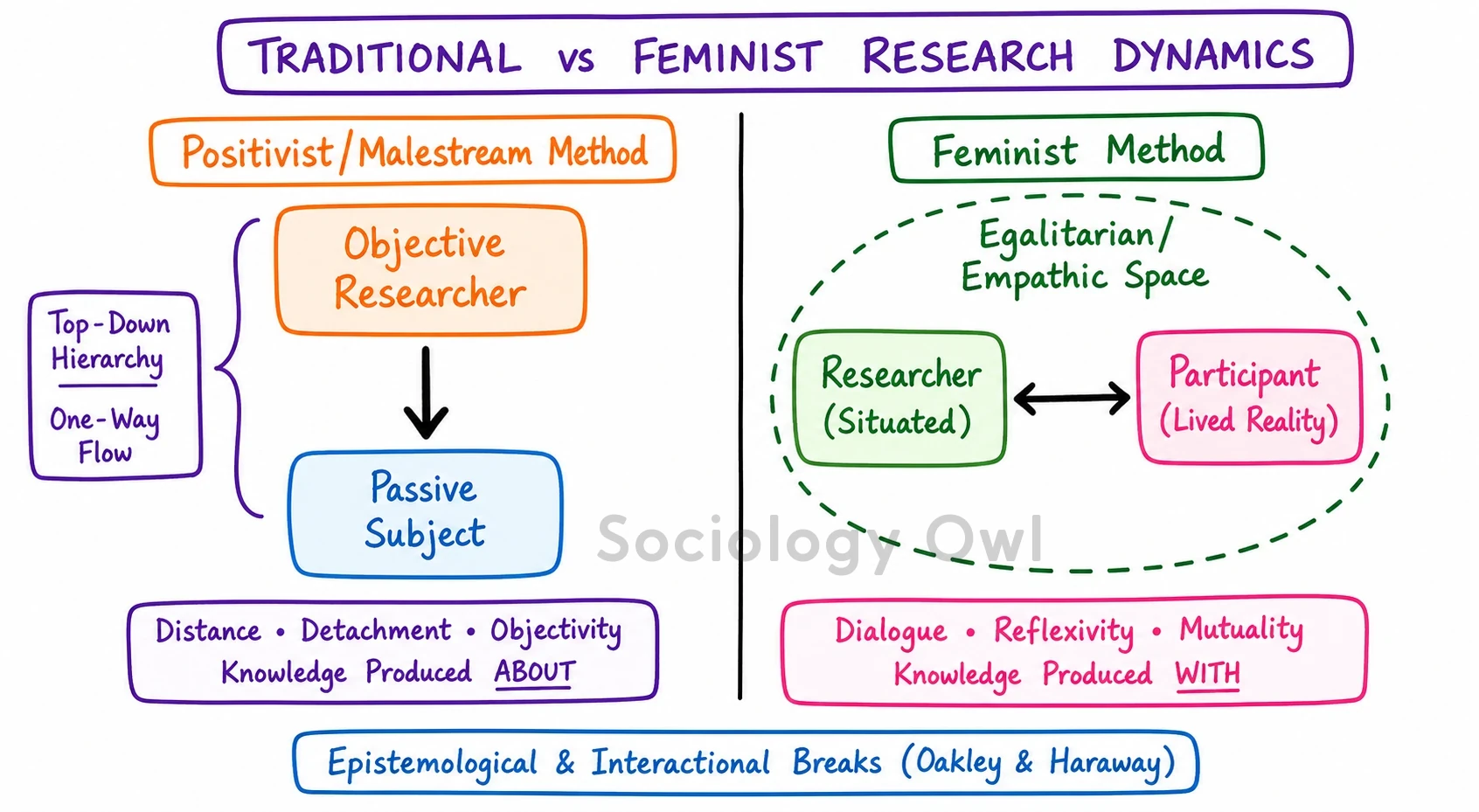
Feminist methodology emerged as an epistemological critique of positivist “Malestream Sociology” (Pamela Abbott). It shifts focus from supposedly neutral, male-centric paradigms toward validating women’s lived realities.
Distinctive Features of Feminist Methodology
- Standpoint Epistemology: Feminist Standpoint Theory (Dorothy Smith) argues marginalized positions offer less distorted social realities. Instead of traditional objectivity, Donna Haraway advocates for “Situated Knowledge”, acknowledging the researcher’s social location.
- Egalitarian Dynamics: Ann Oakley challenges hierarchical interviewing, advocating for empathy, rapport, and breaking researcher-subject binaries.
- Intersectionality: Indian sociologists like Sharmila Rege critique homogenous feminist methods, integrating caste through a Dalit Standpoint to capture complex marginalization.
Critiques
- Positivist Critique: Traditionalists argue feminist research is overly subjective, value-laden, and lacks generalizability due to reliance on micro-studies.
- Postmodern Critique: Judith Butler argues that feminist methodology risks essentializing the category of “woman,” ignoring diverse, fluid gender constructions.
The global adoption of Time-Use Surveys by organizations like the ILO to measure Unpaid Care Work exemplifies feminist methodology successfully making invisible domestic labor visible.
Conclusion
Despite positivist critiques, feminist methodology has effectively democratized knowledge production by validating marginalized voices, ensuring sociology serves as a tool for emancipatory social transformation.