Model Answer:
Tundra biomes, defined by continuous permafrost and low thermal energy, present an acute paradox between severe biophysical fragility and escalating global resource exploitation.
1. Drivers of Extreme Ecological Fragility
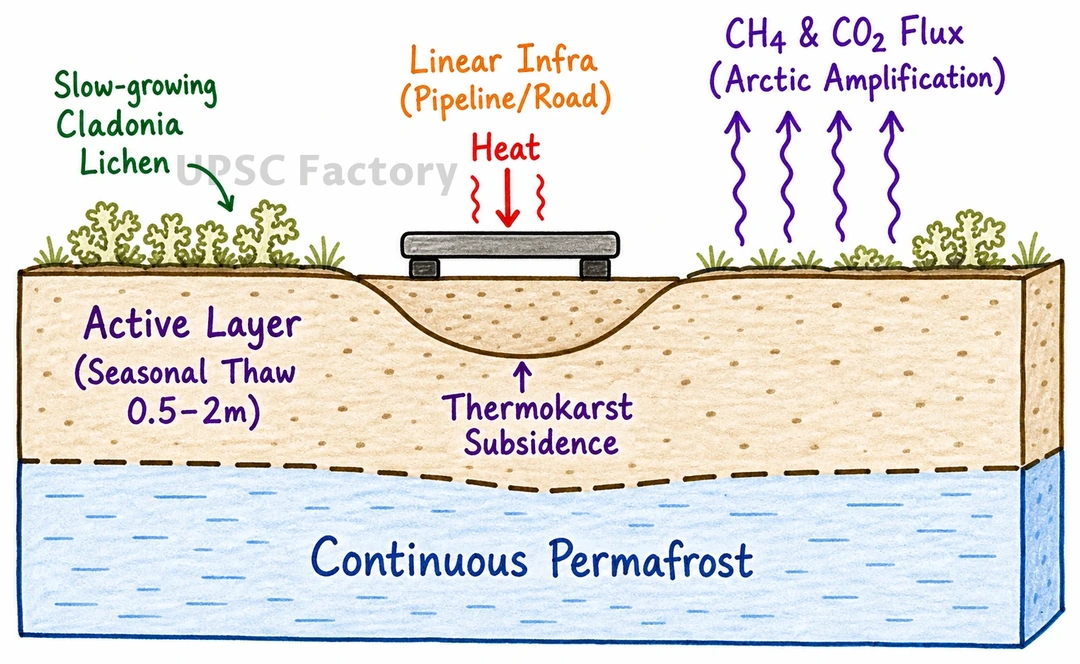
- Cryospheric Sensitivity: Permafrost degradation triggers thermokarst formation, ground subsidence, and methane release under Arctic Amplification.
- Slow Biotic Regeneration: Extremely short growing seasons impede vegetation recovery following physical disturbances (e.g., slow-growing Cladonia lichens).
- Truncated Food Webs: Low species diversity creates hyper-vulnerable trophic chains susceptible to systemic collapse (e.g., caribou, lemmings).
- Nutrient-Poor Pedology: Thin, acidic, waterlogged soils limit soil-microbial buffering capacity against chemical pollutants.
2. Economic Potential vs. Ecological Risks
- Hydrocarbon Wealth: Houses vast untapped fossil fuels (e.g., Yamal LNG, Prudhoe Bay); extraction risks catastrophic, non-degradable oil spills.
- Critical Minerals: High concentrations of nickel, copper, and rare earths (e.g., Norilsk mining) cause extensive acid drainage and heavy metal pollution.
- Commercial Navigation: Melting sea ice opens the Northern Sea Route (NSR), reducing shipping distances while increasing black carbon deposition.
- Geostrategic Infrastructure: Linear infrastructure (pipelines, roads) fragments migratory corridors and destabilizes permafrost foundations.
Sustainable utilization requires shifting from reckless extraction to conservation, governed by the Arctic Council protocols and indigenous-led ecological co-management frameworks.