Model Answer:
Education is not a binary policy choice; it is a developmental continuum where rights-based welfare provides the foundational equity necessary to build a strategic, knowledge-driven economy.
Welfare Obligation: Equity and Social Justice
- Constitutional & Rights Mandate: Guarantees universal access as an enforceable fundamental right (Article 21A, RTE Act 2009, Article 45).
- Capability Enhancement: Expands substantive freedoms, dismantling intergenerational poverty and caste-gender divides (Amartya Sen’s Capability Approach).
- Correcting Market Failures: Prevents exclusionary commercialization by subsidizing basic schooling for vulnerable demographics (PM-POSHAN, Samagra Shiksha).
- Democratic Deepening: Inculcates constitutional values, social cohesion, and active citizenship essential for institutional stability (Article 51A).
Strategic Investment: Global Competitiveness and Innovation
- Demographic Dividend: Converts working-age population into high-skill human capital for Industry 4.0 (NEP 2020 target: 50% Higher Education GER by 2035).
- Frontier Innovation & Growth: Drives patent generation, indigenous R&D, and high-tech manufacturing output (e.g., South Korea’s education-led economic leap).
- Geopolitical Soft Power: Projects educational diplomacy, high-skill talent exports, and global research leadership (Anusandhan National Research Foundation).
- Fiscal Multiplier: Yields long-term tax revenues and boosts total factor productivity, lowering future public welfare outlays.
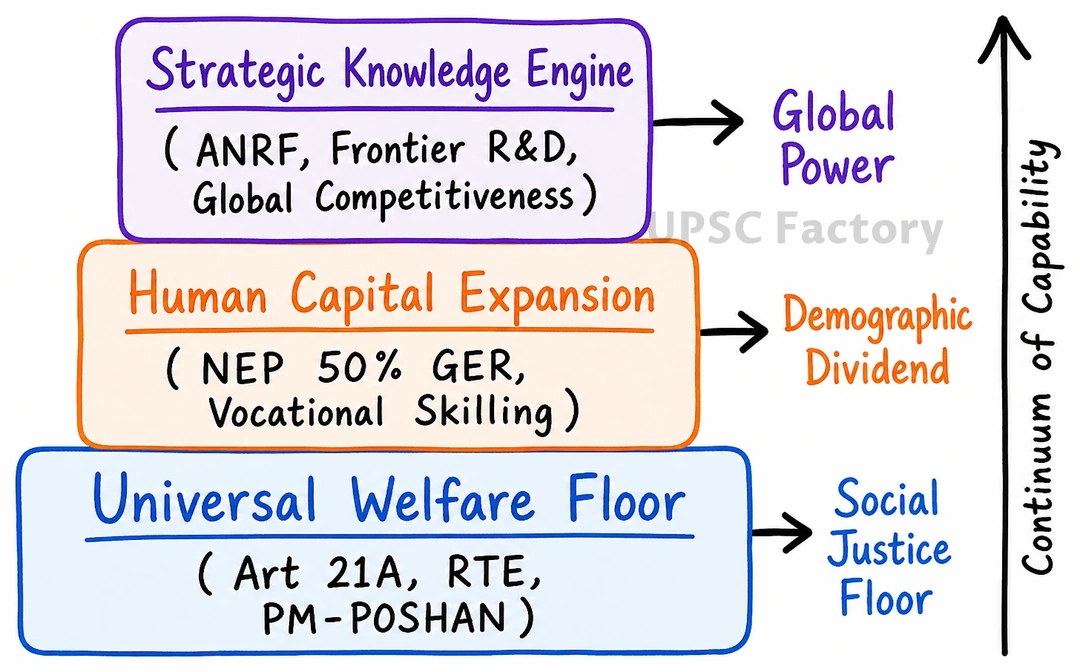
Integrated Synergy: Resolving the Binary
- Interdependence: Welfare without quality creates unemployable graduates; strategic investment without equity creates stark digital and socioeconomic divides.
- Policy Harmonization: Universal primary education must serve as an equitable welfare floor, while tertiary and technical education act as strategic growth engines via 6% GDP spending.
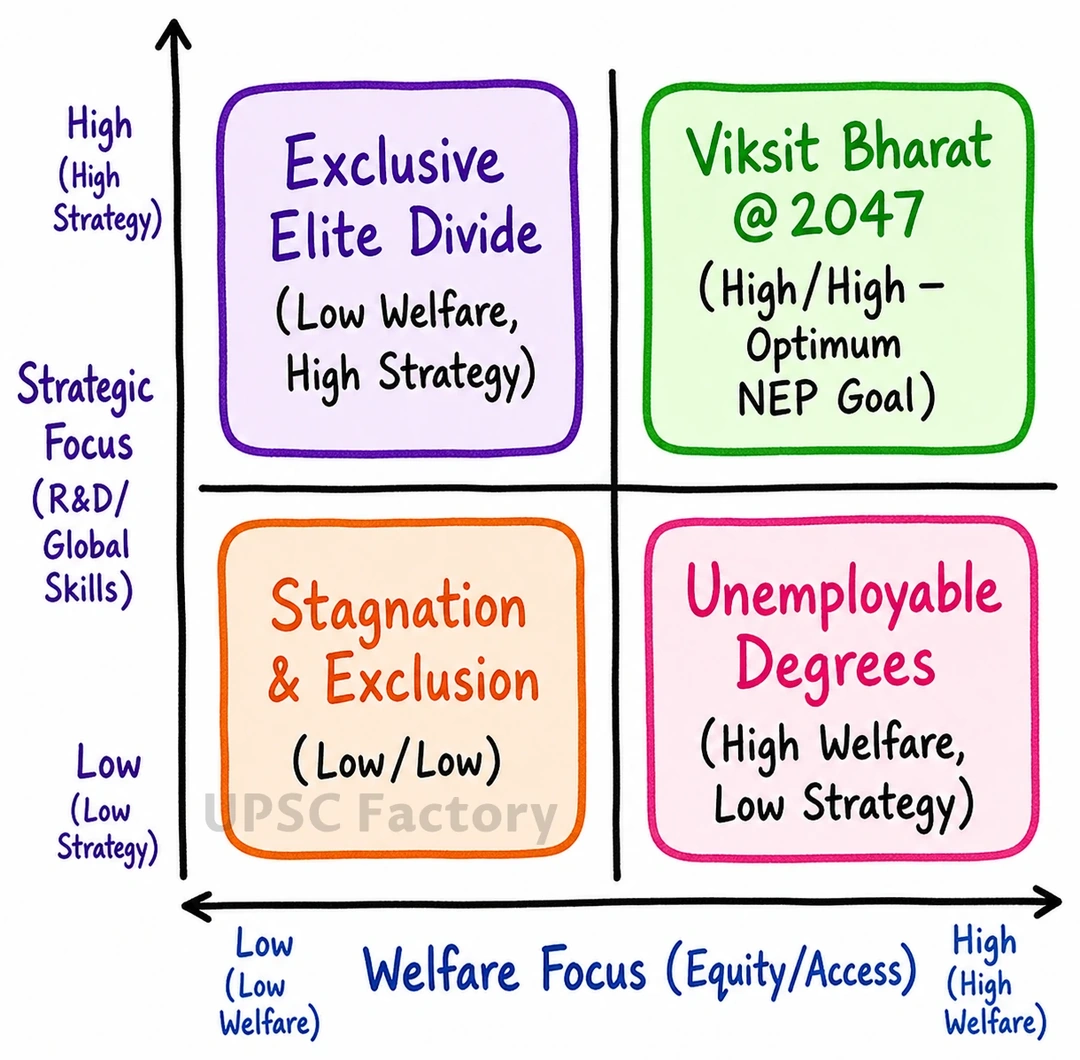
Integrating rights-based welfare with high-end strategic skilling is imperative to transition India from basic literacy to a globally competitive superpower for Viksit Bharat @2047.