Model Answer:
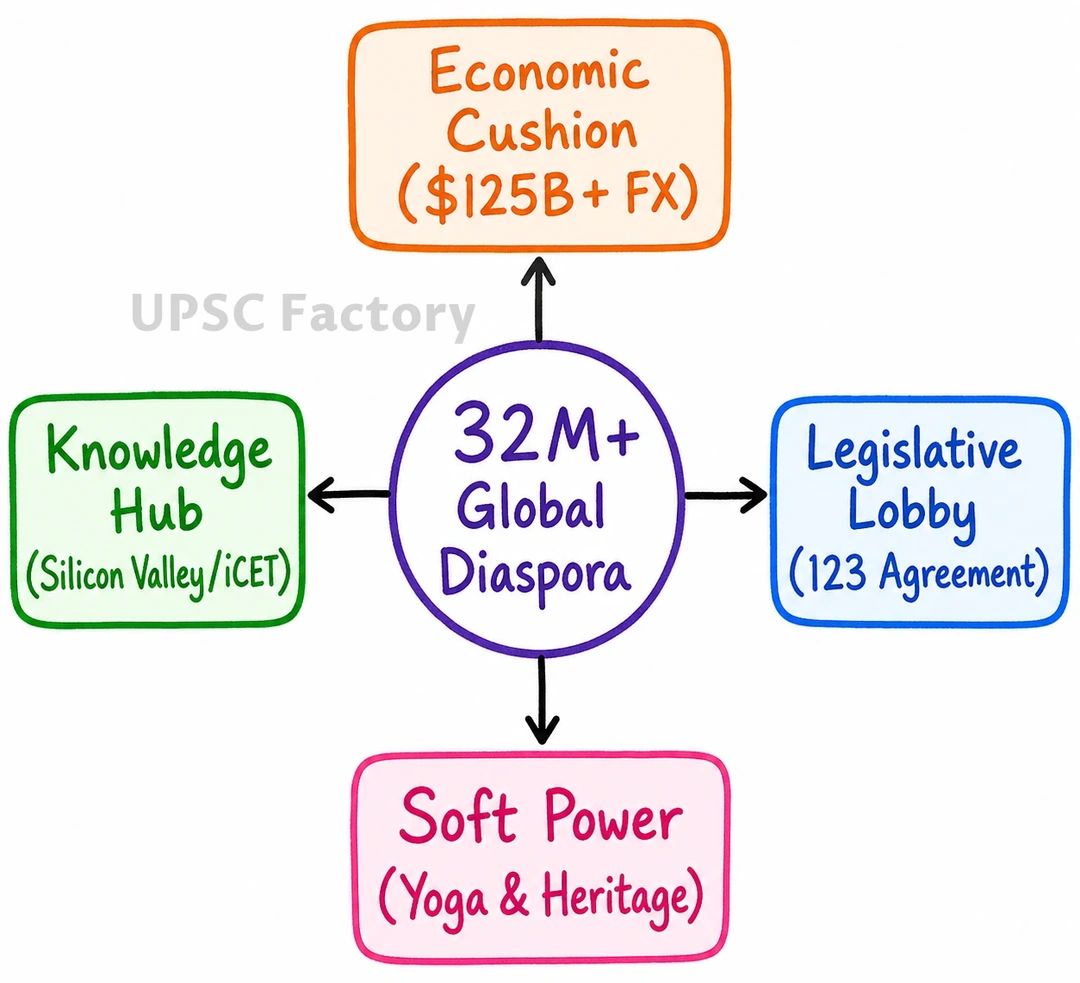
Comprising over 32 million people, India’s diaspora is the world’s largest, functioning as a strategic asset that converts cultural affinity and economic weight into formidable geopolitical leverage.
Strategic Dividends: Economic, Knowledge, and Geopolitical Vectors
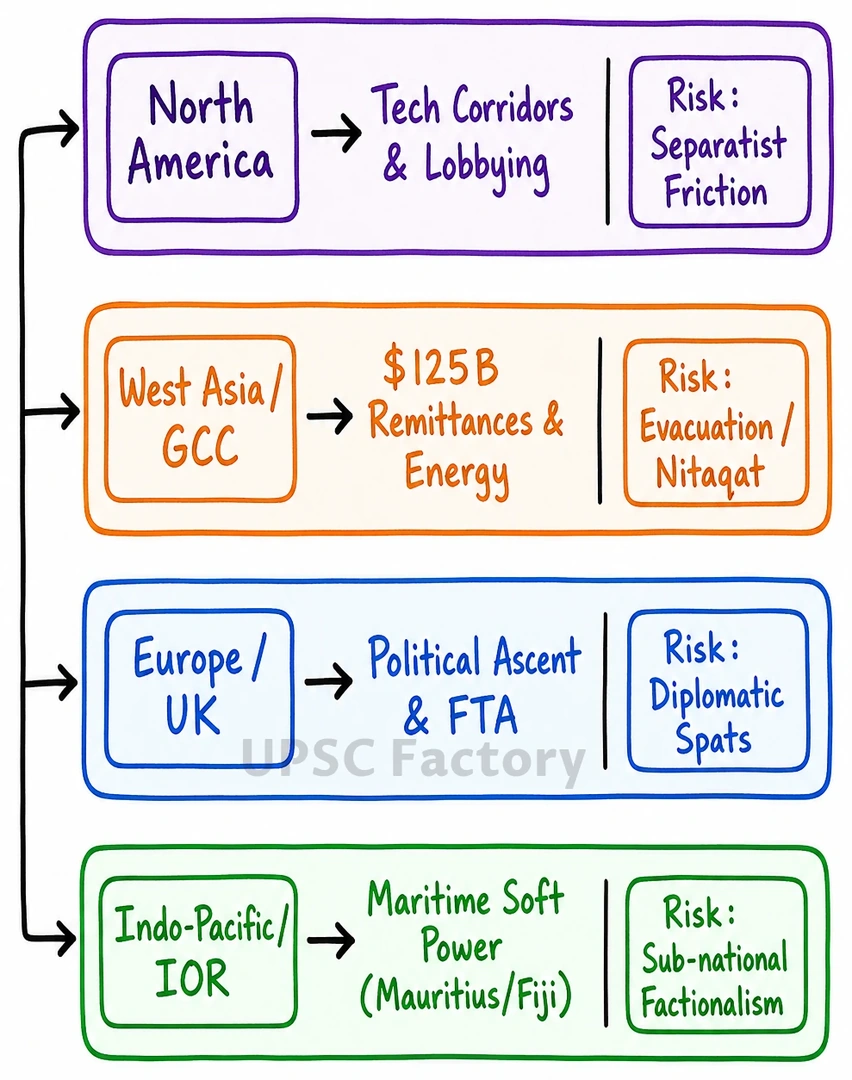
- Economic Cushion & Capital Inflows: Generates over $125 billion in annual remittances (World Bank), stabilizing foreign exchange reserves and stimulating sovereign capital investments.
- Knowledge Networks & Critical Tech: Diaspora leadership in Silicon Valley drives bilateral tech partnerships and high-value R&D corridors (e.g., US-India iCET initiative).
- Legislative & Strategic Lobbying: High-income diaspora caucuses influence host-nation foreign policies in India’s favor (e.g., USINPAC mobilizing support for the 123 Civil Nuclear Agreement).
- Soft Power to Diplomatic Goodwill: Global propagation of Indian heritage, cuisine, and cultural ethos (e.g., International Day of Yoga) enhances national branding and institutional influence.
- Political Ascent in Host Nations: High-profile representation in host governments (e.g., UK, US, Mauritius) fosters natural institutional access and strategic alignment.
Strategic Constraints and Operational Liabilities
- Bilateral Diplomatic Frictions: Extremist and separatist mobilization within diaspora pockets strains key inter-state relations (e.g., Khalistani activities in Canada and the UK).
- Dual-Loyalty & Xenophobic Backlash: Diaspora political activism attracts scrutiny over foreign interference and triggers local nativist pushback (e.g., US H-1B visa curbs, Gulf Nitaqat laws).
- Ideological & Regional Factionalism: Polarization along religious, caste, and domestic political lines fragments community cohesion, weakening unified lobbying power.
- Evacuation & Security Liabilities: Geopolitical instability in conflict zones creates immense logistical, consular, and financial burdens on the Indian state (e.g., Operation Kaveri in Sudan, Operation Ajay in Israel).
Transforming the diaspora from a reactive asset into enduring geopolitical leverage requires institutionalizing engagement through an updated Emigration Governance Framework and proactive Track-1.5 diplomacy to safeguard national interests.