Model Answer:
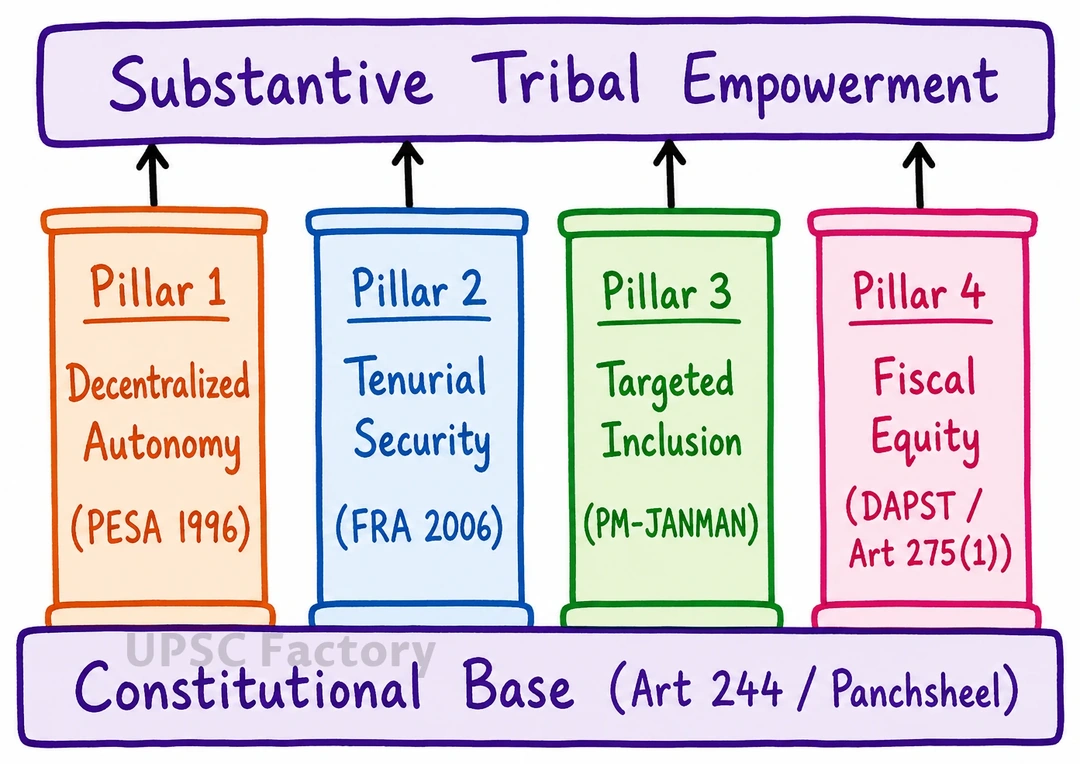
India’s tribal policy has evolved from welfare paternalism to a rights-based framework, operationalizing constitutional safeguards (Articles 244, 275(1)) and Nehru’s Tribal Panchsheel for self-determined, equity-based development.
Alignment with Socially Grounded and Equity-Based Governance
- Decentralized Autonomy: Empowers customary self-governance and community-led resource management through statutory grassroots institutions (PESA 1996; Niyamgiri Gram Sabha).
- Tenurial Security: Recognizes individual and community forest rights, correcting historical developmental injustices (FRA 2006; Community Forest Resource titles).
- Targeted Affirmative Action: Directs saturation-mode socio-economic development toward the most vulnerable groups (PM-JANMAN for PVTGs; Van Dhan Vikas Kendras).
- Fiscal Equity: Ensures proportionate resource allocation for socio-economic infrastructure via the Development Action Plan for Scheduled Tribes (DAPST).
Structural Faultlines and Implementation Gaps
- Dilution of Consent: Regulatory changes frequently bypass mandatory Gram Sabha concurrence for industrial and conservation diversion (Forest Conservation Amendment Act 2023).
- Disproportionate Displacement: Tribes constitute a skewed proportion of project-displaced populations without equitable rehabilitation (Xaxa Committee Report).
- Institutional Subversion: Weak functioning of Tribes Advisory Councils (TACs) and bureaucratic paternalism undermine local self-rule.
Achieving substantive equity demands operationalizing Xaxa Committee recommendations by institutionalizing absolute Gram Sabha sovereignty and rights-based, culturally congruent governance.