Model Answer:
Rapid infrastructure expansion in India’s fragile biomes often triggers systemic disasters, demanding an operational transition toward risk-informed, climate-resilient spatial development.
Manifestations of the Infra–DRR Trade-off
- Geological Instability: Deep tunneling and unscientific slope-cutting trigger severe land subsidence (e.g., Joshimath crisis, Chardham project).
- Hydrological Disruption: Unregulated construction on floodplains and peri-glacial zones amplifies flash floods and GLOFs (e.g., 2023 Teesta dam breach, Sikkim).
Pathways to Manage the Contradiction
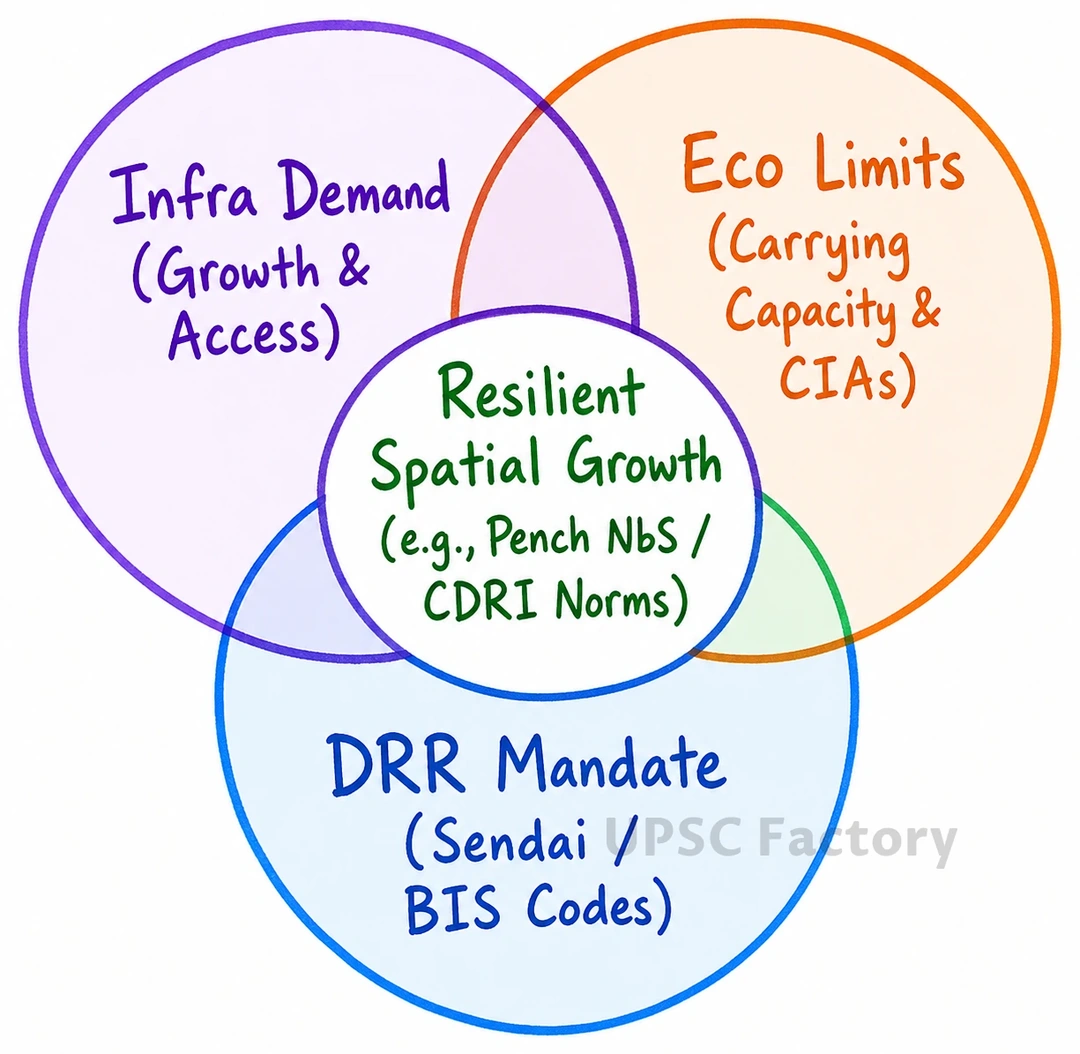
- Carrying-Capacity Audits: Mandate regional Cumulative Impact Assessments (CIAs) to cap project densities in fragile ecologies.
- Eco-Engineering & NbS: Deploy bio-engineering, hydroseeding, and structural underpasses to stabilize slopes and maintain habitats (e.g., NH-44 Pench eco-bridges).
- Resilient Design Standards: Enforce Bureau of Indian Standards (BIS) seismic codes and flexible micro-tunneling instead of heavy blasting.
- Advanced Hazard Telemetry: Install satellite-based InSAR monitoring, LiDAR slope-mapping, and automated sensor-driven Early Warning Systems (EWS).
- Policy & Fiscal Alignment: Embed Sendai Framework Priority 3 (Resilient Infrastructure) through Coalition for Disaster Resilient Infrastructure (CDRI) technical benchmarks.
Mainstreaming disaster-risk auditing into project lifecycles is essential to achieve sustainable economic growth without compromising fragile ecological frontiers.