Model Answer:
Adopted at CBD COP15, the Kunming-Montreal Global Biodiversity Framework (KMGBF) provides a global roadmap to halt and reverse biodiversity loss, aiming for “Living in Harmony with Nature” by 2050.
Aim, Goals, and Targets of KMGBF
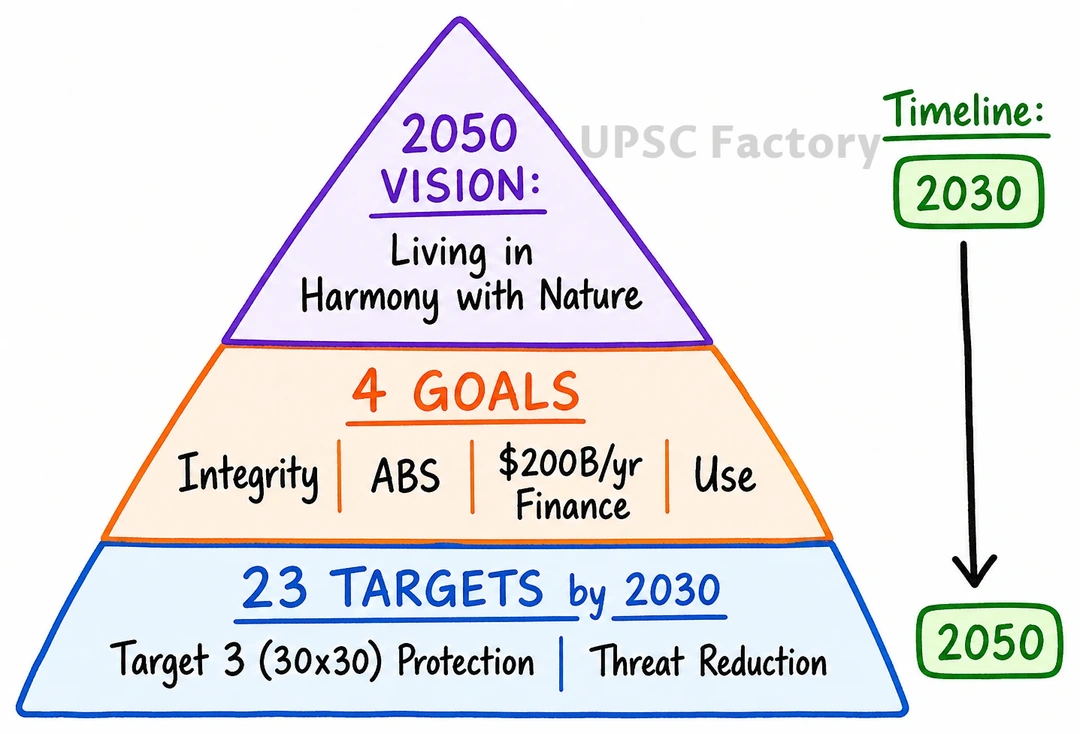
- Four 2050 Goals: Maintain ecosystem integrity and connectivity; sustainable biodiversity use; fair and equitable Access and Benefit-Sharing (ABS); and adequate financing ($200 billion/year).
- 23 Global Targets (2030):
- Target 3 (30×30): Conserve 30% of degraded terrestrial, inland water, and coastal/marine areas.
- Threat Reduction: Halve excess nutrients, pesticide risks, and global food waste; reduce invasive alien species by 50%.
India’s Commitments and Key Initiatives
- Policy Alignment: Updated National Biodiversity Strategy and Action Plan (NBSAP 2024) and enforced the Biological Diversity (Amendment) Act, 2023 to streamline ABS and conservation goals.
- Target 3 (30×30) & Habitat Restoration:
- Mangrove restoration via MISHTI Scheme.
- Conservation of 85 Ramsar wetland sites through Amrit Dharohar.
- Formal notification of Other Effective Area-based Conservation Measures (e.g., Aravalli Biodiversity Park).
- Species Recovery Leadership: Spearheading the International Big Cat Alliance (IBCA) for global transboundary conservation of 7 big cats (Project Tiger/Cheetah).
- Sustainable Consumption: Mainstreaming pro-planet behavioral shifts to curb ecological footprints via Mission LiFE (Target 16).
Through updated statutory frameworks and targeted ecological missions, India harmonizes national developmental priorities with KMGBF targets to advance global planetary resilience.