Model Answer:
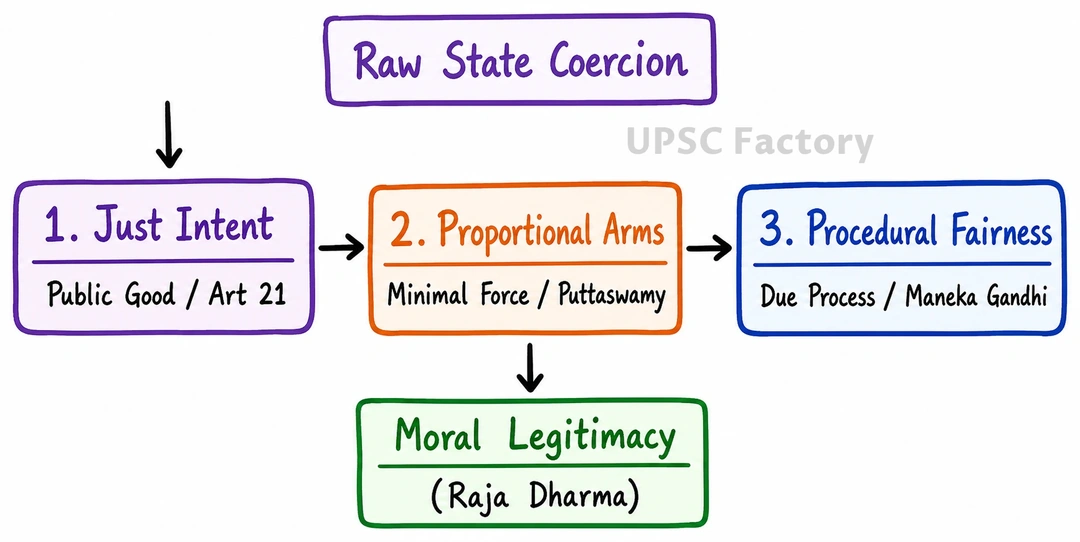
The quote reflects the doctrine of Jus ad bellum—asserting that the state’s coercive power (“arms”) derives moral legitimacy solely when anchored in public interest and righteous purpose (“just intent”).
1. Moral Legitimacy of State Authority
- Upholding Public Interest: State coercion is ethically justified only when deployed to protect rights and welfare (Article 21, Disaster Management Act).
- Doctrine of Proportionality: Restricts state force to the minimum necessary degree to achieve justice (Puttaswamy test).
- Enforcing Raja Dharma: Legitimizes affirmative state intervention to eliminate systemic exploitation and protect the vulnerable (PDS anti-hoarding drives).
2. Safeguards Against the Abuse of Coercion
- Preventing Weaponization: Barring the misuse of enforcement agencies for political vendetta or administrative overreach (Prakash Singh police reforms).
- Substantive Due Process: Mandates that just intent must be matched by fair, non-arbitrary procedures (Maneka Gandhi case).
- Gandhian Means-Ends Purity: Warns that noble administrative goals cannot justify unethical, heavy-handed enforcement measures.
Power detached from justice degrades into tyranny. In democratic governance, state authority remains fair only when disciplined by constitutional morality and human dignity.