Model Answer:
Delegating doctoral evaluation to generative AI under time constraints breaches professional fiduciary duty, substituting rigorous scholarly discernment with automated synthesis.
Deficit of Accountability
- Abdication of Duty: Outsourcing core evaluative judgment violates the personal responsibility owed to the candidate and institution (Nolan Principles).
- Epistemic Injustice: Unverified AI outputs risk algorithmic bias and hallucinated critiques, potentially damaging the scholar’s career (Mata v. Avianca).
- Institutional Default: Violates UGC Academic Integrity Regulations (2018), eroding public trust in the university’s statutory degree-awarding mechanisms.
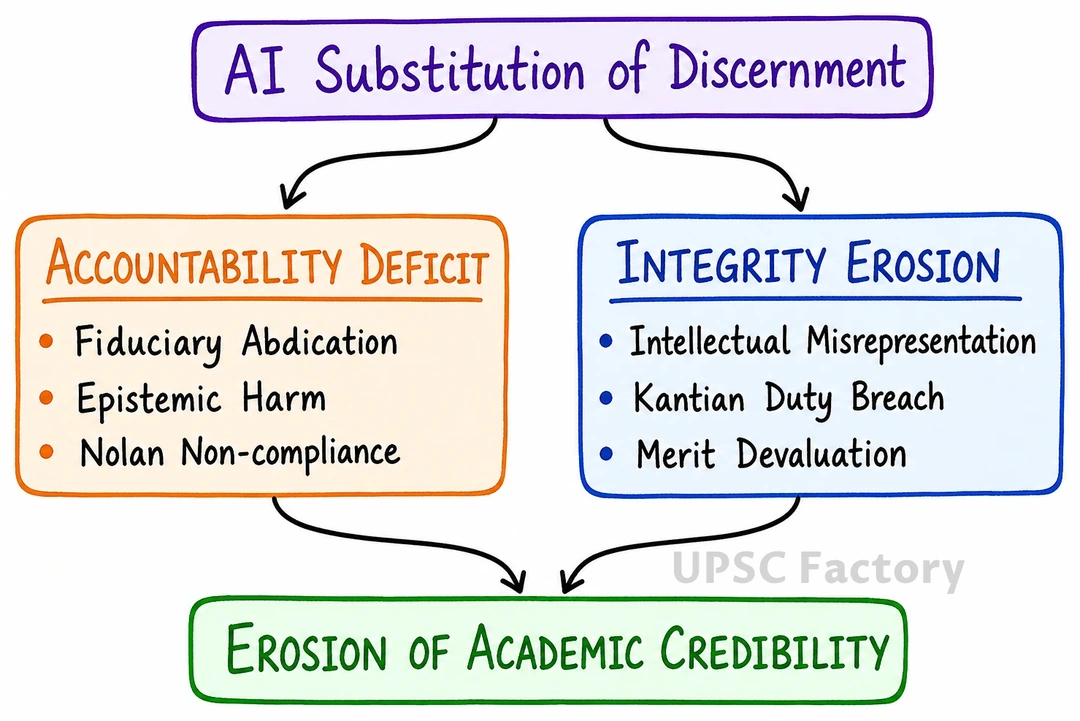
Erosion of Integrity
- Intellectual Misrepresentation: Submitting machine-generated assessment with cosmetic modifications is academic dishonesty, passing synthetic text as expert appraisal.
- Devaluation of Merit: Treats years of original research as a trivial administrative formality, violating ethical fairness (Kant’s Categorical Imperative).
- Failure of Moral Leadership: Prioritizes personal convenience over professional rectitude, normalizing corner-cutting in higher education.
AI must only assist administrative workflows; human critical judgment remains non-negotiable for preserving academic integrity and professional ethics.