Model Answer:
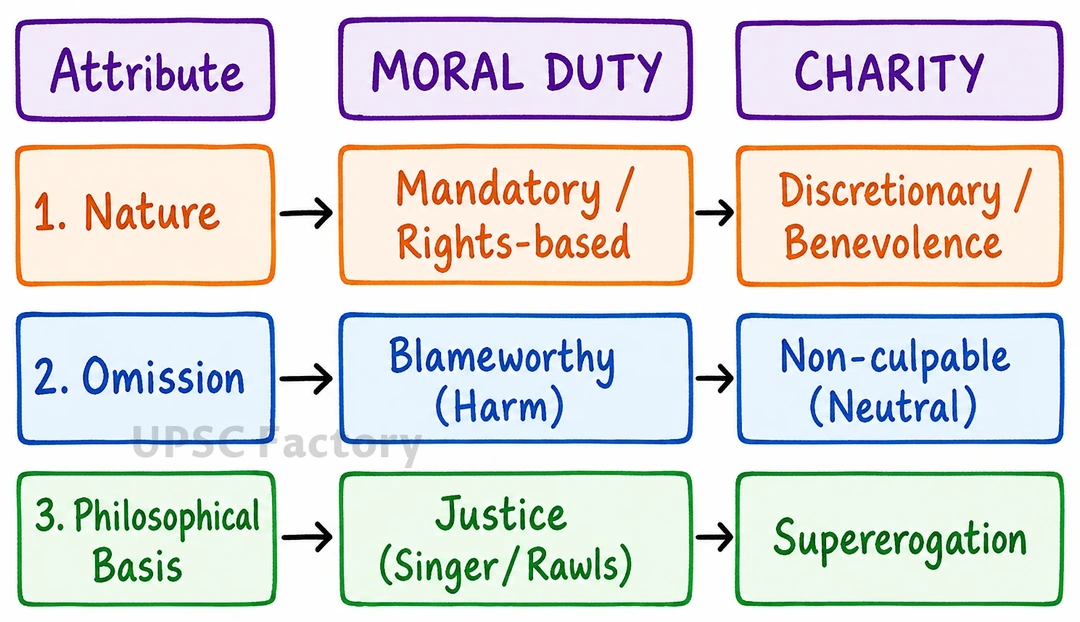
The administrator faces a dilemma between deontological legalism (strict RTE Act compliance) and teleological substantive justice (safeguarding the fundamental right to education under Article 21A).
Core Ethical Dilemma
- Letter vs. Spirit of Law: Strict closure of non-compliant schools induces educational vacuums, risking child labour and dropouts.
- Rule Fetishism vs. Pragmatism: Regulations are welfare instruments; enforcing them rigidly without enabling alternatives violates administrative ethics.
Pragmatic Administrative Strategy
- Graded Compliance Matrix: Prioritise non-negotiable safety and learning standards (child protection, basic pedagogy); provide provisional recognition with milestones for non-critical infrastructural norms.
- Resource Convergence: Upgrade school infrastructure by pooling funds from District Mineral Foundation (DMF), Border Area Development Programme (BADP), and CSR (Aspirational Districts model).
- Context-Specific Derogations: Recommend geographic exemptions for remote/hilly terrains under Section 20 of the RTE Act (e.g., relaxed land/playground requirements).
- Community Co-Management: Empower School Management Committees (SMCs) and Panchayats to mobilise local resources for low-cost, interim infrastructural compliance.
- Mobile & Shared Resource Hubs: Cluster non-compliant satellite schools around central model schools for shared laboratories, sports, and specialized teaching resources.
Administrative pragmatism requires enforcing rules as scaffolding for welfare, harmonising statutory mandates with the non-negotiable right to education.