Model Answer:
The dilemma tests administrative acumen in harmonising substantive justice (Article 21 – Right to Food) with fiscal integrity, ensuring procedural safeguards do not cause wrongful exclusion.
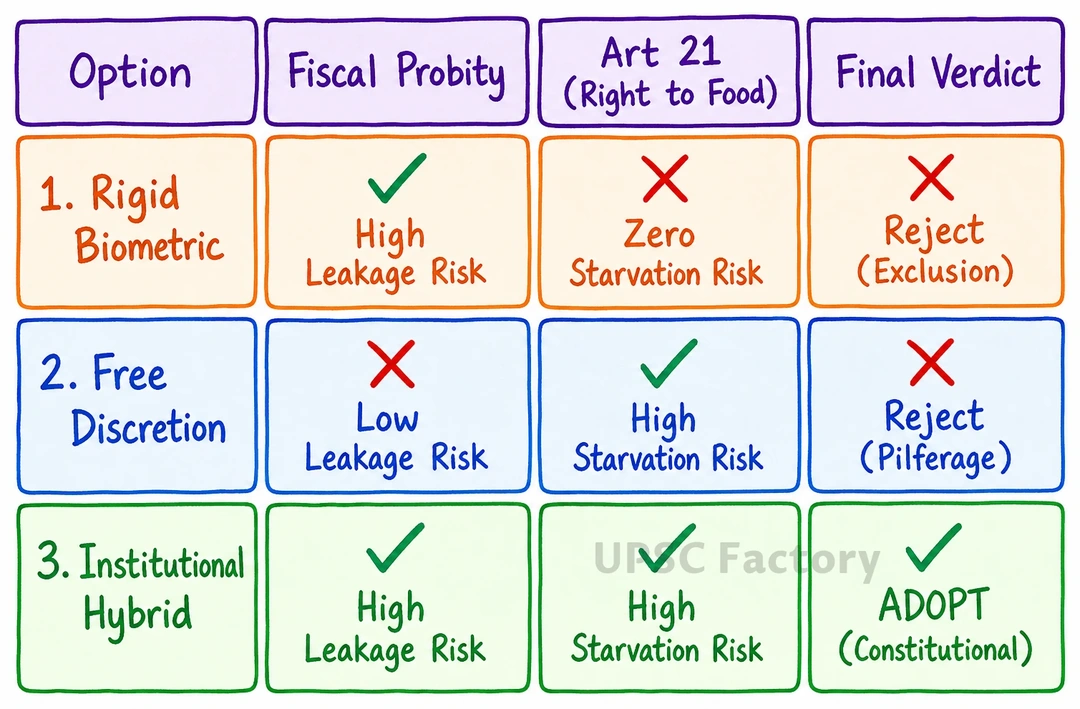
1. Options Available to Vikas & Balancing Probity with Empathy
- Option 1: Rigid Biometric Adherence: Maximises fiscal probity; causes severe exclusion errors, starvation risks, and constitutional breach.
- Option 2: Unchecked Manual Discretion: Maximises immediate access; risks leakages, ghost beneficiaries, and moral hazard.
- Option 3: Balanced Institutional Mechanism (Recommended):
- Multi-Modal Authentication: Deploy Iris scans and facial recognition for worn fingerprints (Chhattisgarh PDS model).
- Offline-Sync PoS Devices: Enable local batch authentication during network downtime with automatic cloud sync upon reconnection.
- Statutory Exception Register: Authorise physical delivery via OTP/Panchayat verification on biometric failure (NFSA 2013 Exception Protocol).
- Post-Distribution Social Audits: Institutionalise monthly Gram Sabha reviews and surprise inspections to curb distributor discretion (NFSA Section 28).
2. Ethics of Technology as a Gatekeeper in Welfare Delivery
- Ethical Merits:
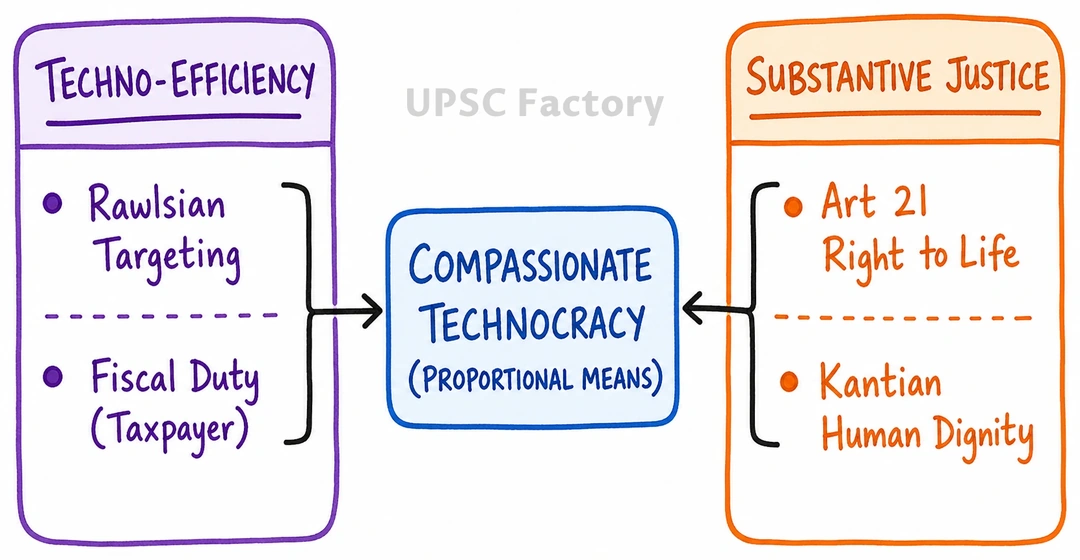
- Targeted Distributive Justice: Eliminates elite capture and ghost beneficiaries, directing public resources to the poorest (Rawlsian Difference Principle).
- Fiduciary Accountability: Upholds the administrator’s duty to protect taxpayer funds from systemic pilferage.
- Ethical Concerns:
- Algorithmic Exclusion (Type-I Error): Denies life-saving entitlements due to systemic glitches, infringing human dignity (Article 21).
- Treating Citizens as Means: Subordinates fundamental welfare rights to technical efficiency (Kant’s Categorical Imperative).
- Structural Asymmetry: Shifts the administrative burden of poor infrastructure onto vulnerable citizens without real-time grievance redressal (Puttaswamy Proportionality Standard).
Administrative ethics requires “compassionate technocracy,” where technology acts as an empowering enabler rather than an exclusionary barrier to constitutional welfare.