Model Answer:
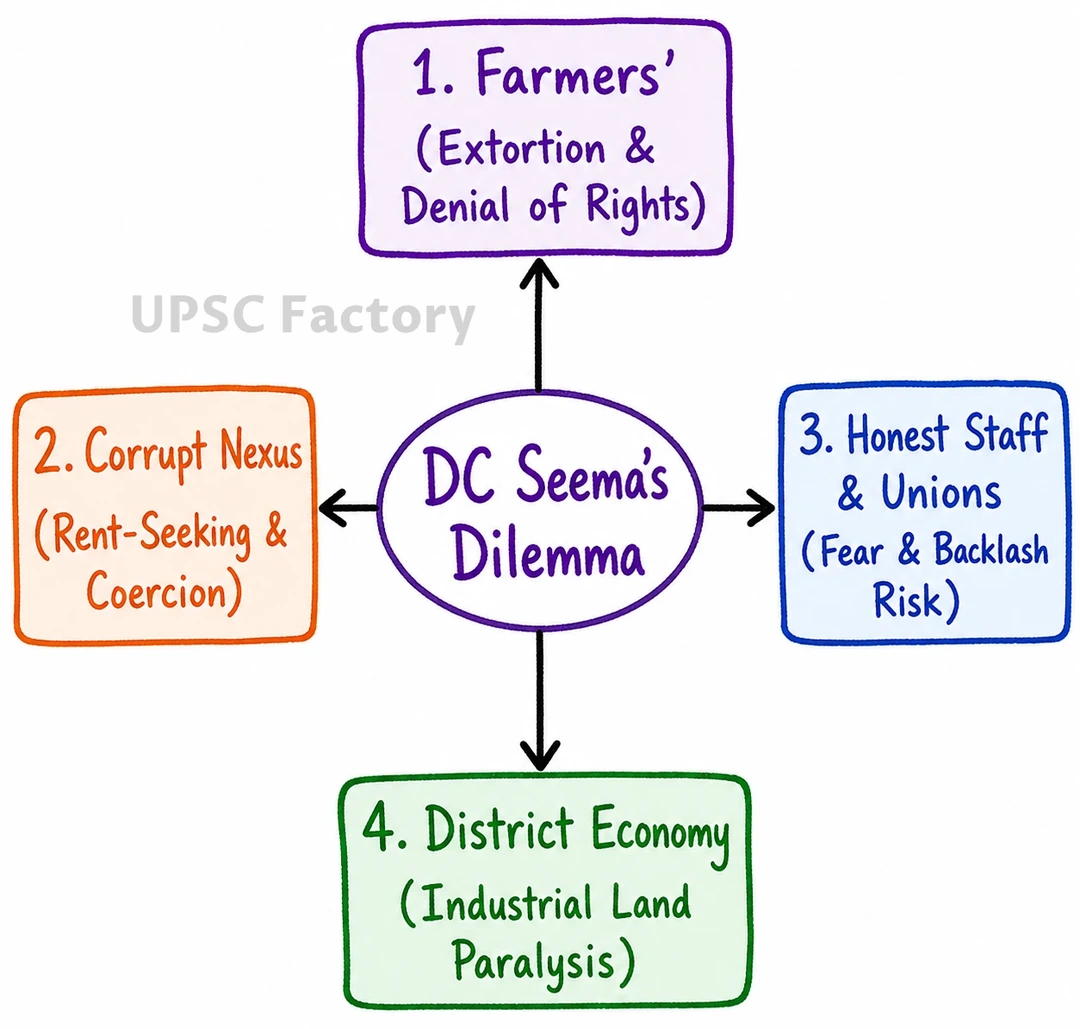
The case presents a crisis of public trust, pitting bureaucratic integrity and lawful enforcement against institutional paralysis, administrative inertia, and fear of union backlash.
1. Ethical Issues Involved
- Breach of Public Trust & Probity: Exploitation of regulatory authority for rent-seeking, violating Nolan’s principle of Integrity and the Prevention of Corruption Act, 1988.
- Administrative Inertia vs. Duty: Honest officials paralyzed by fear reflects moral cowardice and neglect of official duty.
- Denial of Distributive Justice: Selective approvals penalize honest farmers, violating fairness and equality before law (Article 14).
- Institutional Decay: Collusion between touts and officials erodes state legitimacy, undermining regional economic development.
2. Evaluation of Options
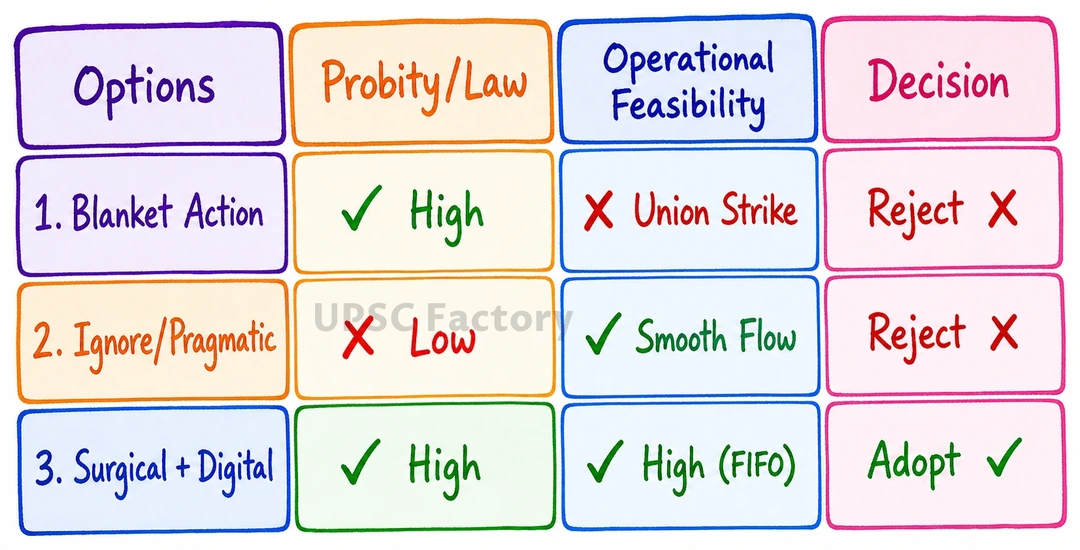
- Option 1: Mass vigilance enquiry and immediate blanket suspensions
- Merit: Sends an unyielding signal against corruption.
- Demerit: Triggers union backlash, stalls routine administration, and victimizes intimidated staff.
- Option 2: Clear the backlog pragmatically without penal action
- Merit: Restores immediate administrative output and avoids conflict.
- Demerit: Institutionalizes impunity and compromises professional ethics.
- Option 3: Targeted surgical deterrence coupled with digital process re-engineering (Recommended)
- Merit: Dismantles the corrupt nexus without halting public service delivery.
3. Recommended Course of Action and Justification
- Surgical Legal Deterrence: Deploy anti-corruption agencies for evidence-led action against ringleader touts and compromised staff (PC Act, 1988), preventing collective victimisation.
- Process Automation (Disintermediation): Digitize the CLU system via a transparent First-In, First-Out (FIFO) dashboard (e.g., Karnataka’s Bhoomi portal) to eliminate discretionary human touchpoints.
- Enforcing Accountability: Implement strict service timelines with deemed approval clauses under the Right to Service Act.
- Staff Reassurance & Protection: Issue written assurances protecting compliant staff, institute whistleblower safeguards, and engage union leaders openly on zero-tolerance norms.
Marrying surgical punitive deterrence with structural digital reforms restores institutional probity, eliminates tout networks, and upholds citizen-centric, accountable governance.