Model Answer:
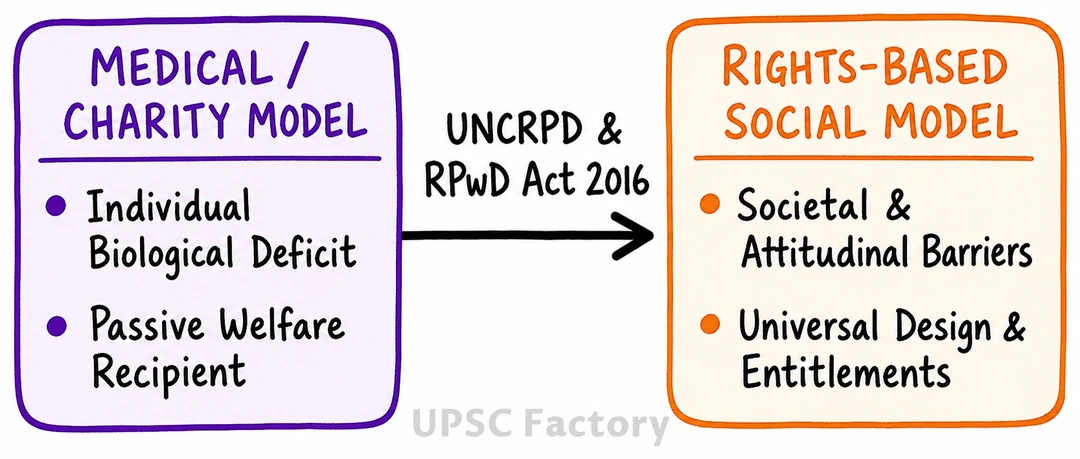
Disability is not merely a biological impairment, but a social construct resulting from the interaction between personal health conditions and environmental, institutional, and attitudinal barriers (UNCRPD, Article 1).
Conceptual Shift: From Medical Deficit to Rights-Based Model
- Charity to Rights Approach: Shifts focus from welfare dependency to legally enforceable socio-economic entitlements (RPwD Act, 2016).
- Universal Design Paradigm: Treats societal barriers, not individual anatomy, as the core determinant of exclusion.
Imperatives for an Inclusive Policy Framework in India
- Demographic Footprint: Over 2.68 crore individuals (Census 2011) face exclusion, compounded by the undercounting of 21 recognized disabilities.
- Economic Empowerment: Bridges severe workforce deficits through targeted skilling and accessible workspaces (PM-DAKSH Yojana).
- Built & Digital Accessibility: Eliminates structural barriers across public infrastructure and digital portals (Sugamya Bharat Abhiyan).
- Intersectional Vulnerabilities: Addresses double marginalization faced by rural persons with disabilities (PwDs) and disabled women regarding education and healthcare.
- Constitutional & Global Commitments: Upholds fundamental rights (Articles 14, 21) and advances SDG 10 (Reduced Inequalities).
Mainstreaming universal accessibility transforms persons with disabilities from passive aid beneficiaries into active drivers of nation-building, realizing genuine social justice.