Model Answer:
India’s demographic transition has reached a below-replacement Total Fertility Rate (TFR) of 2.0 (NFHS-5), opening a narrow demographic dividend window amid complex structural socio-economic vulnerabilities.
1. Structural Challenges of Demographic Transition
- Youth Underemployment & Skill Deficit: Only ~5% of the workforce is formally skilled, creating a mismatch between economic growth and job creation (PLFS 2023).
- Regional Demographic Divergence: Stark fertility divides between the youth-heavy North (Bihar TFR 2.98) and rapidly ageing South (Kerala TFR 1.8) strain federal fiscal transfers and upcoming political delimitation.
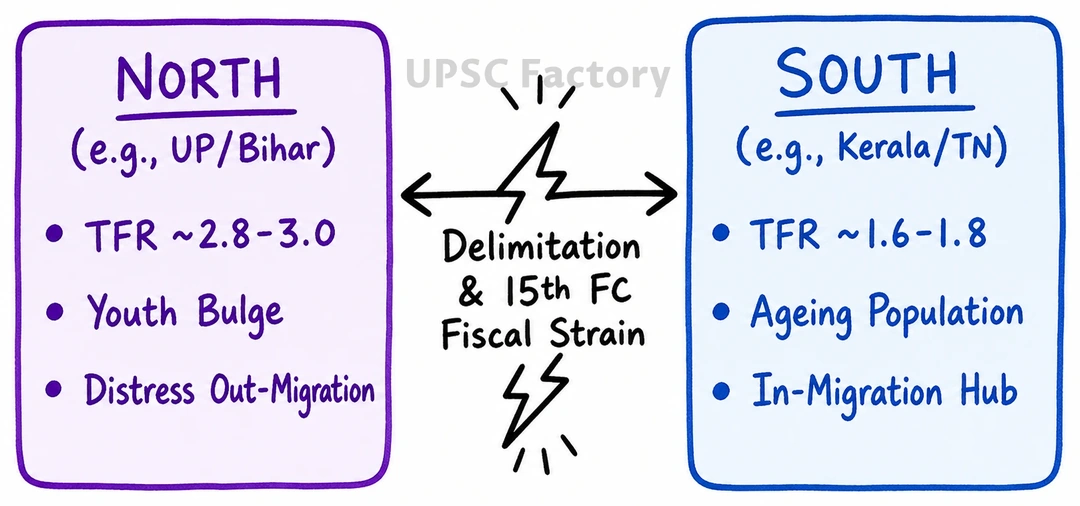
- Accelerating Geriatric Dependency: The elderly cohort will constitute ~15% of the population by 2036, stressing non-inclusive public healthcare systems (Longitudinal Ageing Study in India).
- Depressed Female Labour Force Participation (FLFPR): Subdued female formal employment (~37%) limits potential GDP gains and entrenches gender inequality (World Bank).
- Informality and Social Insecurity: Over 80% of employment remains informal (e-Shram data), leaving transitioning workers without pensions or social safety nets.
- Unplanned Urbanization: Rural-to-urban distress migration overwhelms civic infrastructure, breeding urban poverty traps and informal settlements.
2. Strategic Imperatives
- Human Capital Optimization: Modernize technical education and scale industry-aligned apprenticeships (NEP 2020, Skill India Mission).
- Promoting the Silver Economy: Develop specialized geriatric healthcare and elder-care ecosystems (SAGE Portal, Atal Vayo Abhyuday Yojana).
- Gender-Inclusive Labour Frameworks: Incentivize workplace crèches, formalize care work, and ensure equal wages to unlock female labour reserves.
- Inter-State Coordination: Create a national migration architecture with portable social security (One Nation One Ration Card).
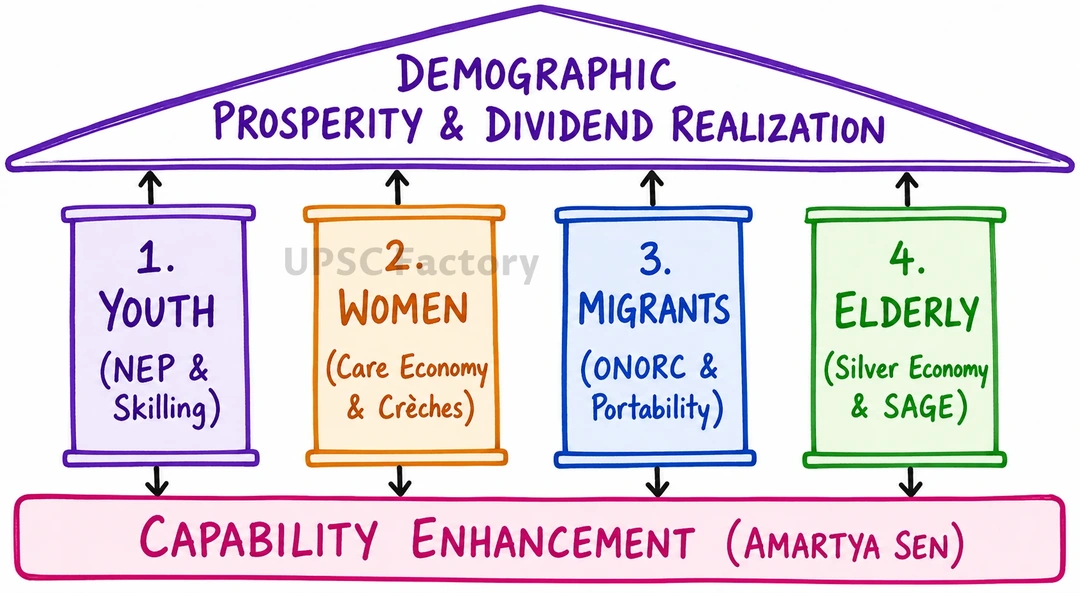
Transforming demographic transition into sustained economic prosperity requires shifting policy focus from numerical population control to qualitative human capability enhancement.