Model Answer:
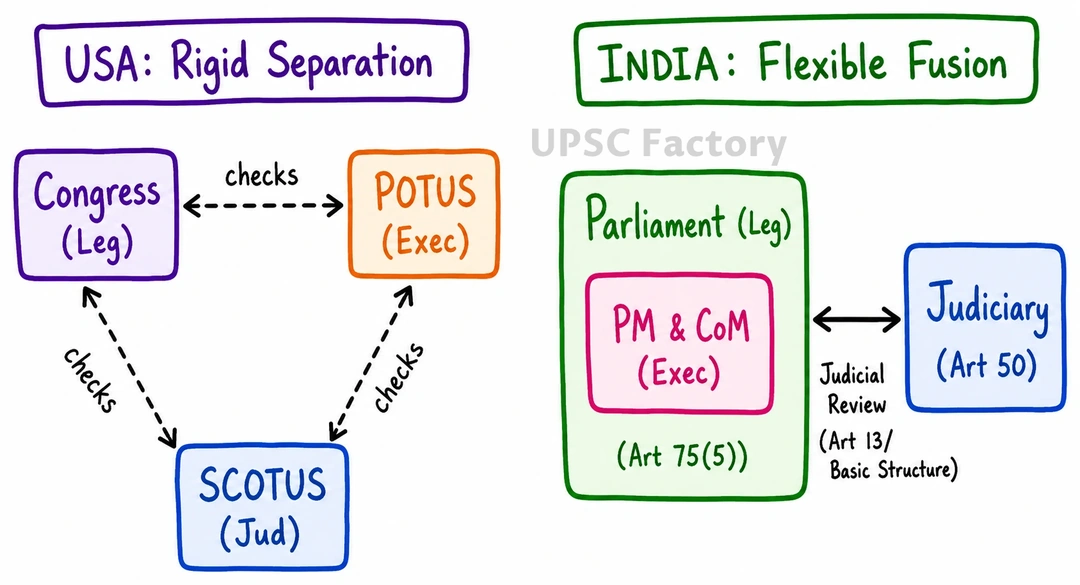
While the US Constitution enforces a rigid tripartite separation of powers (Articles I–III), India adopts Montesquieu’s doctrine flexibly, combining functional overlap and executive-legislative fusion with checks and balances (Ram Jawaya Kapur, 1955).
Separation of Powers: India vs. USA
- Institutional Model: The US enforces strict personnel separation (Executive cannot sit in Congress); India mandates executive membership within the legislature (Article 75(5)).
- Checks and Balances: The US relies on structural vetoes (Senate confirmations, presidential veto); India operates on continuous legislative accountability (Article 75(3), Question Hour) and judicial review (Kesavananda Bharati).
- Judicial Delineation: India constitutionally separates the judiciary from the executive (Article 50), yet allows functional overlap through delegated legislation and tribunals, unlike the rigid US model (Marbury v. Madison).
Authority Matrix: Indian PM vs. US President
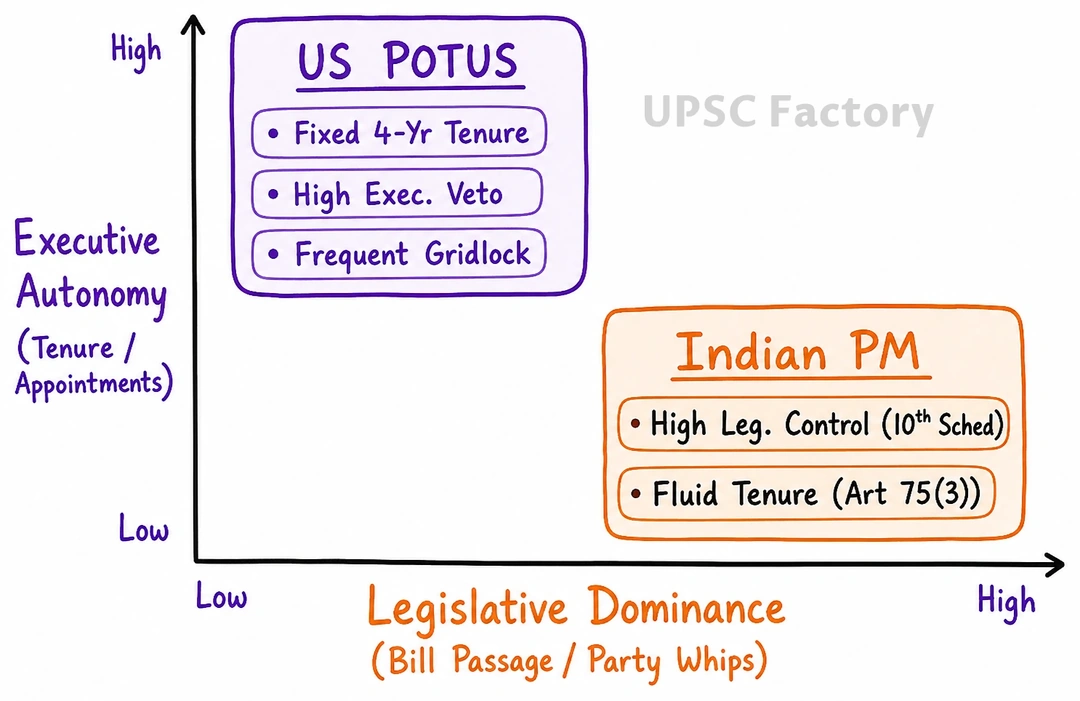
- Legislative Dominance: An Indian PM with a majority controls the legislative agenda via party whips and anti-defection laws (10th Schedule); the US President cannot introduce bills directly and frequently faces divided government gridlock.
- Appointments and Treaties: The US President requires Senate “advice and consent” for treaties and judicial/cabinet appointments; the Indian PM exercises de facto unilateral discretion through presidential aid and advice (Article 74).
- Tenure and Survival: The US President has a fixed four-year tenure immune to legislative confidence; the Indian PM’s authority depends on sustaining a majority in the Lok Sabha.
- Emergency and War Powers: The Indian PM can invoke centralized constitutional emergencies (Articles 352, 356); the US President acts as Commander-in-Chief but remains constrained by Congressional funding and the War Powers Resolution (1973).
An Indian Prime Minister backed by a parliamentary majority exercises far greater legislative mastery, whereas the US President commands greater institutional independence and unilateral executive autonomy.