Model Answer:
Communities are the first responders and primary victims during crises. Community-Based Disaster Management (CBDM) operationalises the Sendai Framework (Priority 4) and Disaster Management Act, 2005 (Section 41) to build bottom-up localized resilience.
1. Community as the Linchpin of Disaster Management: Indian Evidence
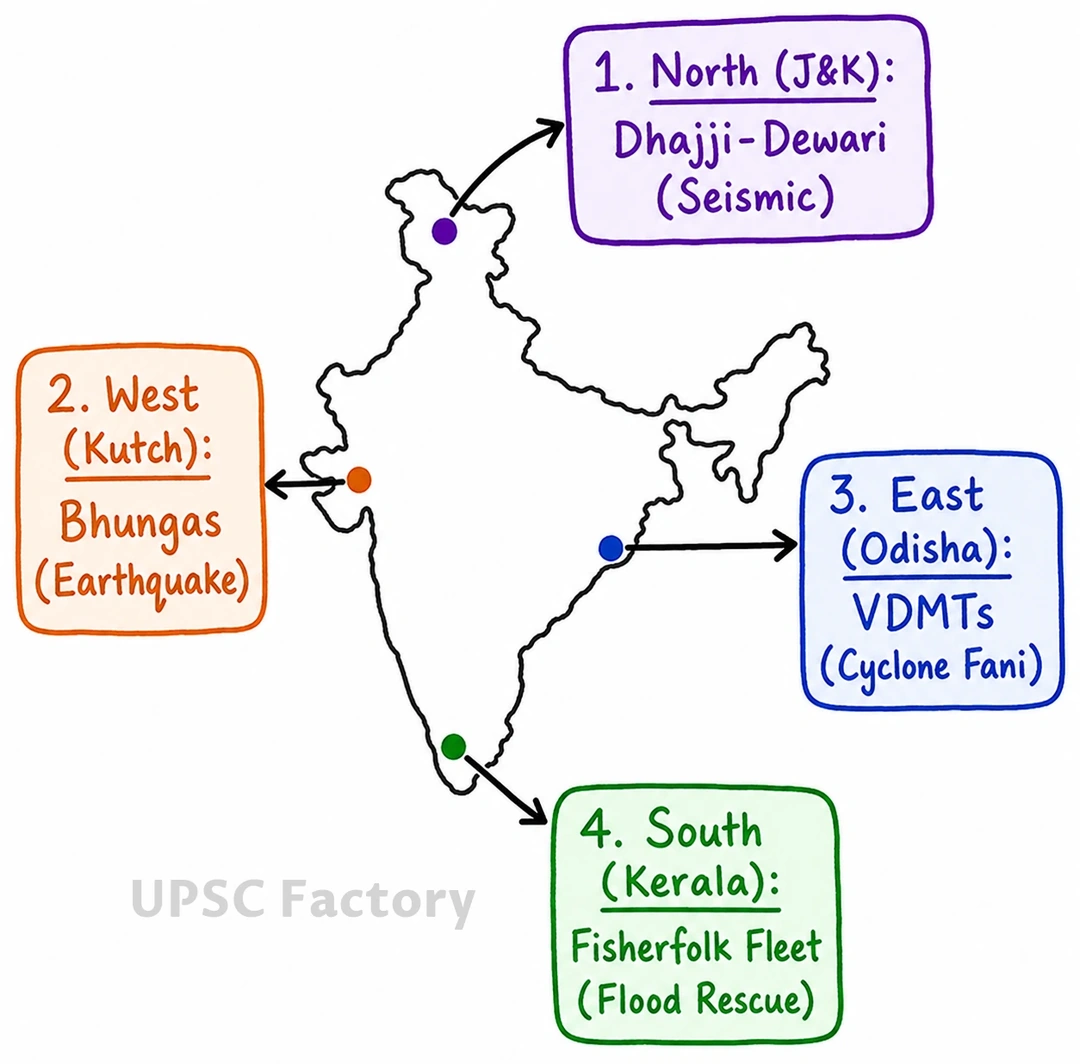
- Golden Hour Rescue: Local volunteers initiate rapid search, rescue, and medical triage before formal agencies arrive (e.g., Kerala fisherfolk rescuing over 65,000 people during the 2018 floods).
- Indigenous Knowledge Integration: Traditional architectural and hydrological practices mitigate structural collapse (e.g., earthquake-resistant Dhajji-Dewari systems in Kashmir; Bhungas in Kutch).
- Zero-Casualty Evacuation: Grassroots task forces ensure last-mile warning dissemination and shelter management (e.g., Odisha’s Village Disaster Management Teams during Cyclone Fani).
- Decentralized Relief Logistics: Community networks manage cooked food, sanitation, and vulnerable care during relief operations (e.g., Gurdwara Langar and civil society networks during COVID-19).
2. Structural & Socio-Economic Challenges
- Social Stratification: Caste, class, and gender hierarchies marginalize vulnerable groups from decision-making and cyclone shelters.
- Top-Down Governance: Bureaucratic centralization often sidelines Panchayati Raj Institutions (PRIs) and Urban Local Bodies (ULBs) in disaster budgeting.
- Capacity and Resource Deficits: Grassroots bodies lack modern life-saving gear, continuous funding, and technical training.
- Disaster Fatigue: Declining community interest and volunteer attrition during long non-disaster intervals reduce preparedness.
3. Measures to Strengthen Community-Based Disaster Management
- Statutory PRI/ULB Empowerment: Devolve tied funds and authority to prepare local disaster plans under the National Disaster Management Plan (NDMP) 2019.
- Scale Community Cadres: Expand institutionalized training and multi-hazard mock drills for citizen responders (e.g., upscaling the Aapda Mitra Scheme).
- Inclusive Micro-Planning: Mandate gender-disaggregated and vulnerable-group inclusion in Village Disaster Management Committees.
- Safety Nets for Volunteers: Provide institutional life/health insurance, protective equipment, and formal recognition for civilian first responders.
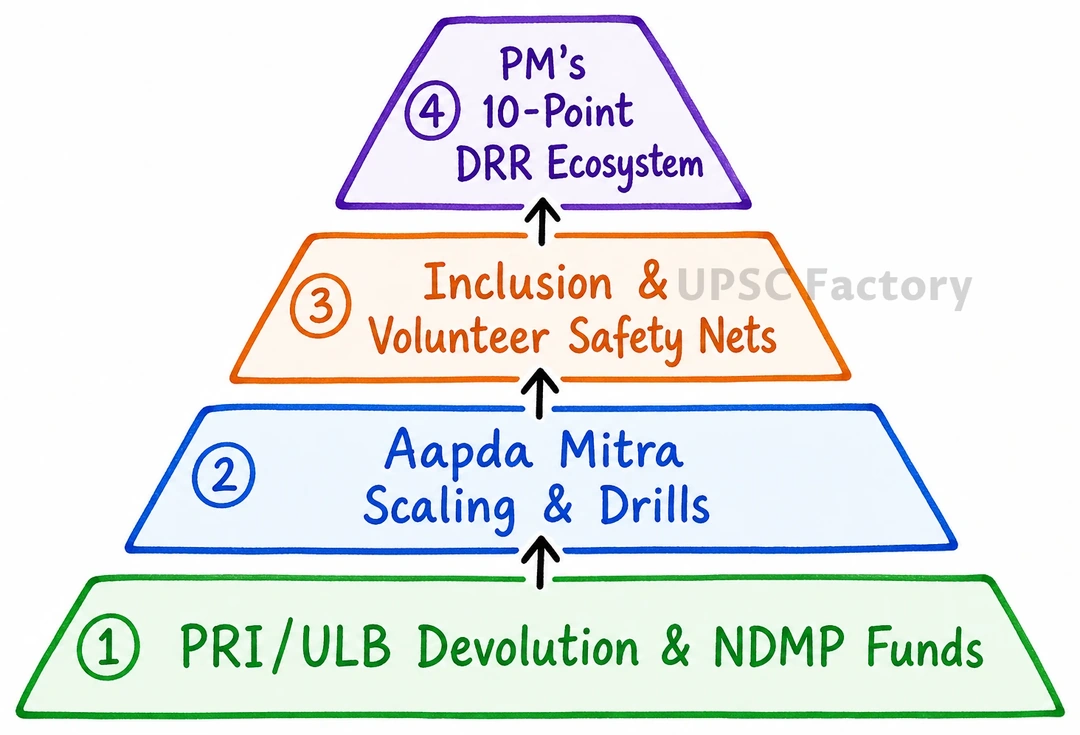
Transitioning from state-centric relief to empowered community stewardship fulfills PM’s 10-Point Agenda on DRR, converting vulnerable populations into self-reliant, resilient ecosystems.