Model Answer:
Coined by Deniz Kandiyoti, the patriarchal bargain describes the pragmatic strategies women deploy within patriarchal constraints to maximize security, influence, or autonomy by conforming to existing gender hierarchies.
Manifestations of Patriarchal Bargain in Conjugal Relations
- Economic Security vs. Subordination: In patrilineal settings, women trade autonomy and unpaid domestic labor for lifelong economic maintenance and social legitimacy, accepting male headship to mitigate financial vulnerability.
- Reproductive Bargaining and Son Preference: Bearing male heirs acts as a vital bargaining chip; a young wife secures conjugal leverage, elevated household status, and insurance against abandonment by fulfilling patriarchal kinship demands.
- Intergenerational Power Cycle: Subordinate young brides endure control by mothers-in-law, actively buying into the system with the calculated expectation of wielding reciprocal domestic power over future daughters-in-law.
- Modesty as Protective Capital: Strict adherence to norms of chastity, wifely deference, or seclusion (purdah) is leveraged as moral capital to prevent domestic abuse and preserve conjugal reputation.
- Renunciation of Property Claims: Women often surrender formal natal inheritance rights to brothers to secure an emergency fallback kinship network in case of marital breakdown.
- Compensatory Second Shift: Dual-earner wives often voluntarily undertake disproportionate care work to pacify masculine anxieties, trading extra domestic labor to maintain marital equilibrium.
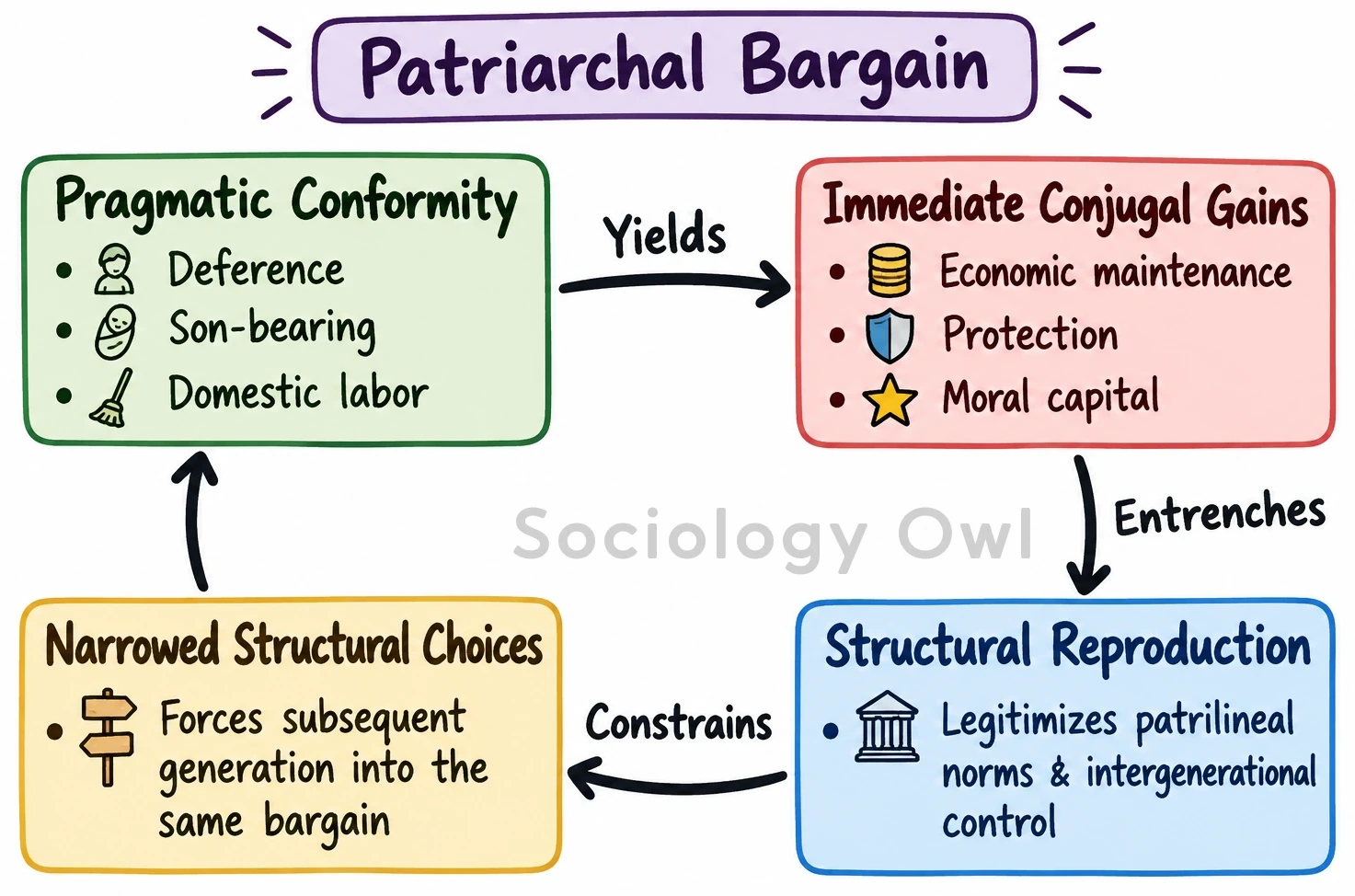
Patriarchal bargains in marriage maximize short-term individual security while structurally entrenching institutionalized gender inequality across generations.