Model Answer:
The sociological understanding of Indian society is characterized by distinct paradigms: G. S. Ghurye pioneered an Indological-historical lens emphasizing civilizational continuity, while A. R. Desai advanced a historical-materialist framework grounded in dialectics and political economy.
Divergent Perspectives: Indological vs. Historical Materialist
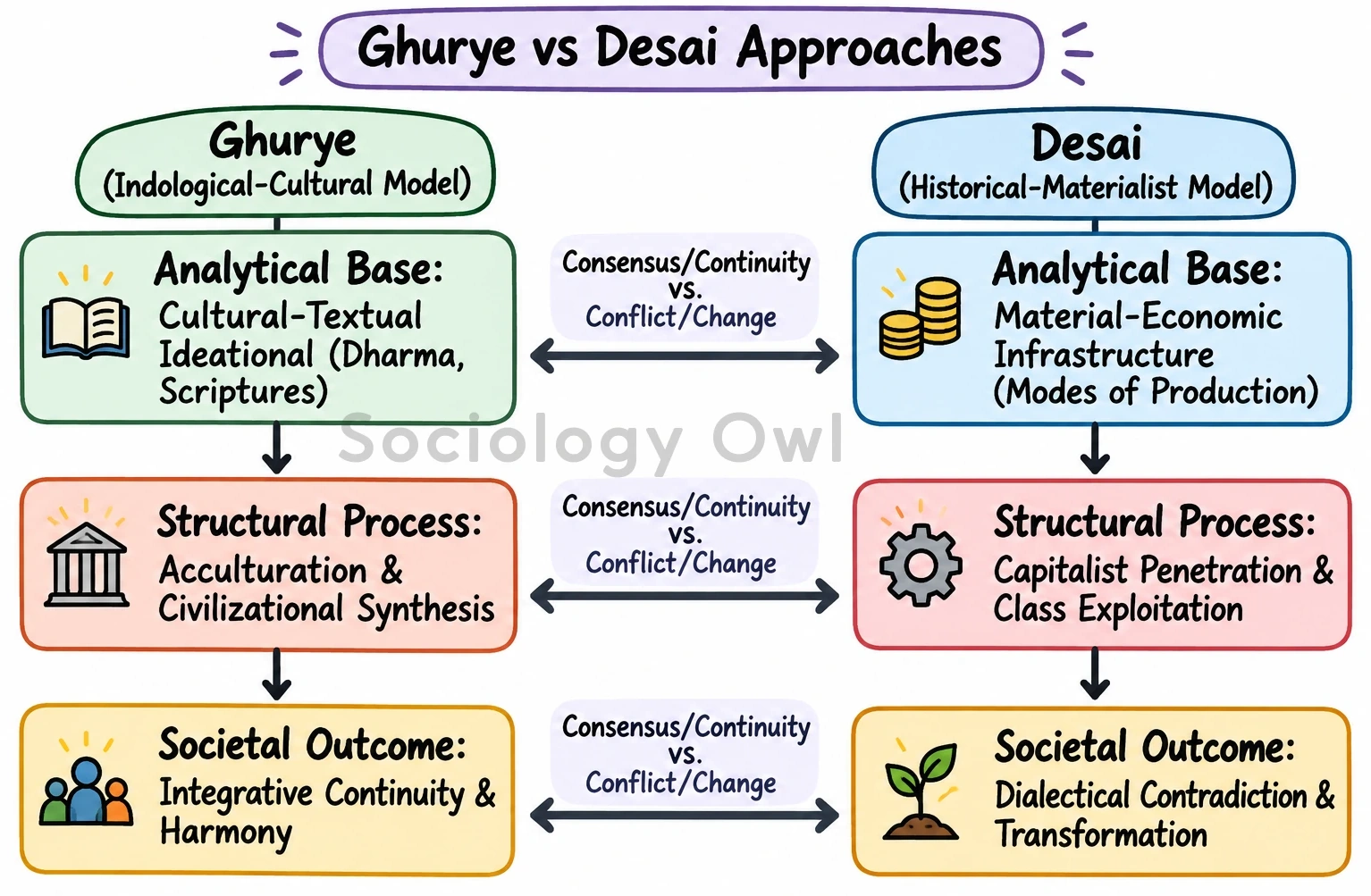
- Methodological Orientation: Ghurye relied on textual Indology, scriptures, and cultural diffusion to analyze tradition, whereas Desai utilized Marxist dialectics, focusing on material infrastructure and changing modes of production.
- Interpretation of Caste: Ghurye, in Caste and Race in India, viewed caste as an integrative cultural institution shaped by ritual values; Desai decoded caste as a dynamic tool of class exploitation and agrarian dominance.
- The Tribal Question: Ghurye categorized tribes as “backward Hindus” requiring cultural assimilation, while Desai viewed tribal pauperization as the direct outcome of colonial and capitalist market penetration.
- Genesis of Nationalism: Ghurye traced nationalism to ancient civilizational unity and shared ethos; Desai, in Social Background of Indian Nationalism, conceptualized it as a material product of capitalist transformations and class interests.
- Social Conflict and State: Ghurye highlighted cultural synthesis and gradual social adaptation, whereas Desai critiqued the post-colonial capitalist state, asserting that genuine egalitarian change demands class struggle.
While Ghurye captures India’s civilizational continuity, Desai demystifies its underlying material inequalities, offering mutually enriching sociological insights.