Model Answer:
India has achieved below-replacement fertility (TFR 2.0, NFHS-5), transitioning its demographic profile from a classic expansive triangle to an asymmetric, bell-shaped pyramid marked by a bulging middle and a contracting base.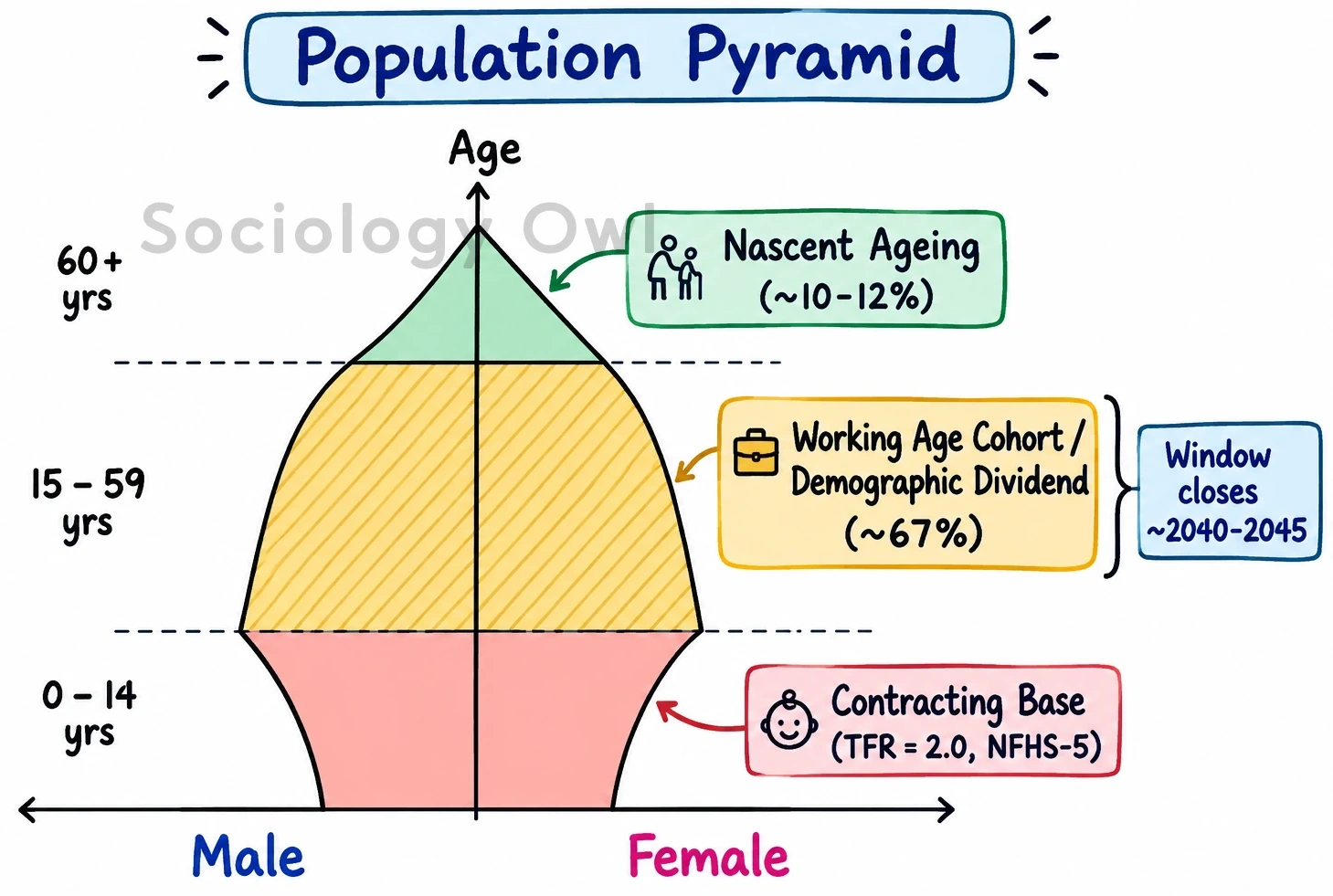
Structural Realities of the Current Pyramid
- Bulging Working-Age Cohort: Over 65% of the population is in the 15–59 age bracket, offering a limited window of the demographic dividend.
- Narrowing Base: Rapid fertility decline across socio-religious groups reflects rising female literacy and contraceptive prevalence.
- Nascent Apex Expansion: A growing population aged 60+ highlights an impending transition toward structural ageing by 2040.
- Regional Asymmetry: Demographic divergence exists between early-transition southern states (contracted base, rapid ageing) and late-transition northern states (youthful, wider base).
Policy Measures for Sustainable Demographic Dynamics
- Human Capital & Employment: Shift focus from mere credentialism to labor-intensive industrialization and vocational skilling, preventing the demographic dividend from decaying into underemployment.
- Managing Interstate Demographic Arbitrage: Establish formal inter-state migration councils to safely channel surplus labor from high-fertility northern states into labor-deficient, ageing southern economies.
- Gender Empowerment & Care Economy: Expand public crèches, safe transport, and parental leave to arrest declining Female Labor Force Participation (FLFPR) and prevent a “motherhood penalty.”
- Geriatric Social Protection: Build non-contributory universal pensions and community-based geriatric care, particularly addressing the vulnerability of widowed, dependent older women (feminization of ageing).
- Rejecting Coercive Demographic Norms: Discard punitive two-child disqualifications in local governance; evidence confirms that female secondary education and primary healthcare achieve sustainable population stabilization naturally.
- Ecologically Balanced Urbanization: Develop secondary and Tier-2 urban growth centers to decentralize population concentration away from ecologically stressed megacities.
Transforming demographic transition into sustainability requires rights-based human capital investments, gender parity, and proactive regional migration governance.