Model Answer:
Collective action, social movements, and revolutions form an escalating, nested continuum of agency, varying in duration, organizational coherence, and structural intent to alter existing power dynamics.
Nexus of Contention in Driving Socio-Political Change
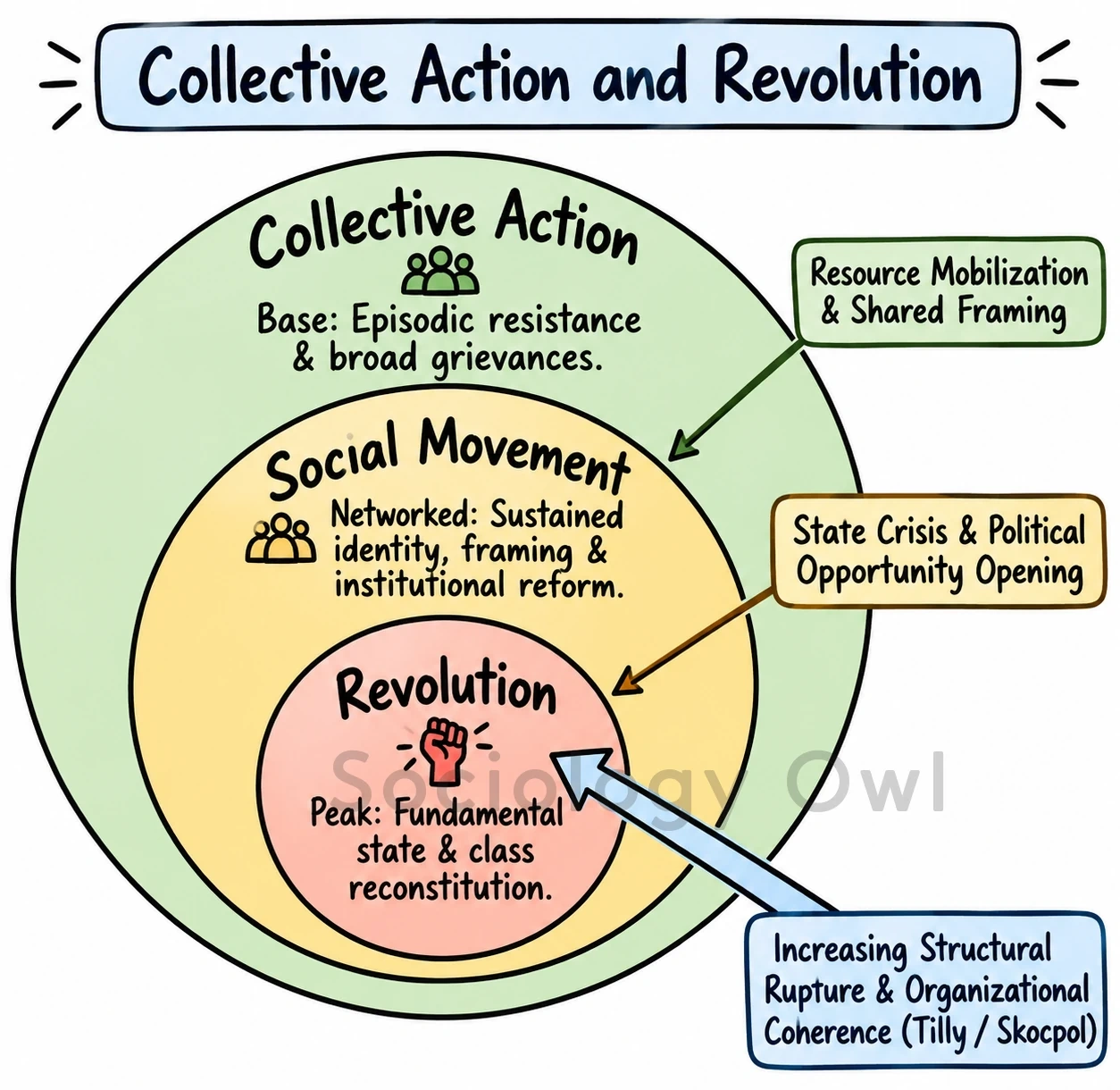
- Nested Continuum: Charles Tilly conceptualizes collective action as the foundational genus; when sustained by collective identity and strategy, it crystallizes into a social movement, which may climax into a revolution.
- Scale of Structural Rupture: Collective action triggers episodic resistance, social movements drive incremental legislative reforms, while revolutions execute rapid, fundamental transformations of state and class structures (Theda Skocpol).
- Ideological Framing and Escalation: Sporadic collective grievances transform into sustained movements via shared cognitive framing; when counter-hegemony successfully challenges state legitimacy (Antonio Gramsci), contention escalates toward revolutionary confrontation.
- Political Opportunity Structures: As Doug McAdam argues, collective protests need resources to institutionalize into movements, but only severe political vulnerability and state crises allow movements to cross the threshold into revolution.
- Institutional Mediation: Social movements act as a mediating bridge; when institutional channels absorb movement demands, change is reformist, but institutional rigidity often radicalizes collective mobilization into revolutionary overthrow.
- Cumulative Outcomes: Collective actions alter immediate public consciousness, social movements secure institutionalized civil-political rights, and revolutions comprehensively reconstitute the societal mode of production and governance.
Together, they form an escalating continuum through which episodic popular contention matures into sustained movements and structural revolutionary transformations.