Model Answer:
India’s demographic transition, marked by an expanding geriatric population alongside rapid urbanization, has strained traditional informal support systems, turning elder care from a customary familial duty into a precarious socio-structural challenge.
Structural and Cultural Challenges in Elder Care
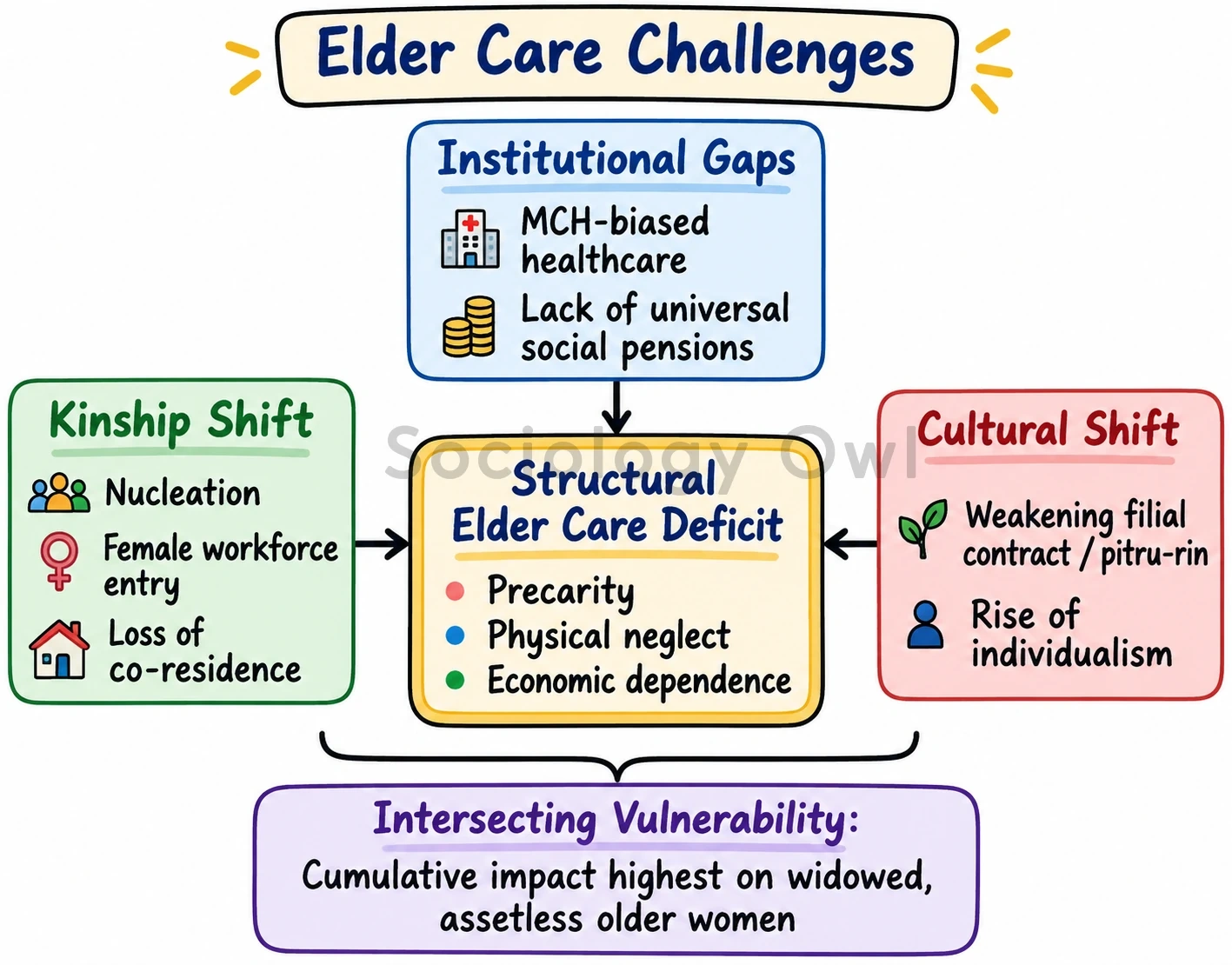
- Erosion of Co-residence: Nucleation of households and spatial dispersion due to migration, as noted by A.M. Shah, leave the aged in “empty nest” settings, isolated from proximate familial care.
- Feminization of Ageing: Older women experience cumulative marginality; higher rates of widowhood, lack of asset ownership, and lifelong economic dependency render them severely care-deprived.
- Economic Insecurity: Predominance of past employment in the informal sector leaves over 80% of the elderly without institutional pensions, compelling structural dependence on reluctant kin.
- Strained Care Economy: As middle-class women increasingly enter the formal workforce, the unpaid caregiving pool shrinks, creating a deficit that unregulated, expensive market substitutes fail to bridge.
- Geriatric Healthcare Deficits: Public health systems remain geared toward maternal and child health, leaving specialized palliative care, chronic ailment management, and mental health support largely inaccessible and privatized.
- Shifting Intergenerational Contracts: Filial obligations grounded in traditional notions of pitru-rin are increasingly replaced by individualistic values, manifesting in emotional alienation, loss of autonomy, and subtle domestic abuse.
Addressing elder care requires shifting from normative filial charity toward a state-guaranteed, community-driven rights framework ensuring dignified ageing.