Model Answer:
Colonial land settlements, high revenue assessments, and the commodification of agriculture disrupted traditional customary ties, restructuring Indian rural society into antagonistic agrarian classes and generating diverse expressions of peasant resistance.
Differentiating Protests and Social Movements
Sociologically, collective actions against agrarian distress manifest along a continuum from localized resistance to structured transformations:
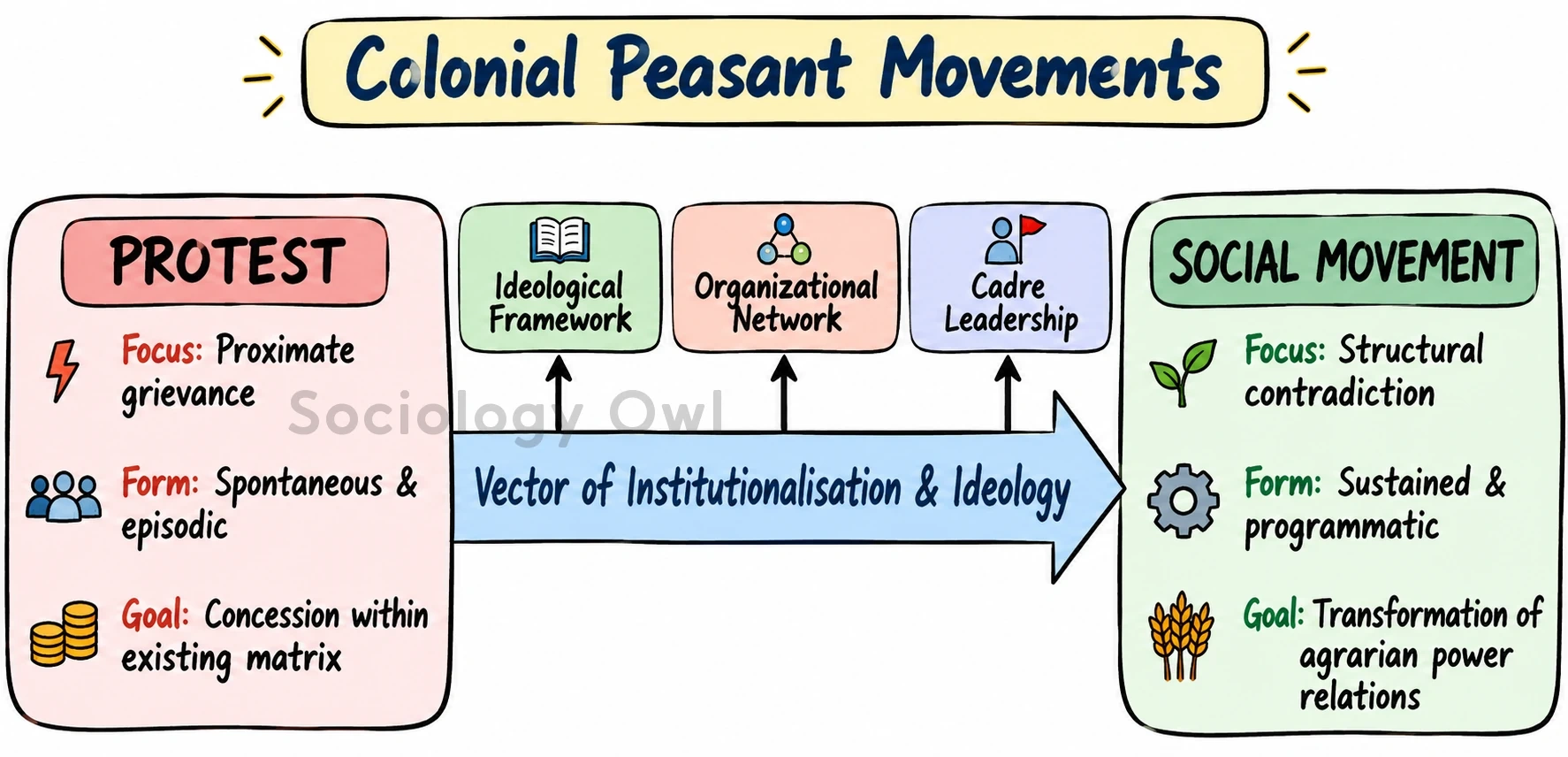
- Temporal Orientation: Protests are episodic, immediate, and reactive bursts of dissent; movements exhibit sustained temporal continuity and protracted engagement.
- Organizational Apparatus: Protests often rely on spontaneous collective effervescence without institutional continuity; movements require enduring organizational networks, resource mobilization, and defined operational roles.
- Ideological Depth: Protests target proximate, specific grievances (e.g., abrupt rent hikes); movements are underpinned by articulated ideologies seeking broader systemic or structural shifts.
- Leadership and Strategy: Protests operate via situational, diffuse actors; movements cultivate formal leadership that formulates long-term tactical repertoires and negotiations.
- Structural Impact: While protests typically negotiate concessions within the existing institutional matrix, movements strive to redefine power equations and property relations.
Colonial Peasant Movements and Agrarian Structural Change
Colonial mobilisations, as Kathleen Gough notes, were not merely restorative, but structurally transformed agrarian relations across India:
- Indigo Revolt (1859–60): Mobilized ryots against coercive European planter monopolies in Bengal. It forged cross-caste tenant solidarity, fractured the coercive unfree-labour nexus, and forced legal state regulation of agrarian contracts.
- Deccan Riots (1875): Kunbi peasants systematically targeted migrant moneylenders (sowkars), resisting predatory mortgage-debt mechanisms. As D.N. Dhanagare highlights, this checked the alienation of peasant lands and compelled institutional intervention via the Deccan Agriculturists’ Relief Act (1879).
- Moplah Uprisings (1921): Reflected an explosive intersection of class and community, where Muslim sharecroppers (Verumpattamdars) challenged high-caste Hindu landlords (Jenmis) and British revenue courts, fundamentally disrupting the Malabar feudal balance.
- Kisan Sabha Mobilisations (1930s): Spearheaded by Swami Sahajanand Saraswati, this institutionalised autonomous peasant class consciousness. It effectively severed peasant radicalism from elite-led nationalist agendas, directly demanding the abolition of intermediary tenures (Zamindari).
- Tebhaga Movement (1946–47): Led by sharecroppers (bargadars) demanding a two-thirds crop share, it challenged the entrenched rural dominance of the intermediate landed class (jotedars), laying the sociological groundwork for post-colonial tenancy protections like Operation Barga.
- Santhal Insurrection (1855): Analysed by Ranajit Guha as autonomous subaltern insurgency, this tribal-peasant uprising directly targeted the exploitative diku (outsider) nexus, forcing the colonial state to legally recognize non-alienable tribal land tenures through the Santhal Parganas Tenancy Act.
Colonial peasant movements transformed passive agrarian subjects into conscious political agents, irrevocably fracturing feudal hegemony and shaping independent India’s land reform trajectory.