Model Answer:
Social reforms in India fundamentally transitioned marginalized groups from ritual subjugation to egalitarian citizenship. The most enduring among these was Dr. B.R. Ambedkar’s rights-based social reform movement targeting the Depressed Classes (Dalits), crystallised historically through the Mahad Satyagraha (1927).
Transformative Impact of Ambedkarite Reforms on Dalits: The Mahad Legacy
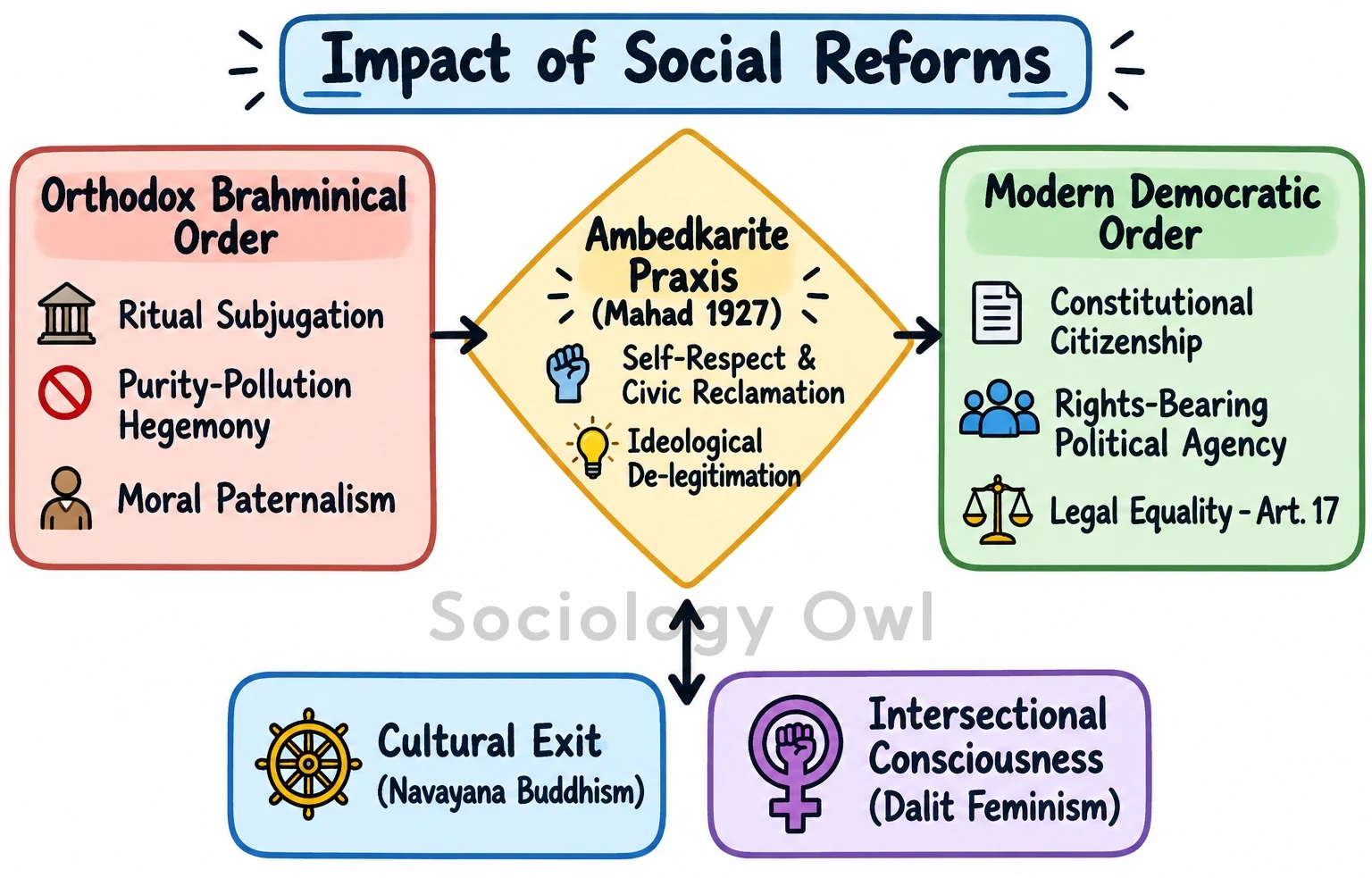
- Reclaiming Civic Space: By asserting the right to draw water from the public Chawdar Tank, the movement shattered the orthodox spatial segregation governed by the purity-pollution binary (Louis Dumont).
- Agency over Paternalism: It decisively supplanted Gandhian moral benevolence (Harijan upliftment) with self-respect, self-help, and an autonomous, rights-bearing political agency.
- Ideological De-legitimation: The symbolic burning of the Manusmriti struck at the metaphysical roots of caste hierarchy, attacking the ideological legitimacy of graded inequality.
- Constitutional Institutionalisation: Agitational reform transformed directly into formal governance, laying the groundwork for Article 17 (abolition of untouchability) and institutionalized compensatory discrimination.
- Cultural Counter-Hegemony: It laid the trajectory for the 1956 conversion to Navayana Buddhism, providing Dalits with an institutional exit from the Brahminical symbolic order.
- Emergence of Dalit Feminism: It galvanized lower-caste women to discard caste-coded markers of servility and embrace education, cultivating an intersectional consciousness (Sharmila Rege).
Ambedkarite reform permanently transformed Dalits from passive, ritually excluded subjects into an assertive, self-determining constitutional collective.