Model Answer:
Influenced by A.R. Radcliffe-Brown, M.N. Srinivas pioneered the field-view tradition in India, analyzing the village not as a static, isolated relic, but as an integrated, functioning social system maintained in dynamic equilibrium.
Structural-Functional Dimensions of Srinivas’s Village Study
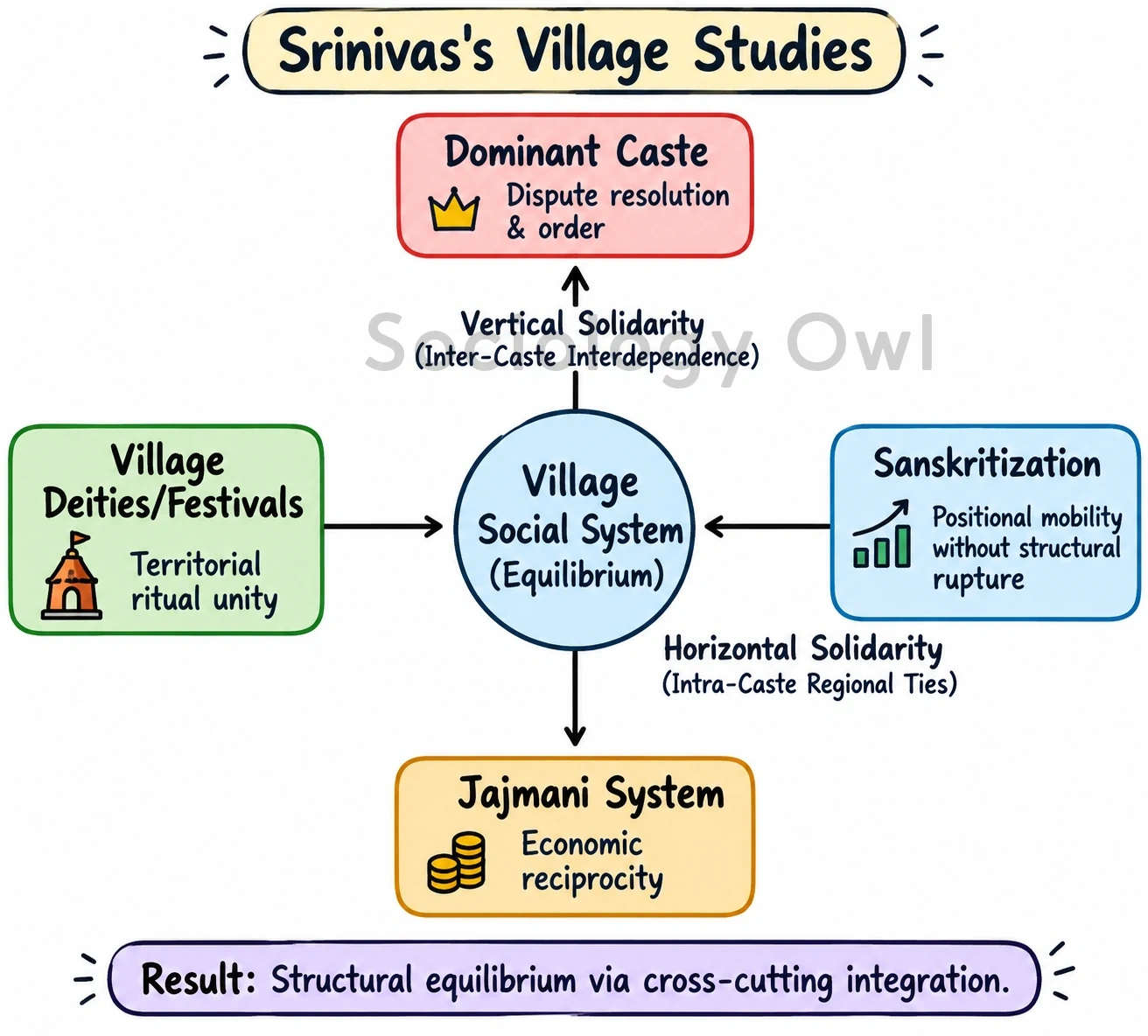
- Vertical Solidarity vs. Horizontal Ties: In The Remembered Village, he demonstrated that despite ritual hierarchy, distinct castes in Rampur were integrated through village-level vertical unity, cross-cutting the divisive external horizontal solidarity of endogamous caste networks.
- Economic and Occupational Interdependence: He framed the Jajmani system as a network of reciprocal, hereditary patron-client obligations, highlighting its role in maintaining socio-economic stability and systemic integration.
- Maintenance of Order via Dominant Caste: Conceptualized the dominant caste (e.g., Okkaligas) as a structural mechanism for informal dispute resolution, local administration, and preserving social equilibrium.
- Positional Mobility without Structural Rupture: Formulated Sanskritization as a functional adjustment mechanism that facilitates positional change for lower castes while preserving the foundational structure of the caste system.
- Ritual Reinforcement of Village Cohesion: Documented how collective rituals, village festivals, and worship of local deities acted as collective mechanisms that reinforced social cohesion and territorial boundaries.
- Functionalist Blindspots: Critics like Louis Dumont and Marxist scholars observed that this emphasis on unity and functional consensus tended to understate asymmetric power, coercion, and structural caste violence.
Srinivas effectively established the village as an interdependent, living social structure, though his functionalist lens somewhat understated inherent caste conflicts.