Model Answer:
Dependency theories view underdevelopment not as an internal deficit, but as a historical condition caused by the unequal integration of “peripheral” societies into a capitalist world economy. Pioneered by A.G. Frank (Capitalism and Underdevelopment in Latin America), they shifted sociological focus to relational global power structures.
Manifestations of Dependency Today
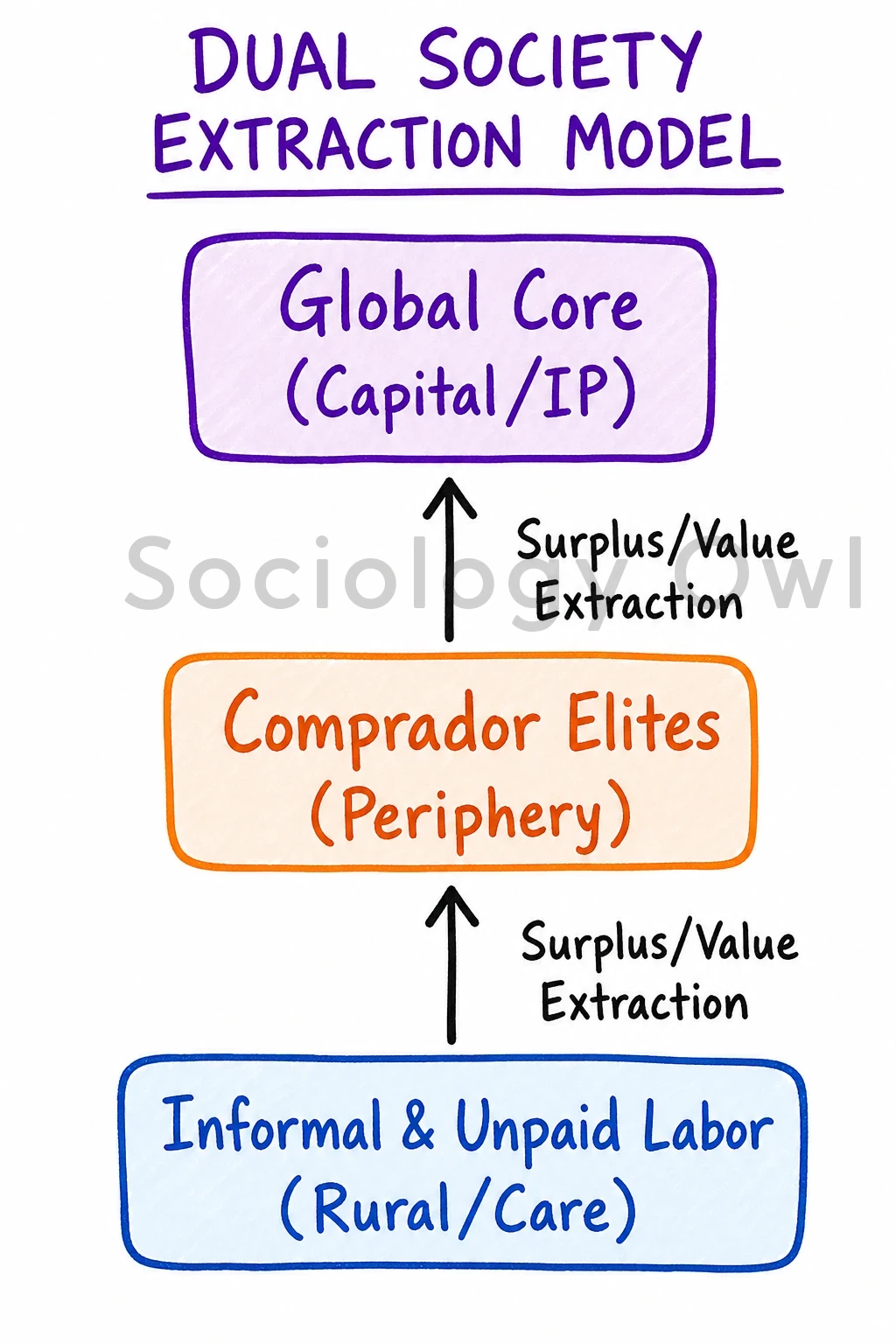
- Surplus Extraction: Samir Amin highlighted how “Unequal Exchange” and “imperial rent” drain peripheral wealth. Today, core nations capture value via Intellectual Property rights and financialization.
- Feminist Dependency: Maria Mies argues global capitalism extracts surplus from the unpaid reproductive labor of women in the Global South via the “housewifization” of labor.
- Global Care Chains: Arlie Russell Hochschild notes how domestic labor continually flows from periphery to core, creating severe “care deficits” in developing nations.
- Internal Stratification: Dependency creates a “dual society” where highly modernized comprador elites thrive alongside an impoverished, informal rural sector.
Sociological Limitations and Critiques
- Over-structural Determinism: Dependency ignores local agency. Amartya Sen’s Capability Approach emphasizes that true development requires building internal human capacities, not just escaping capitalist structures.
- Industrialization via Integration: Marxist critic Bill Warren (Imperialism: Pioneer of Capitalism) argues global integration actively fosters industrialization, evidenced by the East Asian tigers.
- Dynamic Mobility: Immanuel Wallerstein’s World-Systems Theory addresses rigid binaries by introducing a dynamic semi-periphery, allowing for upward mobility.
- Vaccine Nationalism: The COVID-19 “vaccine apartheid” exemplified dependency; core countries hoarded IP and manufacturing, leaving the periphery dependent on charity.
- Neo-Dependency: China’s Belt and Road Initiative demonstrates that the core-periphery model persists; the “Core” has simply expanded through new “debt-trap diplomacy.”
- Data Colonialism: Digital infrastructures systematically concentrate platform power in the Global North.
Conclusion
While orthodox dependency theories seem deterministic, their analytical spirit survives. In a world grappling with climate injustice, neo-colonial debt, and digital monopolies, dependency remains an evolving reality. Navigating it requires intersectional analysis and exploring radical alternatives like Samir Amin’s concept of “Delinking.”