Model Answer:
Guy Standing defines the “Feminization of Labour” dually: the quantitative rise of women in the workforce and the qualitative shift where work becomes “feminized”—precarious, informal, and low-wage.
Capitalist Exploitation and Global Supply Chains
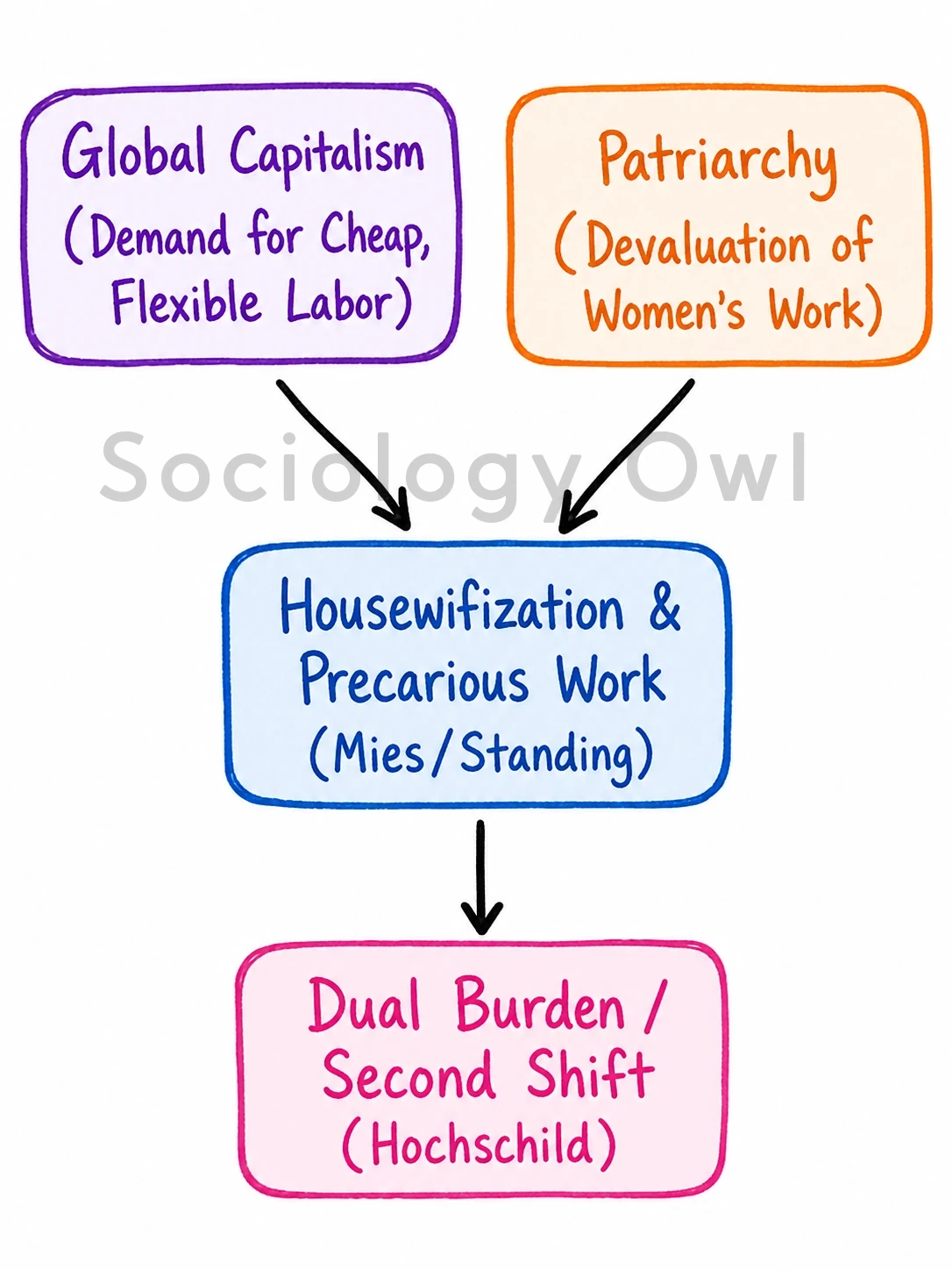
- Diane Elson: MNCs exploit the “Nimble Fingers Syndrome”, utilizing patriarchal stereotypes of women’s docility for repetitive manufacturing.
- Maria Mies: This causes the “Housewifization of Labour”, treating women’s work in developing nations as cheap, expendable extensions of unpaid domestic duties.
Shifting Patriarchy and Dual Burden
- Sylvia Walby: Employment often fails to end subjugation; it merely shifts oppression from private to “Public Patriarchy” (wage gaps, occupational segregation).
- Arlie Hochschild: Paid work creates a “Second Shift”, exacerbating women’s unpaid dual burden.
In Bangladesh’s garment sweatshops or Filipino domestic worker migrations creating a global “Care Deficit”, the precarity of feminized work under global capitalism is starkly evident.
Conclusion
As Naila Kabeer notes, true empowerment requires structural transformations in property rights, state welfare, and patriarchal mindsets, rather than just precarious labor force participation.