Model Answer:
Civil Society Organizations (CSOs) act as the crucial “third sector” of governance. While primarily non-State developmental partners, friction sometimes generates an “anti-State” perception.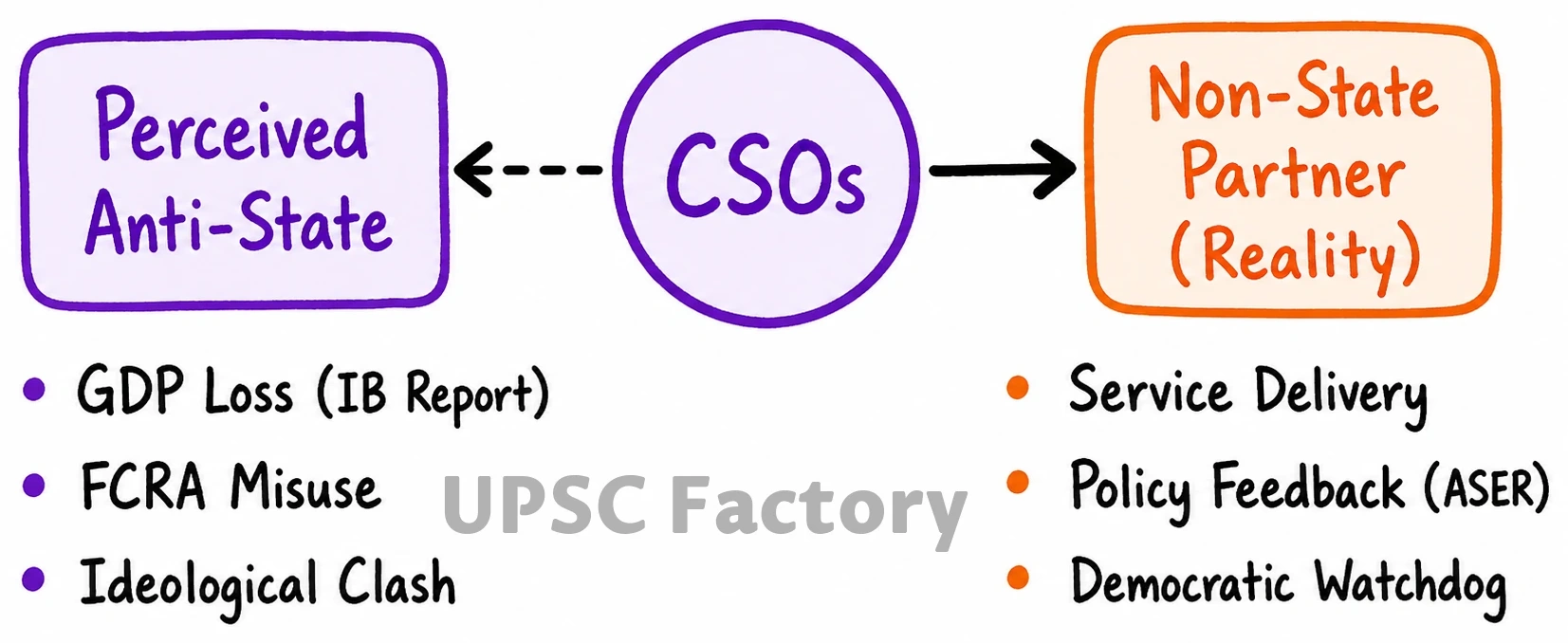
1. Factors Driving the “Anti-State” Perception
- Economic Stalling: Activism delaying critical infrastructure; a 2014 IB Report claimed such protests cause a 2-3% GDP loss.
- Foreign Interference: Alleged misuse of foreign funds for vested political interests, prompting the stringent FCRA Amendments 2020.
- Ideological Friction: Direct resistance to State-led development paradigms (e.g., Greenpeace, Narmada Bachao Andolan).
- Reputational Critiques: Critical human rights advocacy occasionally embarrassing the State internationally (e.g., Amnesty International).
2. CSOs as True “Non-State” Developmental Partners
- Service Delivery: Filling vast State welfare gaps through grassroots action (e.g., Akshaya Patra managing Mid-Day Meals).
- Policy Feedback: Providing empirical data to improve developmental outcomes (e.g., Pratham’s ASER reports guiding education).
- Democratic Watchdogs: Expanding citizen rights and systemic transparency (e.g., MKSS’s foundational role in the RTI Act).
- Last-Mile Connectivity: Acting as the State’s extended arm during emergencies (e.g., vital NGO relief during COVID-19).
CSOs are not inherently anti-State but act as vital democratic watchdogs. Fostering a symbiotic partnership under the National Policy on Voluntary Sector (2007) is essential for inclusive governance.