Model Answer:
In the 19th century, India transformed from the world’s leading exporter of manufactured goods into a mere raw material appendage, a de-industrialization process fundamentally triggered by England’s Industrial Revolution.
1. Role of the English Industrial Revolution
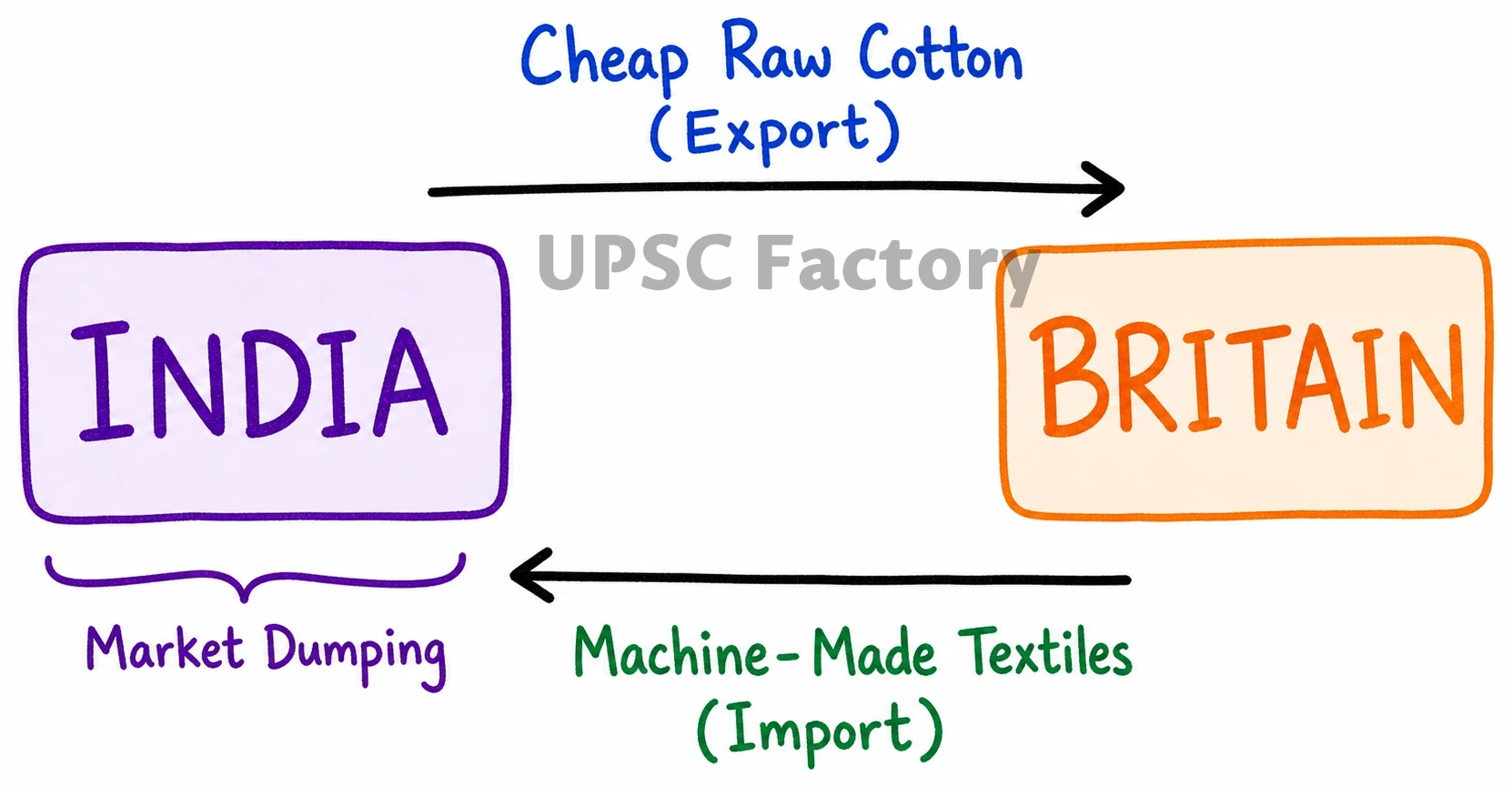
- Mass Production Advantage: Cheap, machine-made British textiles severely outcompeted expensive, labor-intensive Indian hand-woven goods (ruin of Dhaka muslin).
- Raw Material Siphoning: English mills demanded massive raw cotton exports, spiking domestic prices and starving Indian weavers of affordable inputs.
- Market Flooding: The Charter Act of 1813 ended the EIC monopoly, converting India into a dumping ground for British industrial surpluses.
- Technological Obsolescence: Traditional Indian artisans lacked the capital and institutional backing to compete with English steam-powered looms.
2. Other Critical Factors (Colonial Policies & Structural Changes)
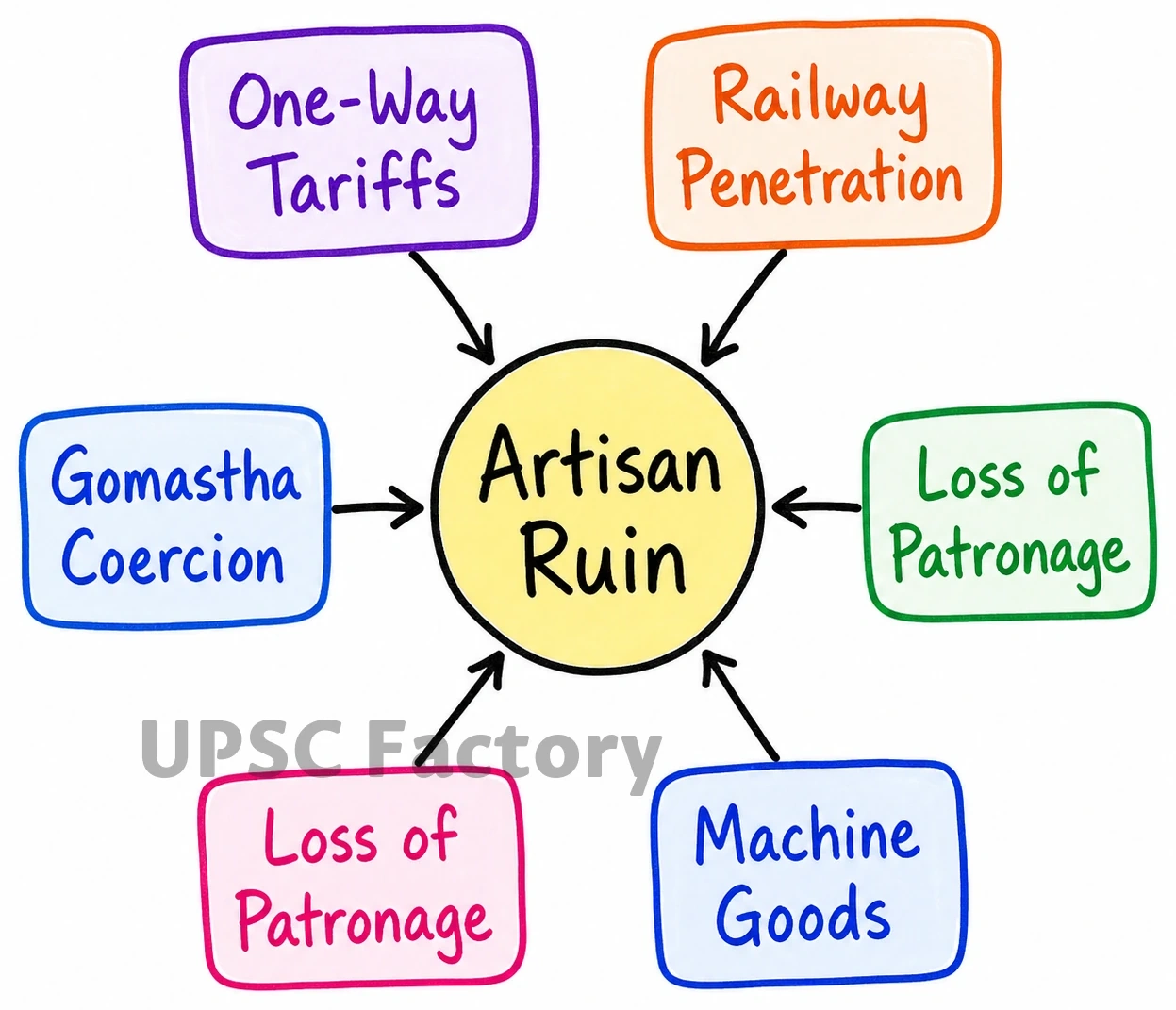
- One-Way Free Trade: Britain imposed crippling tariffs (often exceeding 70%) on Indian textiles while mandating duty-free entry for British imports.
- Loss of Royal Patronage: The annexation of princely states and indigenous courts destroyed the primary domestic market for luxury handicrafts (e.g., Awadh).
- Transport Revolution: Railways shattered rural economic isolation, aggressively penetrating hinterland markets aided by heavily discriminatory freight rates against Indian goods.
- Coercive EIC Practices: Company agents (Gomasthas) used physical coercion and debt traps to force weavers to sell at dictated, unremunerative prices.
- Shifting Consumer Tastes: The newly emerged, Western-educated Indian middle-class culturally preferred imported British manufactured goods over traditional crafts.
- Lack of Industrial Transition: Unlike Europe, ruined Indian artisans found no alternative modern factory jobs, forcing them into overburdened agriculture (forced ruralization).
While the Industrial Revolution provided the initial economic shock, it was deliberate, discriminatory colonial statecraft—as highlighted in Dadabhai Naoroji’s Poverty and Un-British Rule—that systematically institutionalized the ruin of Indian handicrafts.