Model Answer:
The Gangetic valley, India’s core breadbasket, faces critical groundwater depletion, with NASA’s GRACE data and CGWB classifying numerous Northwestern blocks as “over-exploited.”
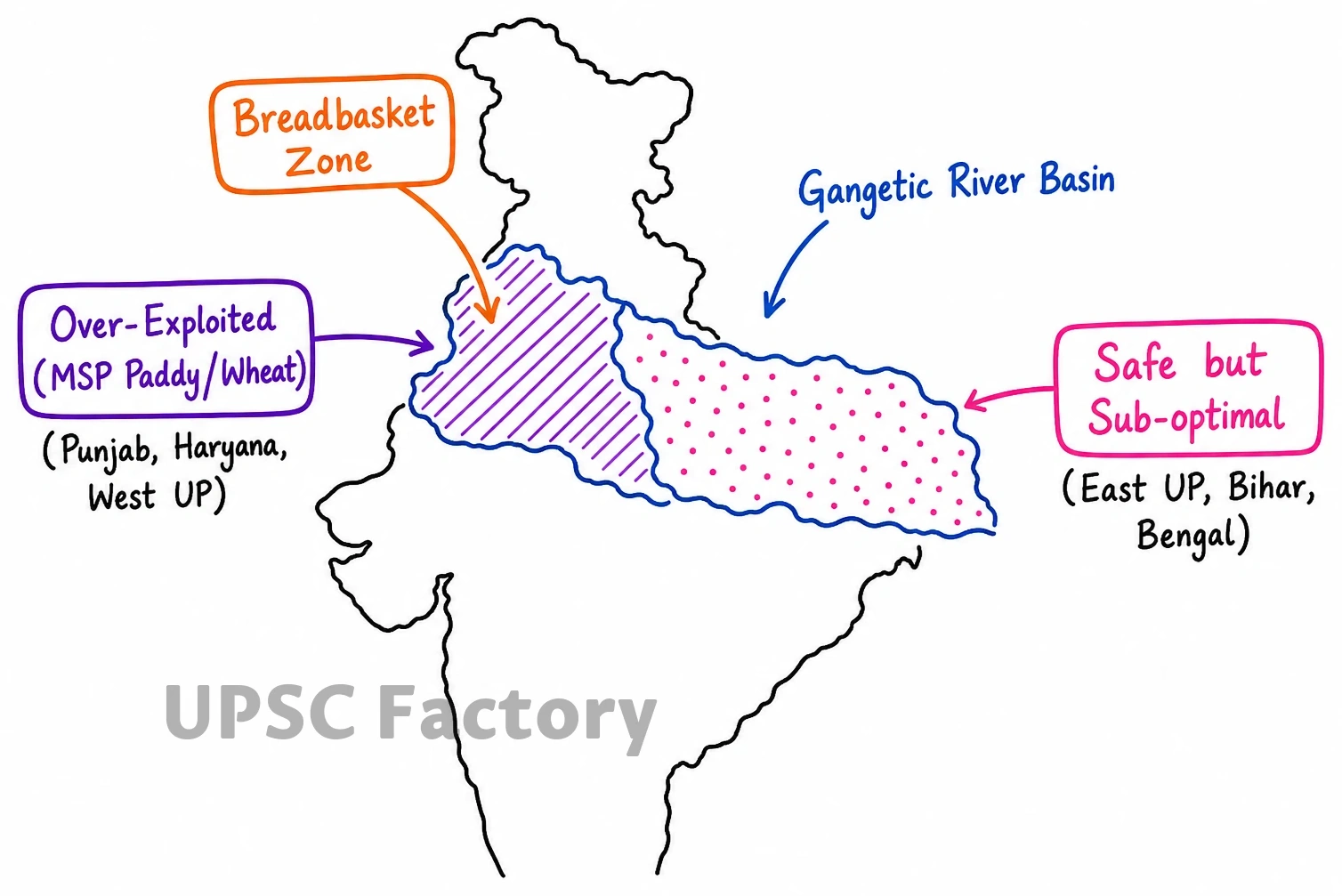
1. Drivers of Groundwater Decline
- Distorted Policies: MSP-backed procurement heavily incentivizes water-guzzling crops in semi-arid zones (paddy/wheat in Punjab/Haryana).
- Resource Mispricing: Free or highly subsidized agricultural electricity drives relentless, unregulated pumping (virtual water export).
- Recharge Deficits: Erratic monsoons, rampant deforestation, and high surface runoff drastically reduce natural aquifer replenishment.
- Inefficient Agronomy: Widespread traditional flood irrigation causes massive groundwater wastage (sub-optimal ~30% water-use efficiency).
2. Cascading Impacts on India’s Food Security
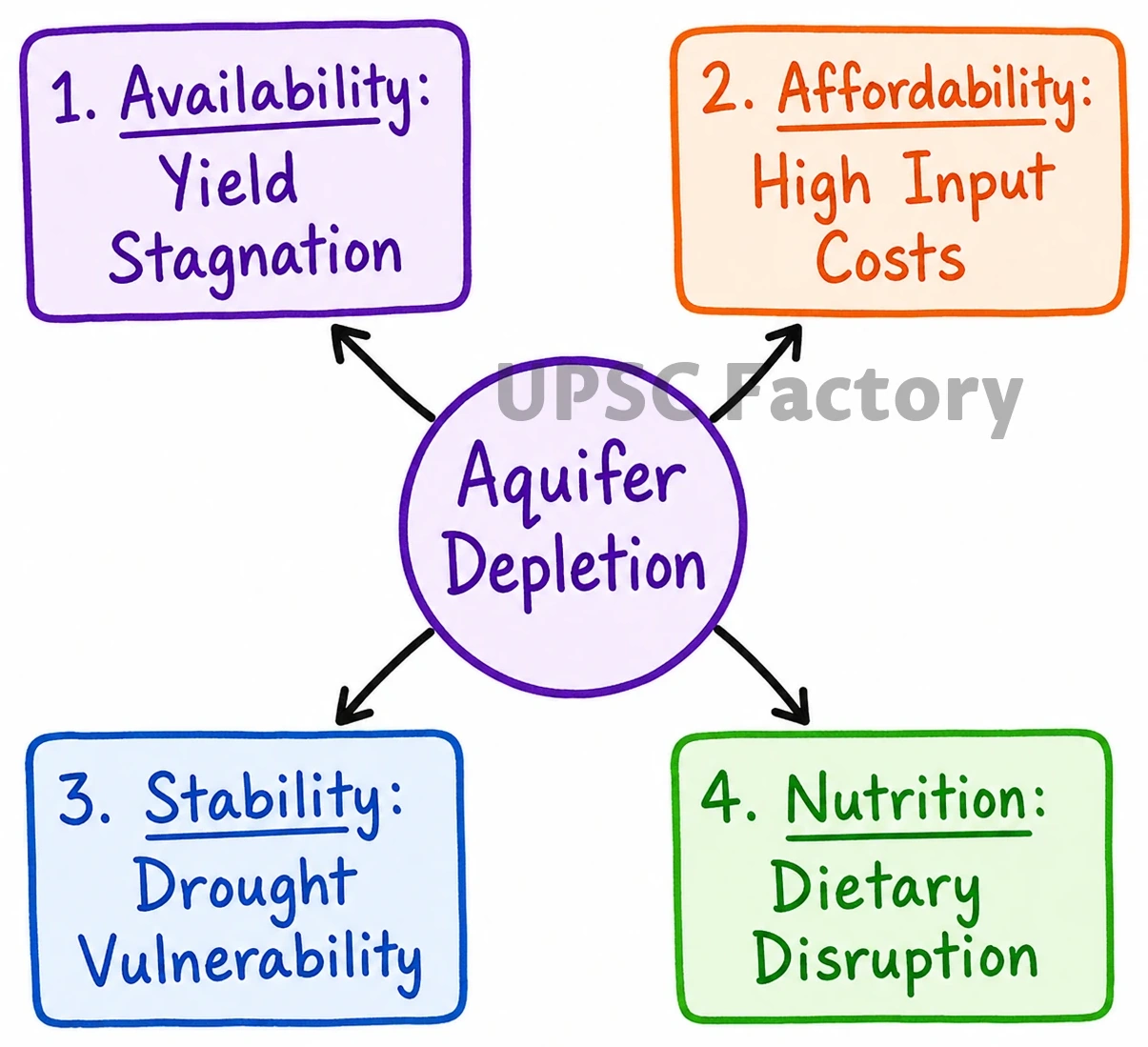
- Threats to Food Availability:
- Yield Stagnation: Chronic moisture stress and associated soil salinity reduce cereal outputs (Punjab/Haryana yield plateauing).
- Cropping Intensity Drop: Drying deep aquifers force reductions in the Rabi and Zaid seasons, shrinking gross production.
- Impacts on Affordability:
- Input Cost Escalation: Deepening borewells and powerful pumps increase farming costs, directly driving retail food inflation.
- Livelihood Shocks: Severe water scarcity triggers farmer distress and migration, destabilizing local agricultural supply chains.
- Risks to Stability:
- Drought Vulnerability: Depleted aquifers eliminate India’s primary physiological buffer against increasingly frequent monsoon failures.
- PDS Disruption: Over-reliance on Gangetic procurement threatens the structural stability of the National Food Security Act (NFSA).
- Nutritional Insecurity:
- Transition Chaos: Unplanned, forced agricultural shifts due to sudden water exhaustion disrupt existing dietary diversity and macro-nutrient availability.
Securing India’s food future requires transitioning from ‘water-intensive’ to ‘water-efficient’ agriculture through proactive crop diversification (National Millet Mission) and participatory, community-led aquifer management (Atal Bhujal Yojana).