Model Answer:
The Maldives, strategically situated in the Indian Ocean Region (IOR), is the linchpin of India’s “Neighbourhood First” policy and SAGAR doctrine.
1. Geopolitical and Geostrategic Importance (Trade & Energy Flows)
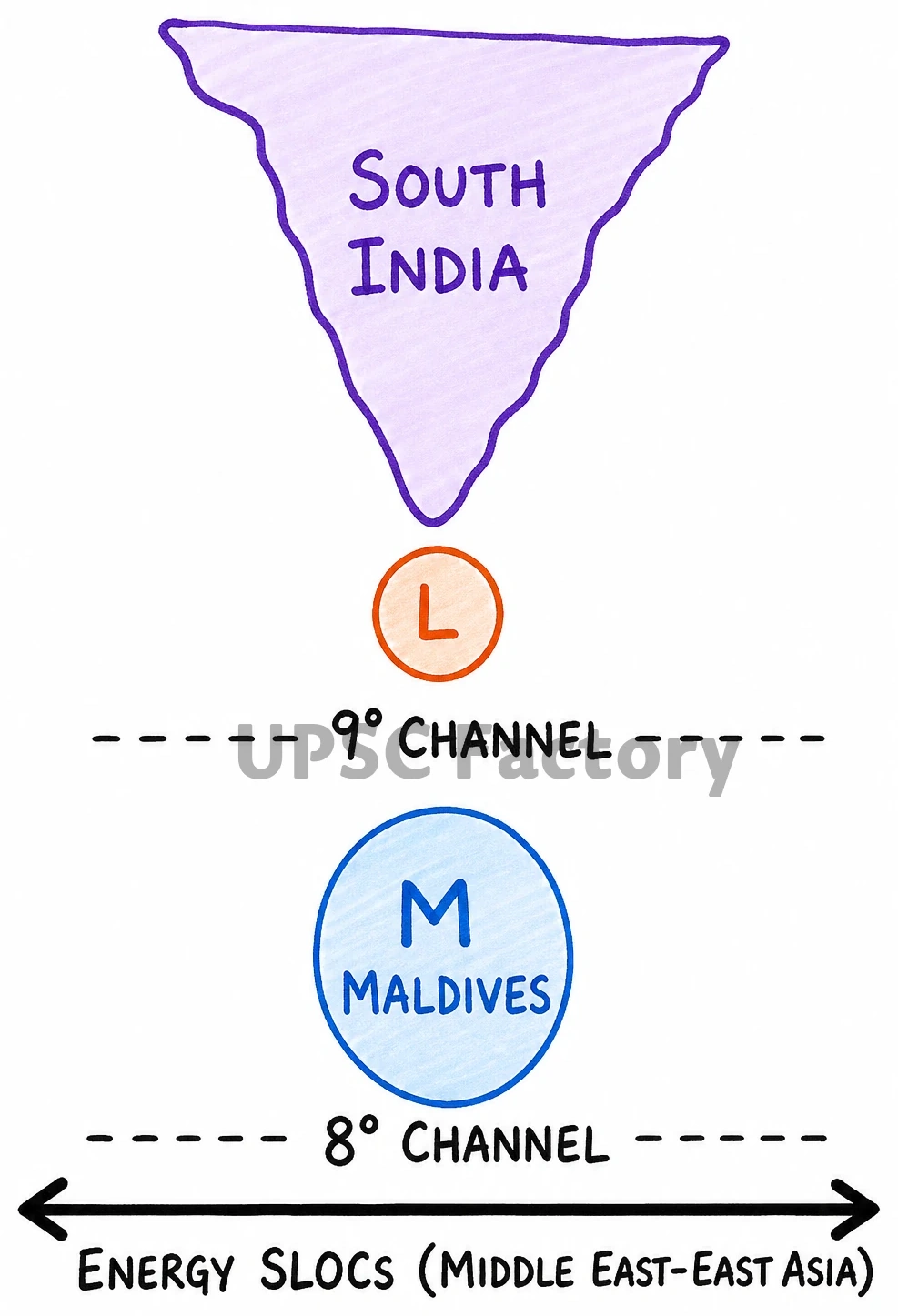
- Crucial SLOC Proximity: Sits astride vital Sea Lines of Communication carrying nearly 50% of India’s external merchandise trade.
- Energy Security Chokepoint: Overlooks the Eight Degree and Nine Degree Channels, securing critical Middle Eastern oil transits to East Asia/India.
- Toll Gate of the IOR: Functions as a vital strategic buffer and gateway between the western and eastern Indian Ocean.
- Exclusive Economic Zone (EEZ): Geolocation enables coordinated monitoring of vast maritime domains, safeguarding critical regional blue economy assets.
- Supply Chain Resilience: Targeted Indian infrastructure investments (Greater Malé Connectivity Project) ensure uninterrupted regional logistics and trade stability.
2. Impact on Maritime Security & Regional Stability
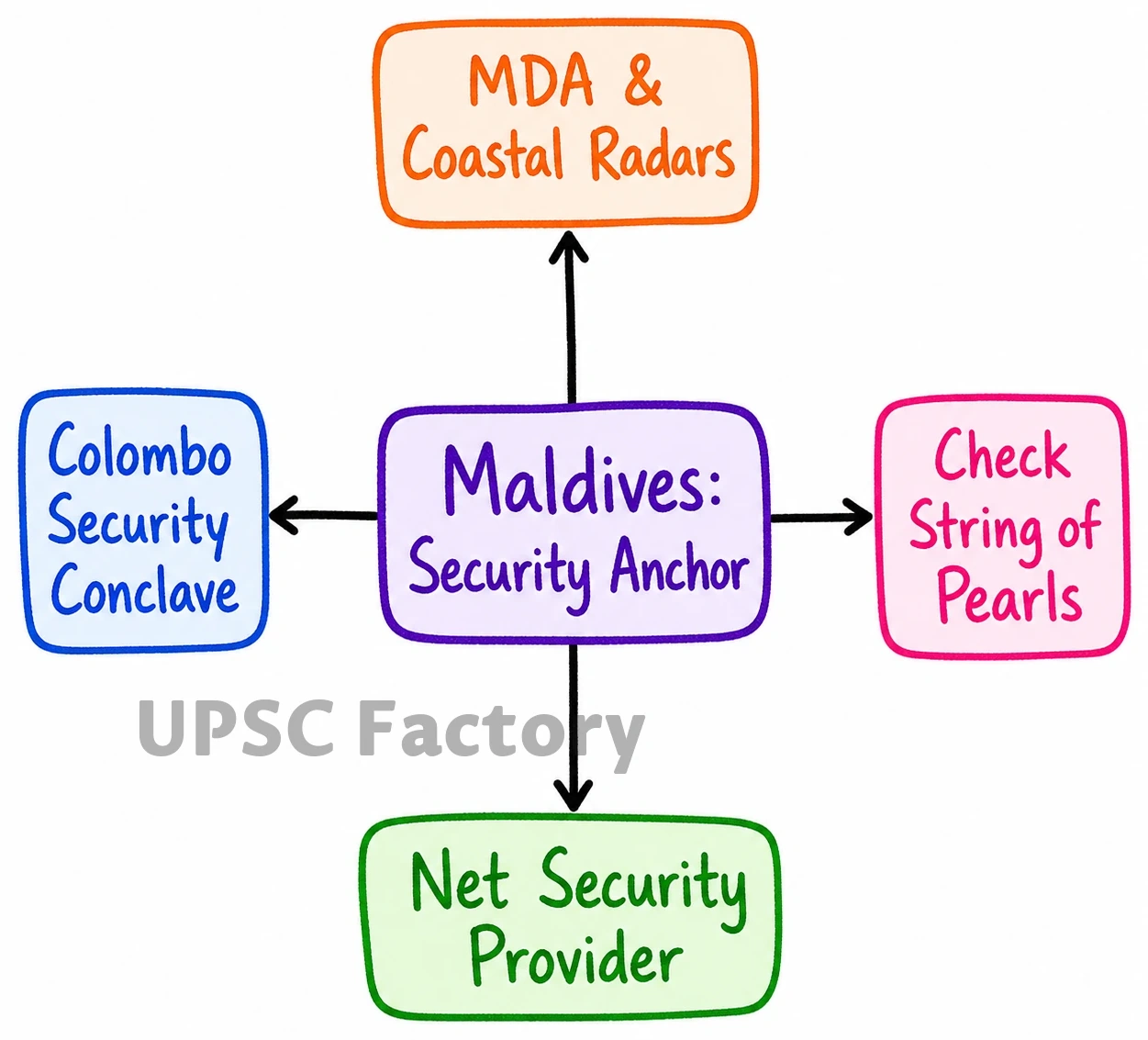
- Net Security Provider: Historic crisis responses (Operation Cactus, Operation Neer) solidify India’s credibility as the regional peace guarantor.
- Countering Extra-Regional Influence: China’s expanding footprint (infrastructure debt, oceanographic surveys) actively challenges India’s traditional strategic primacy.
- Checkmating the “String of Pearls”: Sustaining strong bilateral defense ties prevents the militarization of India’s immediate southwestern maritime flank.
- Combating Non-Traditional Threats: Institutional mechanisms (Colombo Security Conclave) are critical to countering piracy, illegal fishing, drug trafficking, and radicalization.
- Maritime Domain Awareness (MDA): Integration of Maldivian coastal radar systems into India’s grid tracks adversarial naval and submarine movements.
- Navigating Domestic Volatility: Political regime shifts and systemic “India Out” campaigns create strategic vulnerabilities, demanding highly calibrated diplomatic maneuvering.
India must sustain pragmatic engagement through capacity building and non-reciprocal economic support to ensure a stable, resilient, and multipolar IOR.