Model Answer:
Driven by mantle convection currents, lithospheric plates constantly interact, driving a perpetual cycle of continental fragmentation and oceanic expansion under the Plate Tectonics Theory.
1. Tectonic Mechanisms Driving Morphological Changes
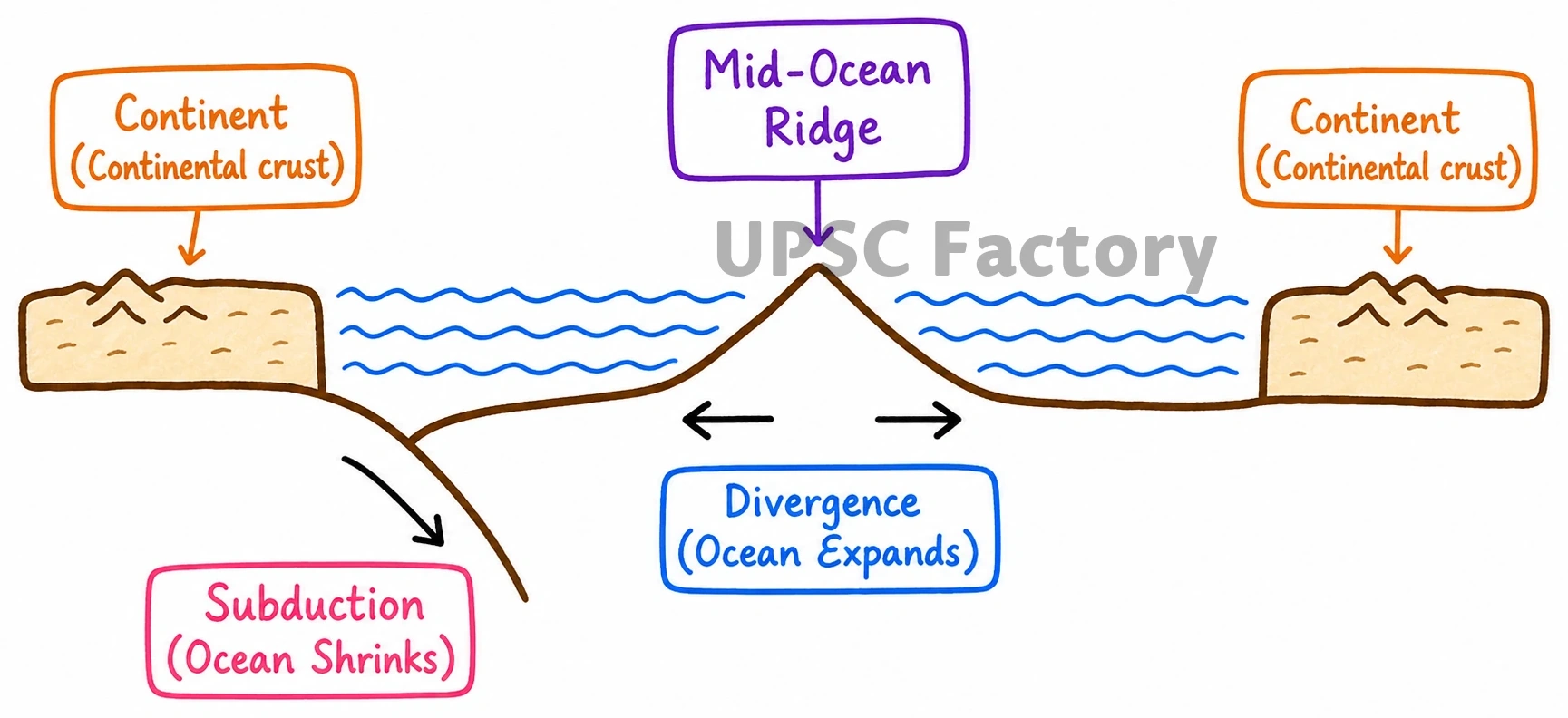
- Divergent Boundaries (Oceanic): Upwelling magma creates new crust, driving continuous seafloor spreading and expanding ocean basin sizes (Mid-Atlantic Ridge).
- Continental Rifting (Divergent): Tensional tectonic forces fracture contiguous continental masses, eventually birthing new linear seas (East African Rift Valley).
- Ocean-Continent Convergence: Denser oceanic plates subduct, destroying crust and shrinking oceans while shaping continental margins via volcanism (Andes Mountains).
- Continent-Continent Convergence: Compressive forces fuse crustal masses, closing intervening oceans and expanding continental size via orogeny (Himalayan accretion).
- Transform Boundaries: Crustal plates slide laterally, altering continental boundary shapes via massive horizontal displacement without crustal destruction (San Andreas Fault).
2. The Wilson Cycle: Evolutionary Stages of Basins
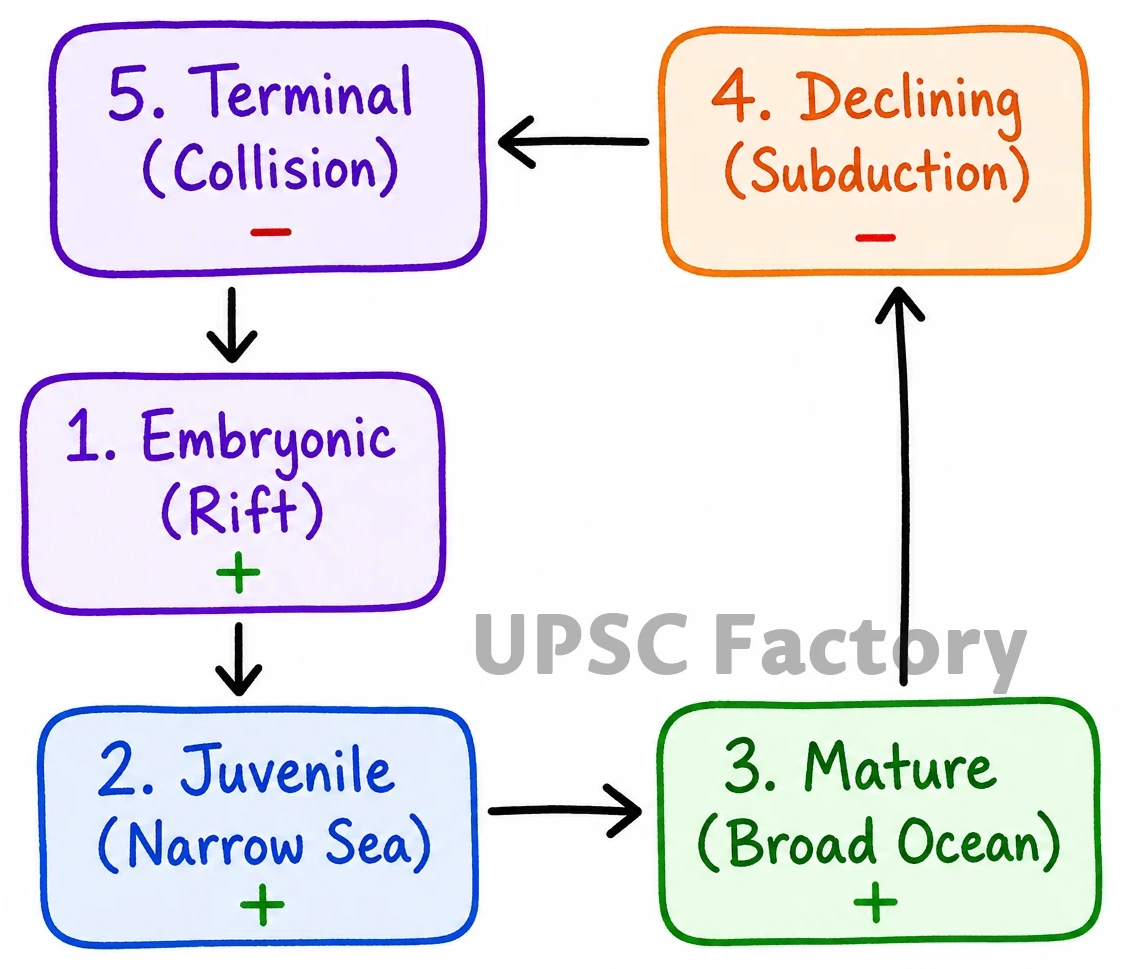
- Embryonic Stage: Mantle plumes thermally uplift and thin the continental crust, causing initial block fragmentation (Great Rift Valley).
- Juvenile Stage: Continued divergence separates continents, filling initial rifts with oceanic water to form narrow seas (Red Sea).
- Mature Stage: Sustained seafloor spreading forms vast, stable oceanic basins flanked by broad passive continental margins (Atlantic Ocean).
- Declining Stage: Subduction rates outpace spreading; ocean basins physically shrink, altering the adjacent continent’s shape (Pacific Ocean Ring of Fire).
- Terminal Stage: Complete subduction causes ocean closure and continent-continent collision, fusing landmasses into supercontinents (Mediterranean Sea shrinking).
Tectonic forces ensure Earth’s topography remains in dynamic equilibrium, continuously destroying and regenerating the lithosphere toward future supercontinent formations like Amasia.