Model Answer:
India’s vision for energy independence by 2047 (Amrit Kaal) demands a decisive transition from heavy fossil fuel imports (~85%) to indigenous, clean technologies.
Clean Tech Roadmap for Energy Independence (2047)
- Renewable Capacity Scaling: Achieving 500 GW non-fossil capacity by 2030 through rapid solar and wind deployment (Panchamrit targets).
- Green Hydrogen: Scaling domestic production to substitute fossil fuels in hard-to-abate industries (National Green Hydrogen Mission).
- Grid Storage & E-Mobility: Integrating Battery Energy Storage Systems (BESS) and smart grids to accelerate EV adoption (PLI ACC, PM E-DRIVE).
- Nuclear Transition: Developing Small Modular Reactors (SMRs) to guarantee baseload reliability.
Crucial Role of Biotechnology
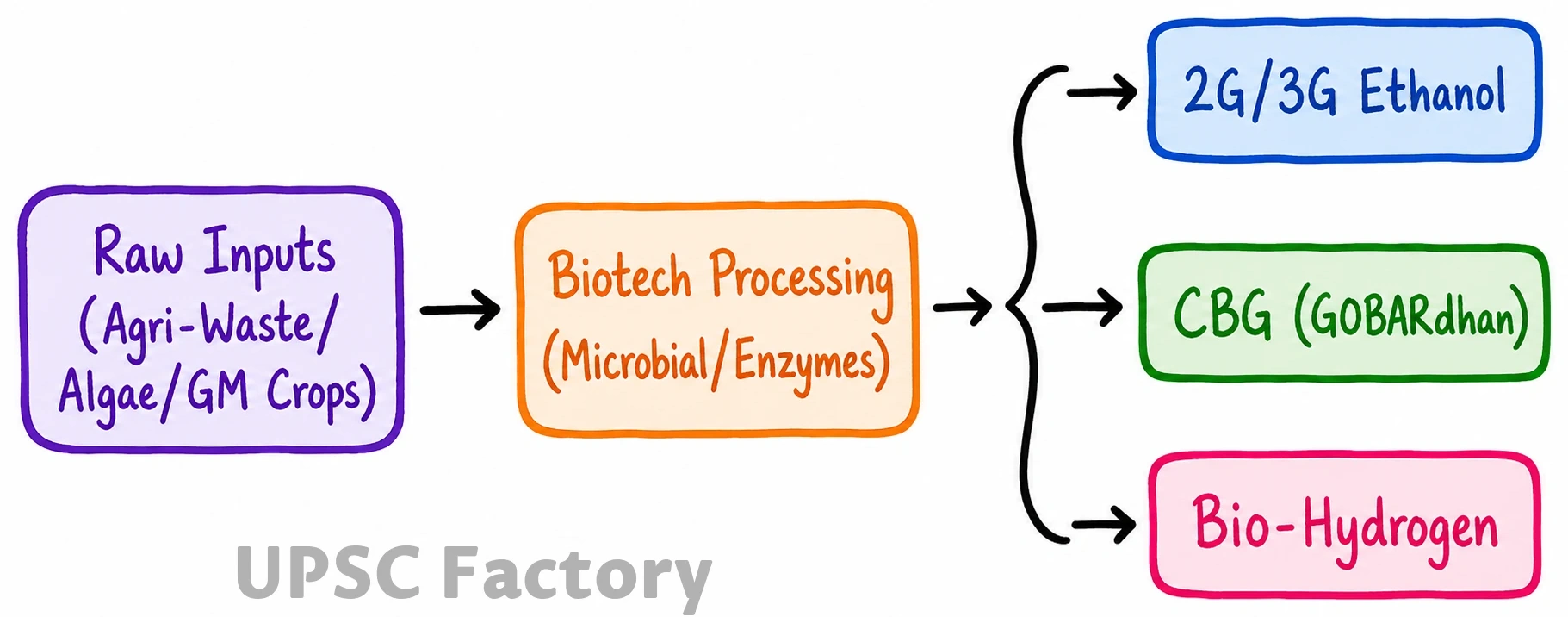
- Advanced Biofuels: Utilizing synthetic biology to produce 2G (cellulosic) and 3G (algal) ethanol, bypassing food-vs-fuel debates (Panipat 2G Ethanol Plant).
- Waste-to-Energy: Leveraging microbial methanogenesis to convert agricultural residue and municipal waste into Compressed Biogas (CBG) (GOBARdhan Scheme).
- Energy Crops: Cultivating Genetically Modified (GM) crops optimized for high biomass yield specifically for bioenergy generation.
- Bio-Hydrogen Production: Deploying metabolically engineered cyanobacteria and dark fermentation processes for sustainable, zero-emission hydrogen generation.
Integrating advanced biotechnology with the broader clean energy ecosystem will not only decarbonize the economy but definitively secure India’s energy sovereignty by 2047.