Model Answer:
Established post-9/11 (UNSC Resolution 1373), the Counter-Terrorism Committee (CTC) and its Executive Directorate (CTED) coordinate the global institutional architecture against international terrorism.
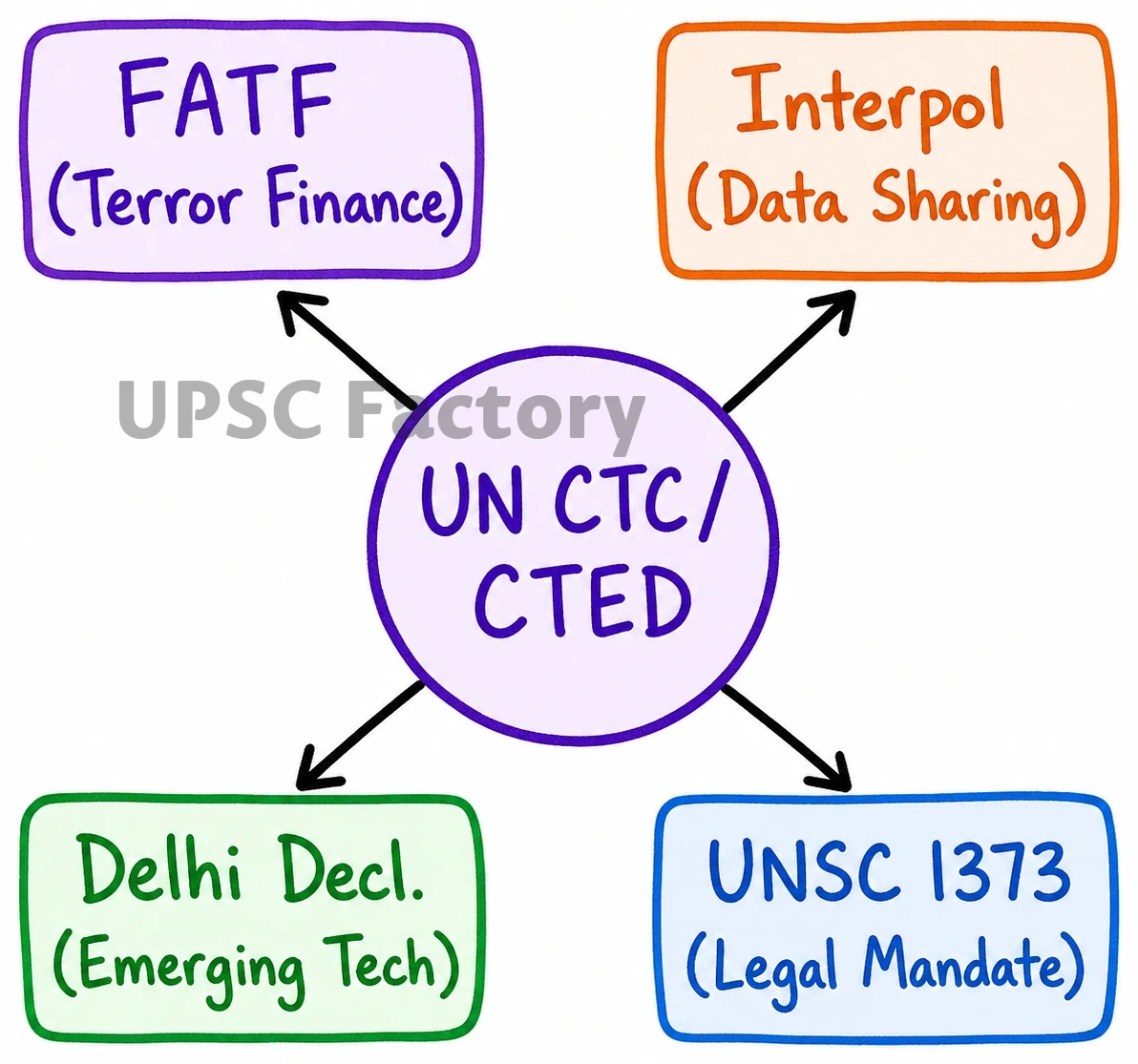
1. Effectiveness & Achievements in Global Counter-Terrorism
- Standardizing Legal Frameworks: Mandated member states to criminalize terror financing and deny safe havens (UNSC Res 1373).
- Institutional Capacity Building: CTED conducts expert country assessments, identifying vulnerabilities and facilitating targeted technical assistance.
- Combating Terror Financing: Deepened synergies with global standard-setting bodies to curb illicit fund flows (FATF-CTC coordination).
- Tackling Emerging Tech: Advanced multilateral frameworks to counter unmanned aerial systems and crypto-terrorism (Delhi Declaration, 2022).
- Information Sharing Protocols: Facilitated rapid global data exchange regarding foreign terrorist fighters (Interpol database integration).
- Human Rights Alignment: Ensures state counter-terrorism measures strictly comply with international human rights and refugee laws.
2. Limitations & Operational Challenges
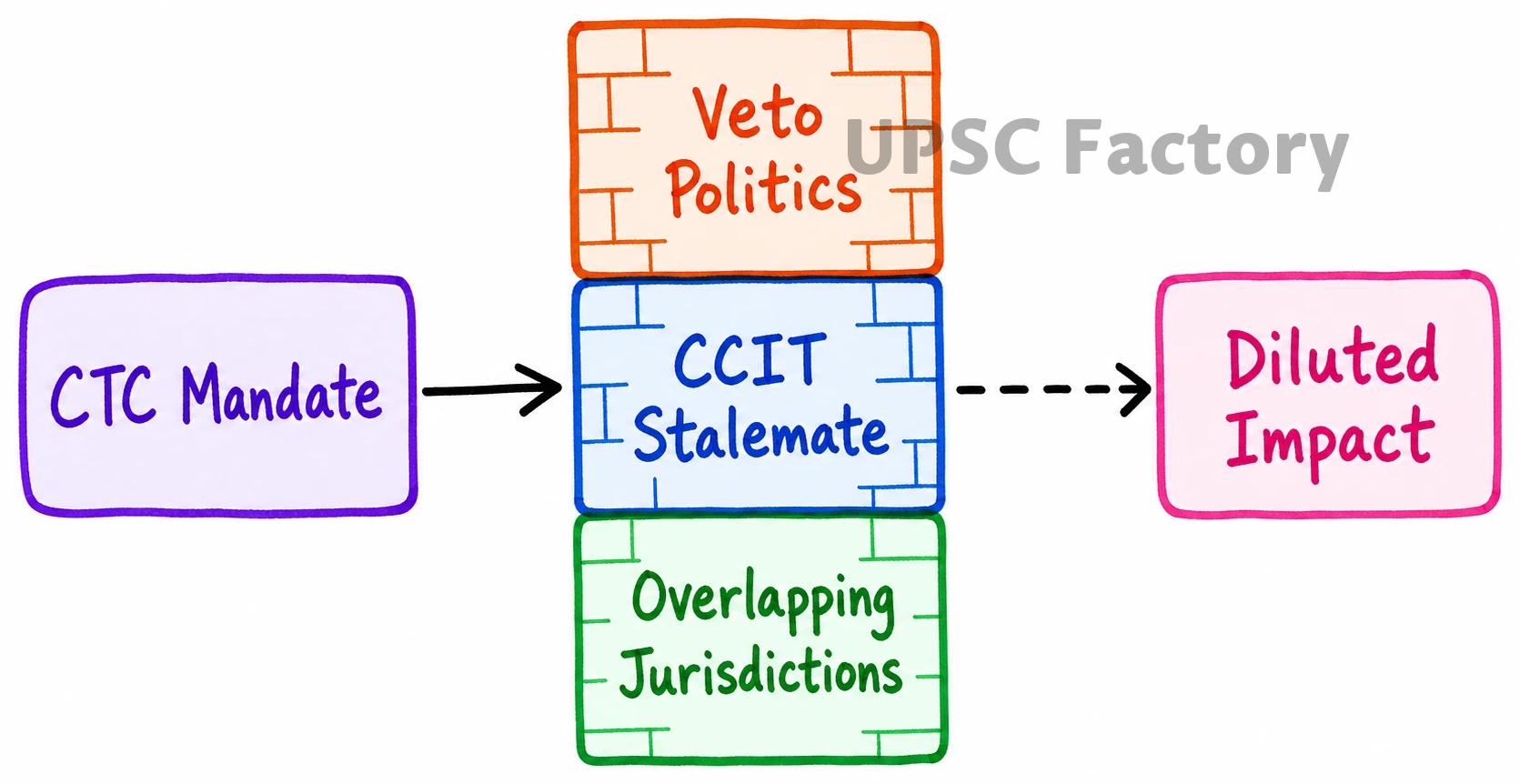
- Definitional Ambiguity: The absence of a universally accepted definition of terrorism paralyzes unified action (CCIT stalemate).
- Politicization of Mandates: Geopolitical rivalries and veto powers frequently shield globally recognized terrorists (China blocking LeT/JeM listings).
- Weak Enforcement Mechanisms: CTC lacks direct punitive or sanctions powers, relying entirely on voluntary state compliance.
- State-Sponsored Terrorism: Consistently fails to hold rogue states accountable for employing terrorism as state policy (cross-border proxies).
- Fragmented UN Architecture: Overlapping jurisdictions between the CTC, 1267 Sanctions Committee, and UNOCT dilute overall operational impact.
- Agility Deficit: Bureaucratic inertia struggles to match the speed of algorithmic radicalization and decentralized “lone wolf” attacks.
To neutralize modern asymmetric threats, the UN must finalize the Comprehensive Convention on International Terrorism (CCIT), depoliticize terror-listing mechanisms, and grant the CTC binding enforcement capabilities.