Model Answer:
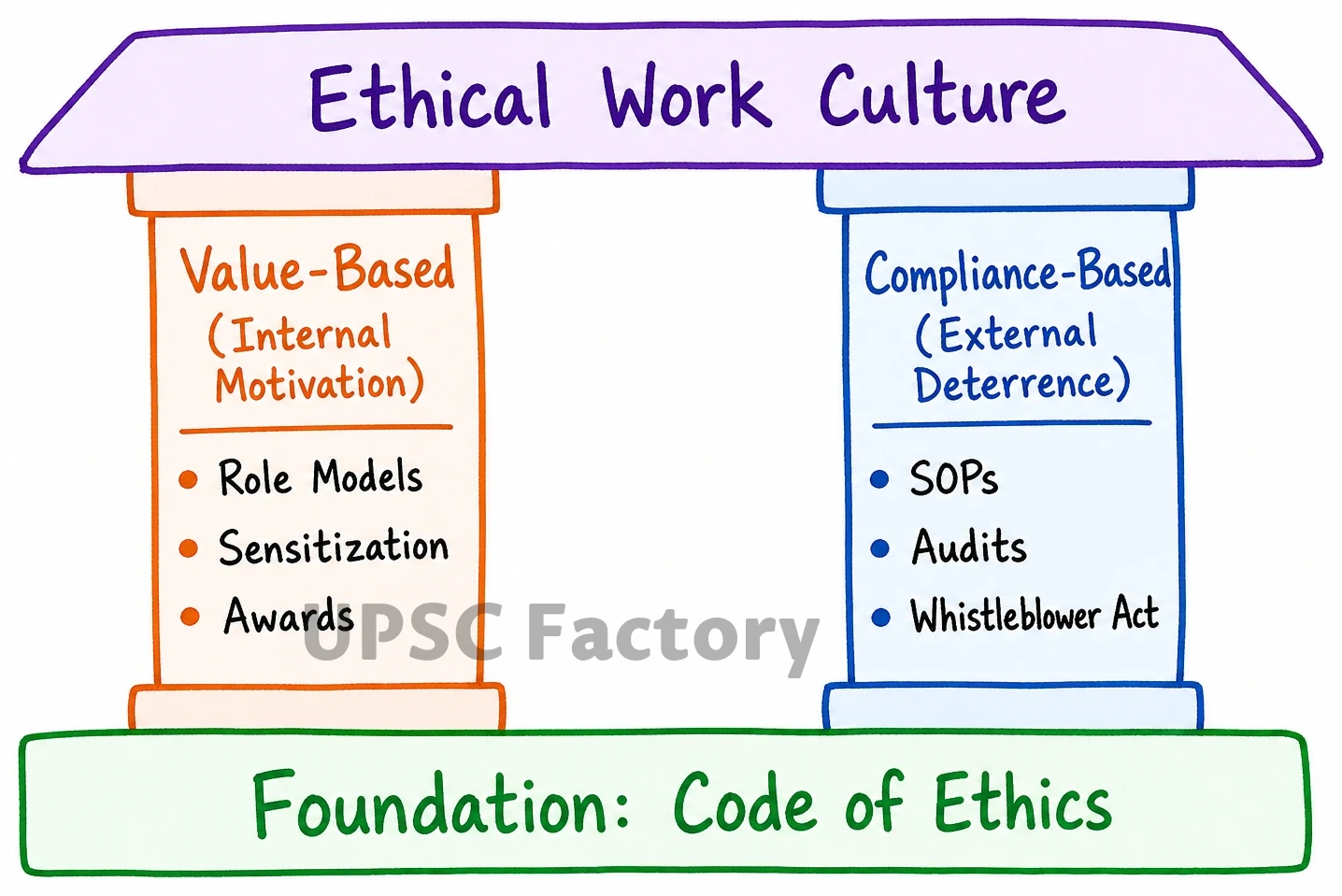
A Code of Ethics acts as an organization’s moral compass. However, realizing true workplace probity requires a dual framework of value-internalization (internal motivation) and rule-compliance (external deterrence).
1. Measures for a Value-Based Work Culture
- Lead by Example: Administrators must personify the ‘Nolan Principles’ of integrity and selflessness to inspire subordinates (e.g., E. Sreedharan at DMRC).
- Ethical Sensitization: Conduct regular, case-study-based moral reasoning workshops to build an internally driven ethical compass.
- Incentivizing Probity: Institutionalize periodic ‘Ethics Awards’ or positive performance appraisals to publicly recognize morally upright behavior.
2. Measures for a Compliance-Based Work Culture
- Enforceable Code of Conduct: Translate abstract ethical norms into strict, actionable, and measurable Standard Operating Procedures (e.g., Tata Group Code of Conduct).
- Robust Vigilance & Audits: Institute regular e-governance tracking, surprise inspections, and social audits to minimize discretionary powers and deter malfeasance.
- Whistleblower Protection: Establish secure, anonymous grievance redressal channels to shield truth-tellers from institutional retaliation (Whistle Blowers Protection Act, 2014).
By synergizing value-based self-regulation with strict compliance-based accountability, organizations can eradicate administrative opacity and achieve the 2nd ARC’s vision of genuine ‘Ethics in Governance’.