Model Answer:
The dilemma pits short-term mercantilist realpolitik against ethical statecraft, governed by non-proliferation norms, human rights obligations, and long-term strategic autonomy.
1. Options Evaluation and Justified Selection
- Option 1: Award Contract to Country B
- Merits: Immediate cash flow via advance payments; diplomatic leverage in ongoing FTA negotiations.
- Ethical/Strategic Demerits: Non-NPT status, nuclear ambiguity, and proxy guerrilla funding violate international arms control norms (ATT Articles 6 & 7); deepens regional instability.
- Option 2: Award Contract to Country A (Recommended)
- Merits: Legitimate self-defence needs (Jus ad Bellum); enables co-development and R&D tech-transfers; zero history of guerrilla support or non-state proliferation.
- Challenges: Deferred revenue due to long-term loan structure.
Selection & Justification: Ajit must choose Country A. Long-term security co-development outweighs Country B’s immediate liquidity, preventing complicity in proxy warfare and upholding the Wassenaar Arrangement guidelines on regional stability (e.g., India’s defensive BrahMos export model).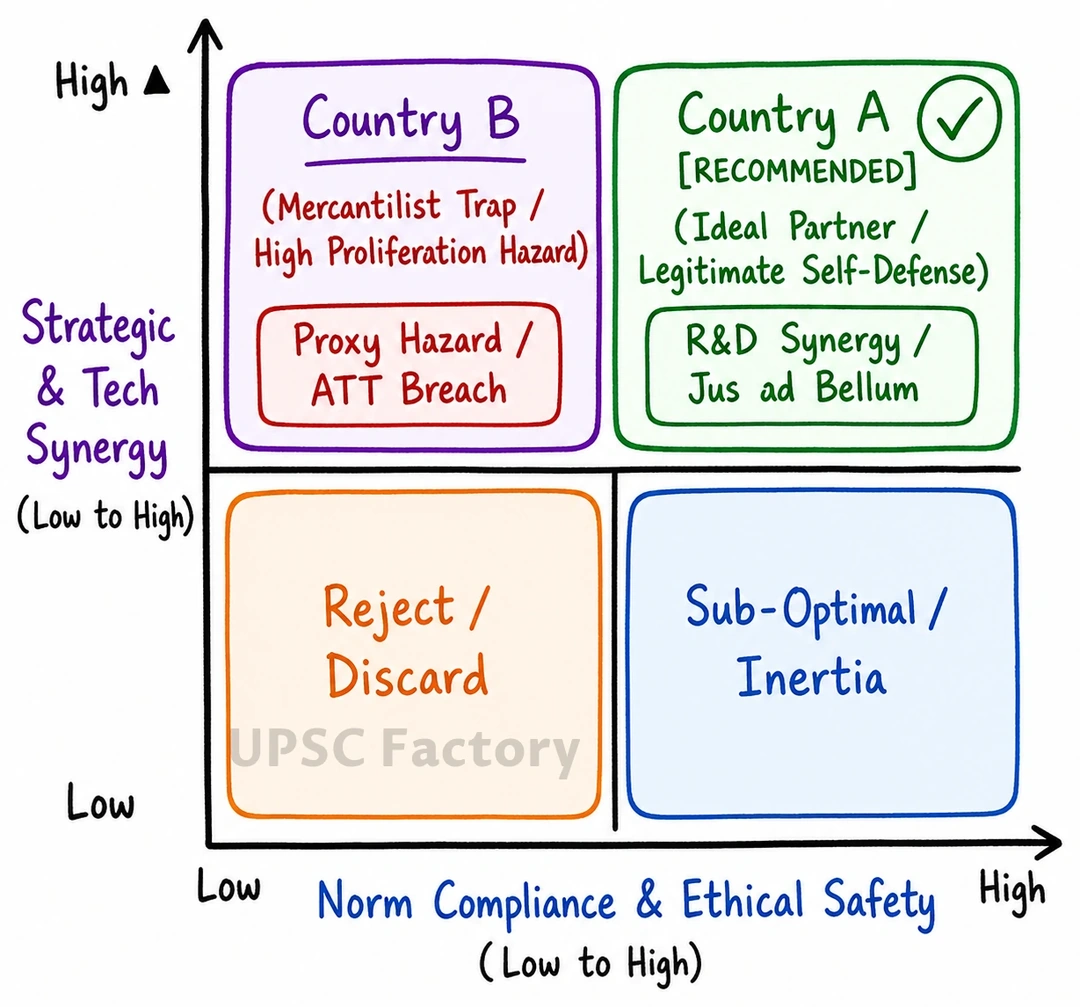
2. Framework to Harmonize Strategic Interests with Ethics
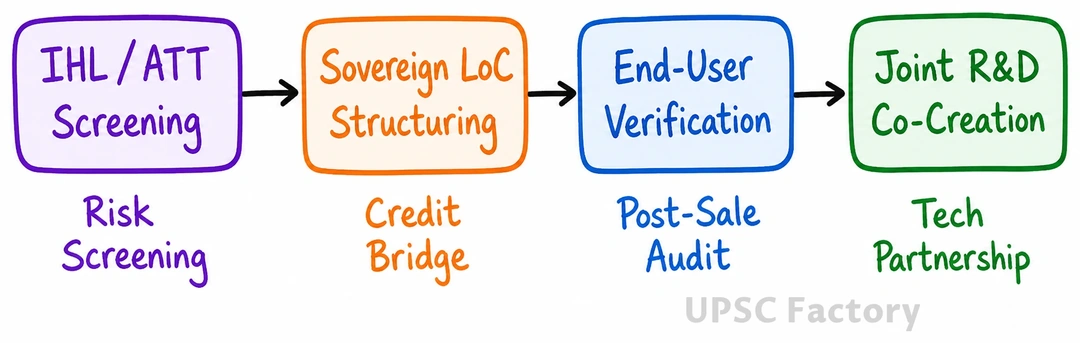
- Norm-Based Due Diligence: Institutionalize risk-assessment matrices screening buyers against international humanitarian law, illicit diversion risks, and internal repression track records (SIPRI Arms Transfer Framework).
- Creative Financial Structuring: Offset Country A’s delayed liquidity by backing the sale through Government-backed Lines of Credit (LoC), securing domestic production jobs while ensuring financial sustainability.
- Non-Diversion & End-User Monitoring: Mandate legally binding End-User Certificates (EUCs) with post-delivery inspection clauses to prevent horizontal proliferation.
- Technology Co-Creation: Pivot from transactional sales to joint R&D with responsible partners, securing domestic technological sovereignty without fueling aggressive militarism.
Adhering to ethical statecraft ensures MDP acts as a responsible global security partner, demonstrating that national defence exports must advance rules-based international peace rather than unprincipled commercial opportunism.