Model Answer:
India’s mining sector is crucial for industrial growth and GDP, yet unchecked exploitation creates severe ecological imbalances, directly violating the principles of sustainable development.
Environmental Hazards Posed by Mining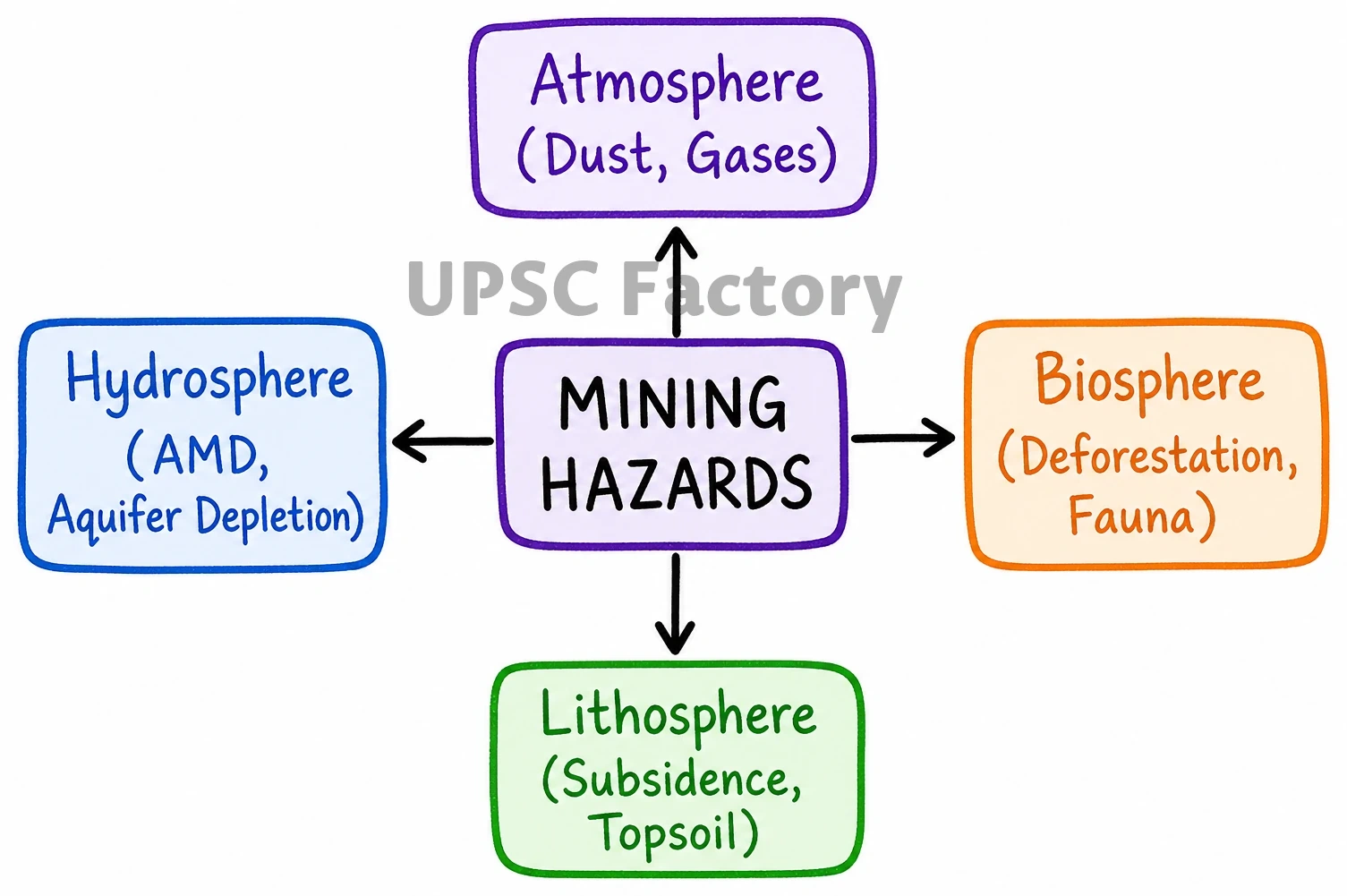
- Deforestation & Habitat Loss: Extensive land clearance destroys biodiversity and fragments critical wildlife corridors (e.g., Odisha elephant reserves).
- Water Contamination: Acid mine drainage and heavy metal leaching severely pollute rivers and groundwater (e.g., Subarnarekha river pollution).
- Air Quality Degradation: Drilling, blasting, and transport release high levels of particulate matter and toxic gases (e.g., Jharia coal fires).
- Geological Instability: Unscientific underground extraction triggers landslides, sinkholes, and land subsidence (e.g., Rat-hole mining in Meghalaya).
- Soil Sterilization: Haphazard overburden dumping destroys topsoil fertility and alters regional soil profiles.
- Hydrological Disruption: Excessive mine dewatering depletes deep aquifers and drastically lowers local groundwater tables.
- Acoustic & Vibration Hazards: Chronic noise from heavy machinery and blasting disturbs sensitive local fauna.
Remedial Measures for Sustainable Mining
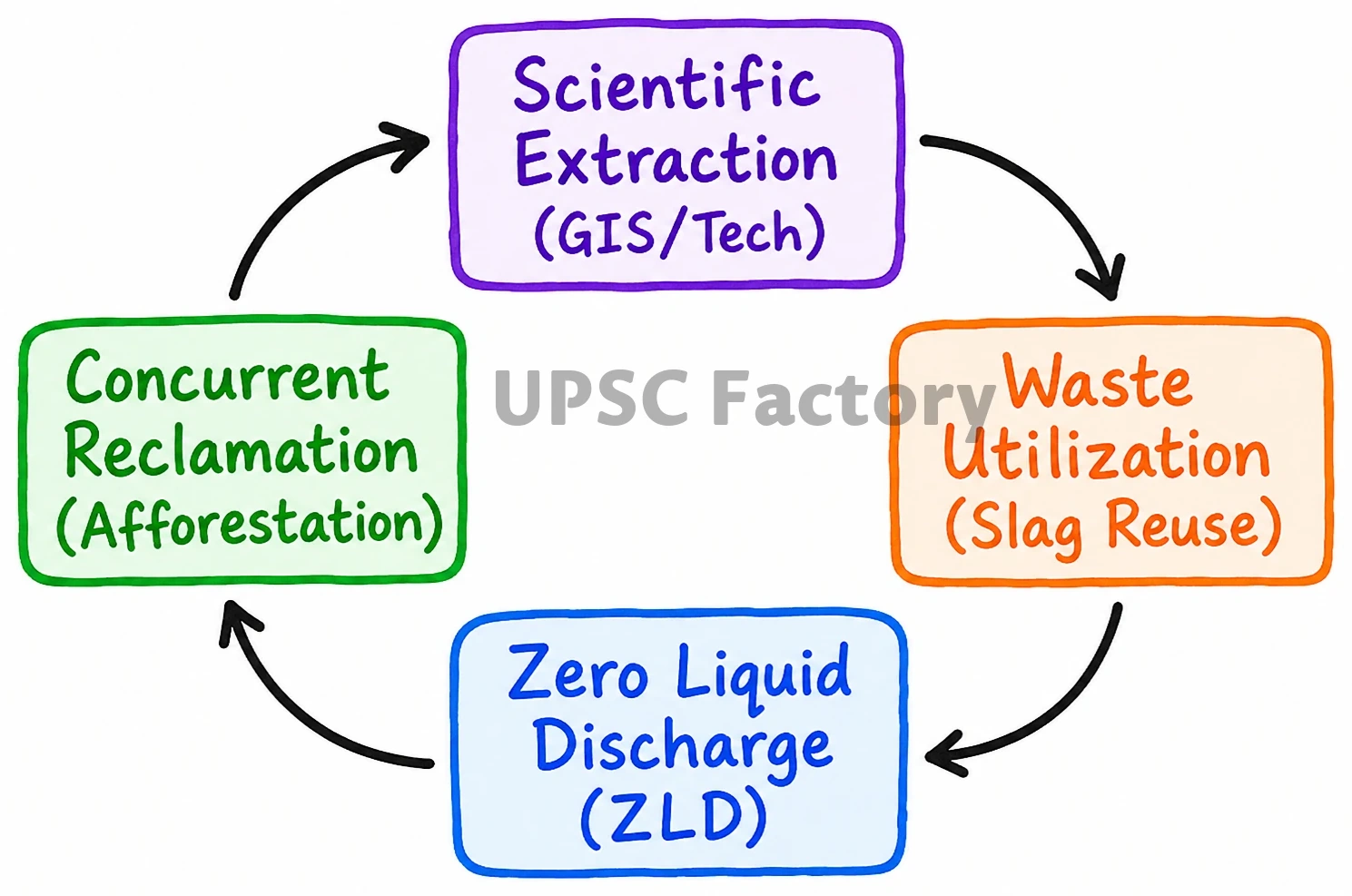
- Regulatory Enforcement: Strict adherence to the MMDR Act and mandatory, rigorous Environment Impact Assessment (EIA) before clearances.
- Ecological Restoration: Mandating concurrent mine reclamation, afforestation, and bioremediation (e.g., Kudremukh ecological restoration model).
- Technological Upgrades: Deploying precision mining, remote sensing, and GIS for real-time compliance monitoring.
- Water Management: Implementing Zero Liquid Discharge (ZLD) systems and neutralizing acid mine drainage using constructed wetlands.
- Targeted Fund Utilization: Strategically deploying District Mineral Foundation (DMF) funds for localized environmental rehabilitation.
- Circular Economy Practices: Promoting the recycling of mineral waste and commercial utilization of overburden (e.g., using slag in cement).
- Sustainable Policy Adherence: Enforcing the National Mineral Policy 2019 to align extraction with regional carrying capacity (e.g., Aravalli hill protections).
Transitioning to “Green Mining” through stringent regulatory oversight and technological innovation is imperative to harmonize India’s economic ambitions with long-term ecological security.