Model Answer:
With a 7,516-km coastline, India relies on sea routes for 95% of its trade by volume and 80% of oil imports, making maritime security an absolute prerequisite for national economic survival.
1. Vitality for Trade & Security Challenges
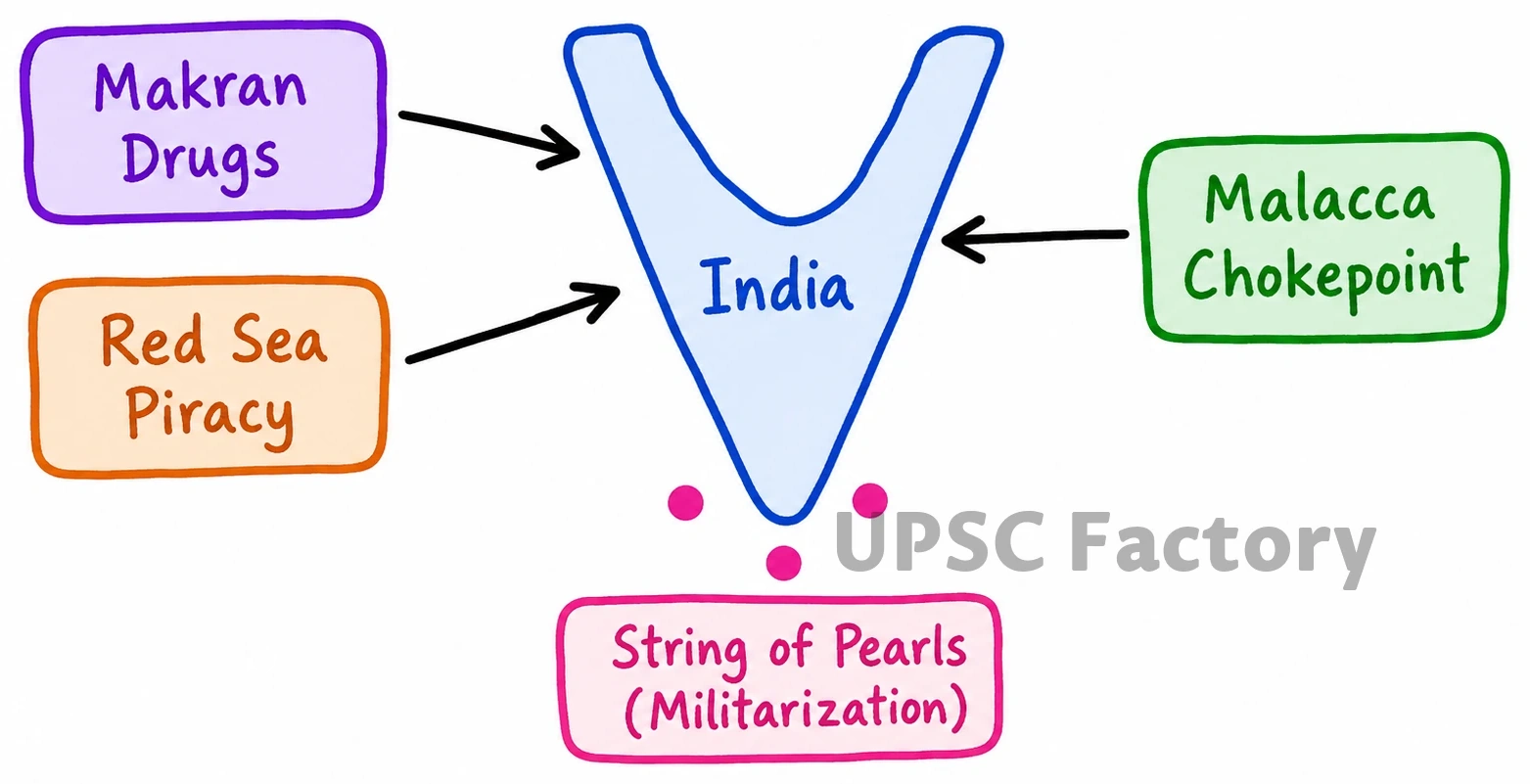
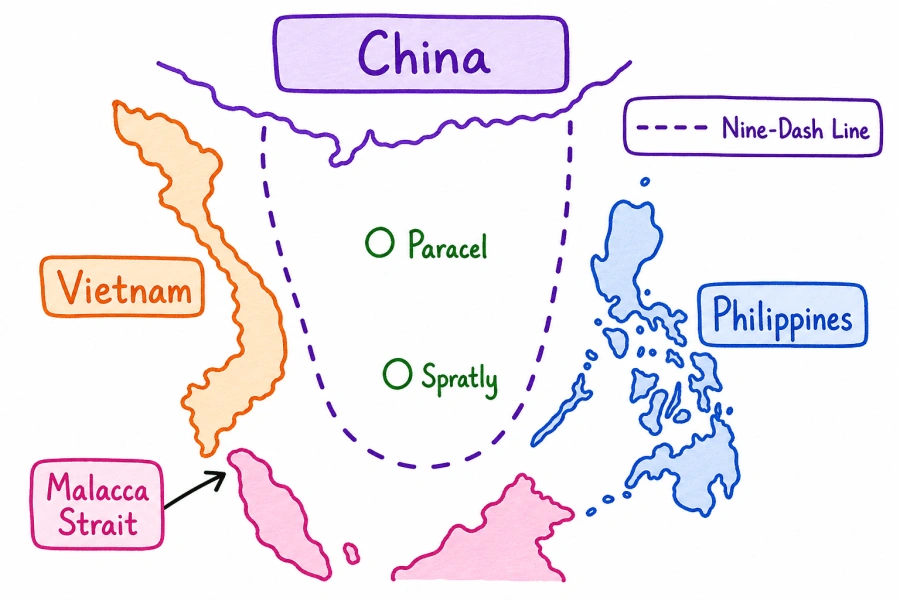
- Chokepoint Vulnerability: India’s energy and trade lifelines require unhindered access through critical Sea Lanes of Communication (Straits of Hormuz, Malacca).
- Asymmetric Disruption: Piracy, hijackings, and drone strikes directly paralyze merchant shipping and inflate insurance costs (Houthi attacks in Red Sea).
- Coastal Terrorism: Porous, unmonitored maritime borders facilitate militant infiltration and cross-border arms smuggling (26/11 Mumbai attacks).
- Geopolitical Militarization: Rapid expansion of adversarial naval footprints in the Indian Ocean Region (IOR) threatens freedom of navigation (String of Pearls).
- Transnational Syndicates: Extensive use of maritime routes for narcotics trafficking due to geographic vulnerabilities (Makran coast proximity).
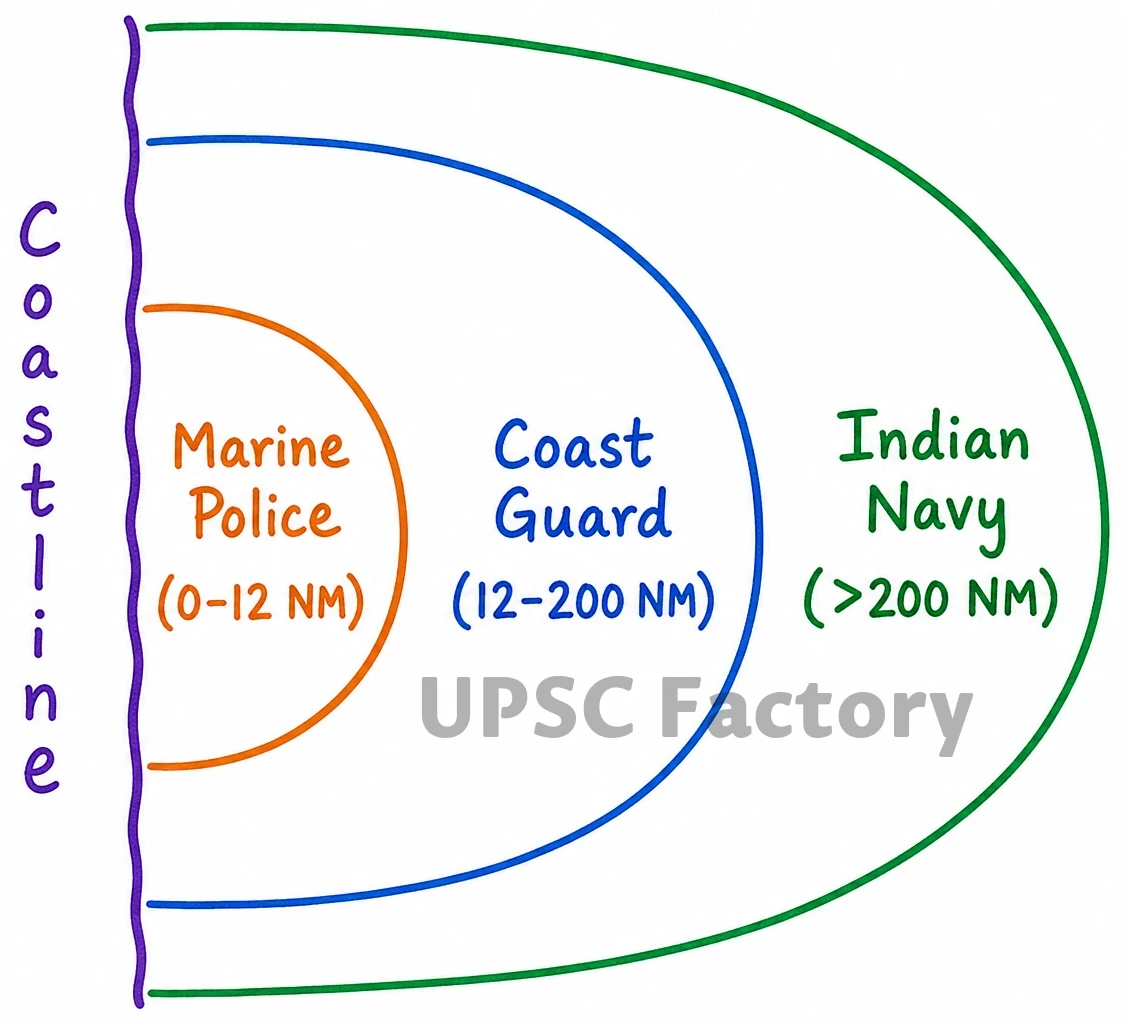
- Fragmented Governance: Jurisdictional overlaps and coordination gaps among the Indian Navy, Coast Guard (ICG), and State Marine Police.
- Resource Deficits: Shortages in shallow-water patrol vessels and incomplete registration of traditional fishing trawlers hamper local monitoring.
2. Strategic & Institutional Way Forward
- Technological Overhaul: Expand the Coastal Surveillance Network (CSN) with advanced radar chains, unmanned aerial vehicles, and underwater sensors.
- Enhanced Domain Awareness: Maximize real-time data sharing via the Information Fusion Centre (IFC-IOR) and space-based Automatic Identification Systems (AIS).
- Institutional Synergy: Expedite the operationalization of the Maritime Theatre Command to ensure seamless tri-service and inter-agency integration.
- Capacity Building: Accelerate the Coastal Security Scheme (CSS Phase III) to upgrade marine police infrastructure, interceptor boats, and personnel training.
- Diplomatic Deterrence: Deepen regional naval partnerships and secure vital sea lanes through multilateral frameworks and joint escorts (QUAD, Operation Sankalp).
- Community Integration: Institutionalize fisherfolk as the primary intelligence network through mandatory biometric IDs (Navik Aadhar) and incentive-based reporting.
Advancing the SAGAR doctrine (Security and Growth for All in the Region) and achieving self-reliance in naval capabilities are essential for India to secure its Blue Economy and emerge as a Net Security Provider.