Model Answer:
Offshore oil accounts for ~30% of global production, predominantly localized in shallow continental shelves characterized by thick marine sedimentary basins and trapped hydrocarbons.
Geographical Distribution of Offshore Oil Reserves
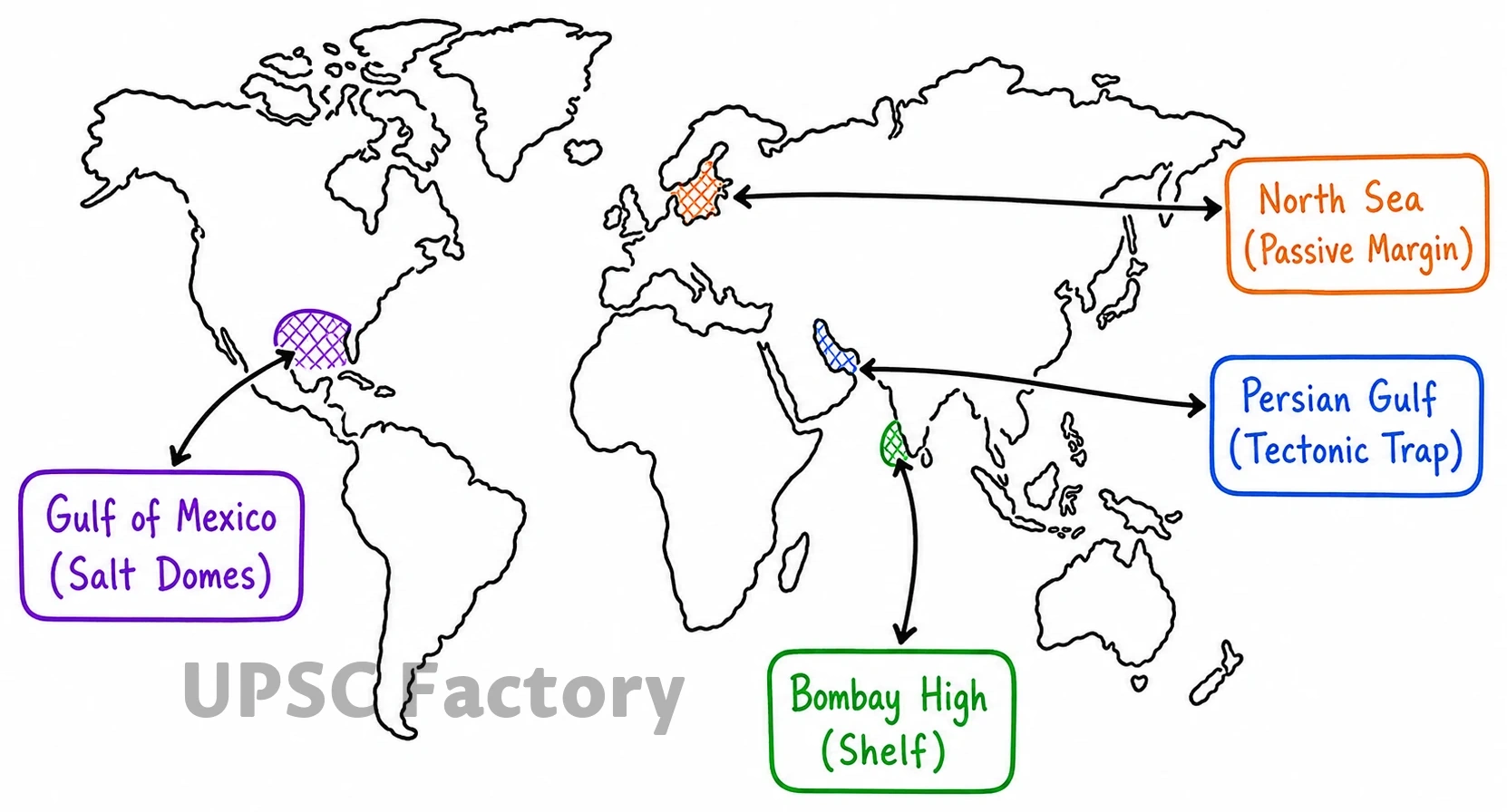
- Geological Basis: Geographically confined to marine sedimentary basins where phytoplankton decayed in anoxic environments over millions of years.
- Continental Shelves: Shallow, submerged coastal margins offer optimal conditions for organic accumulation and structural traps (Bombay High, India).
- Tectonic Depressions: Convergent boundaries and foreland basins create massive structural traps holding the largest offshore fields (Persian Gulf, Safaniya field).
- Passive Margins: Thick sedimentary sequences combined with prolific salt dome traps characterize major Atlantic reserves (Gulf of Mexico, North Sea).
- Emerging Frontiers: Technological advancements and receding ice are unlocking extreme-latitude and deep-water basins (Arctic Ocean, South China Sea).
Key Differences: Offshore vs. Onshore Reserves
- Biological Origin: Offshore reserves derive primarily from marine phytoplankton and algae; onshore occurrences often stem from terrestrial biomass/swamps (Digboi, Assam).
- Geopolitics and Governance: Offshore reserves rely on UNCLOS frameworks for EEZ extraction rights, frequently sparking maritime disputes; onshore reserves are governed by absolute territorial sovereignty.
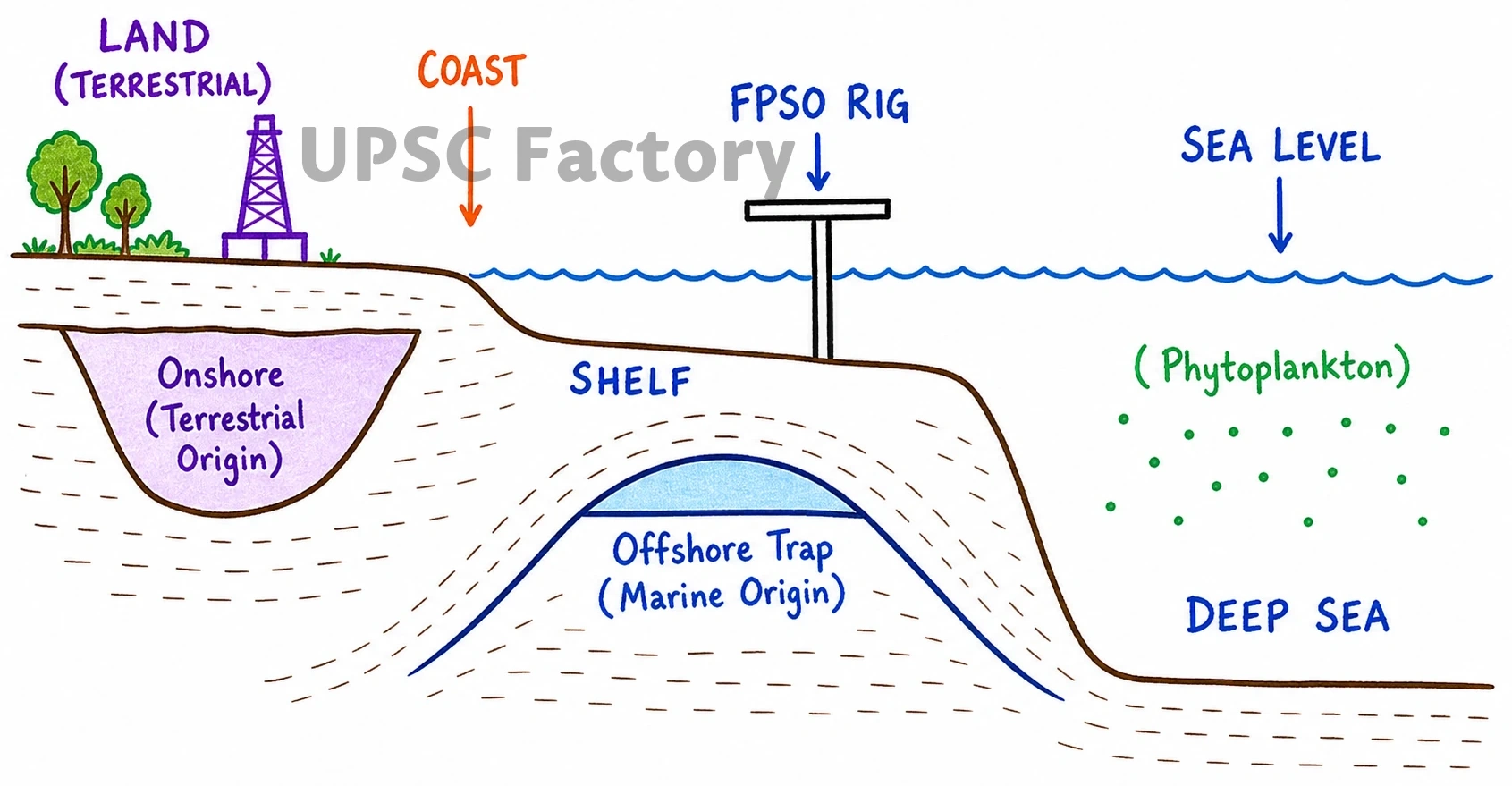
- Extraction Technology: Offshore demands complex, capital-intensive infrastructure like Floating Production Storage and Offloading (FPSO) units; onshore relies on conventional land rigs and pumpjacks.
- Economic Viability: Offshore projects possess longer gestation periods, higher risk, and higher break-even costs ($40–$60/bbl) compared to conventional onshore extraction.
- Environmental Hazards: Offshore spills are rapidly dispersed by ocean currents, causing uncontainable marine ecological destruction (Deepwater Horizon); onshore spills cause highly localized soil/groundwater pollution.
As conventional onshore reserves plateau, technological breakthroughs in deep-water drilling will increasingly shift global energy reliance toward offshore frontiers, necessitating stringent transboundary ecological safeguards.