Model Answer:
Mahatma Jotirao Phule was a revolutionary 19th-century reformer whose institutional efforts and seminal literature spearheaded the anti-caste movement and emancipated diverse marginalized subaltern classes in India.
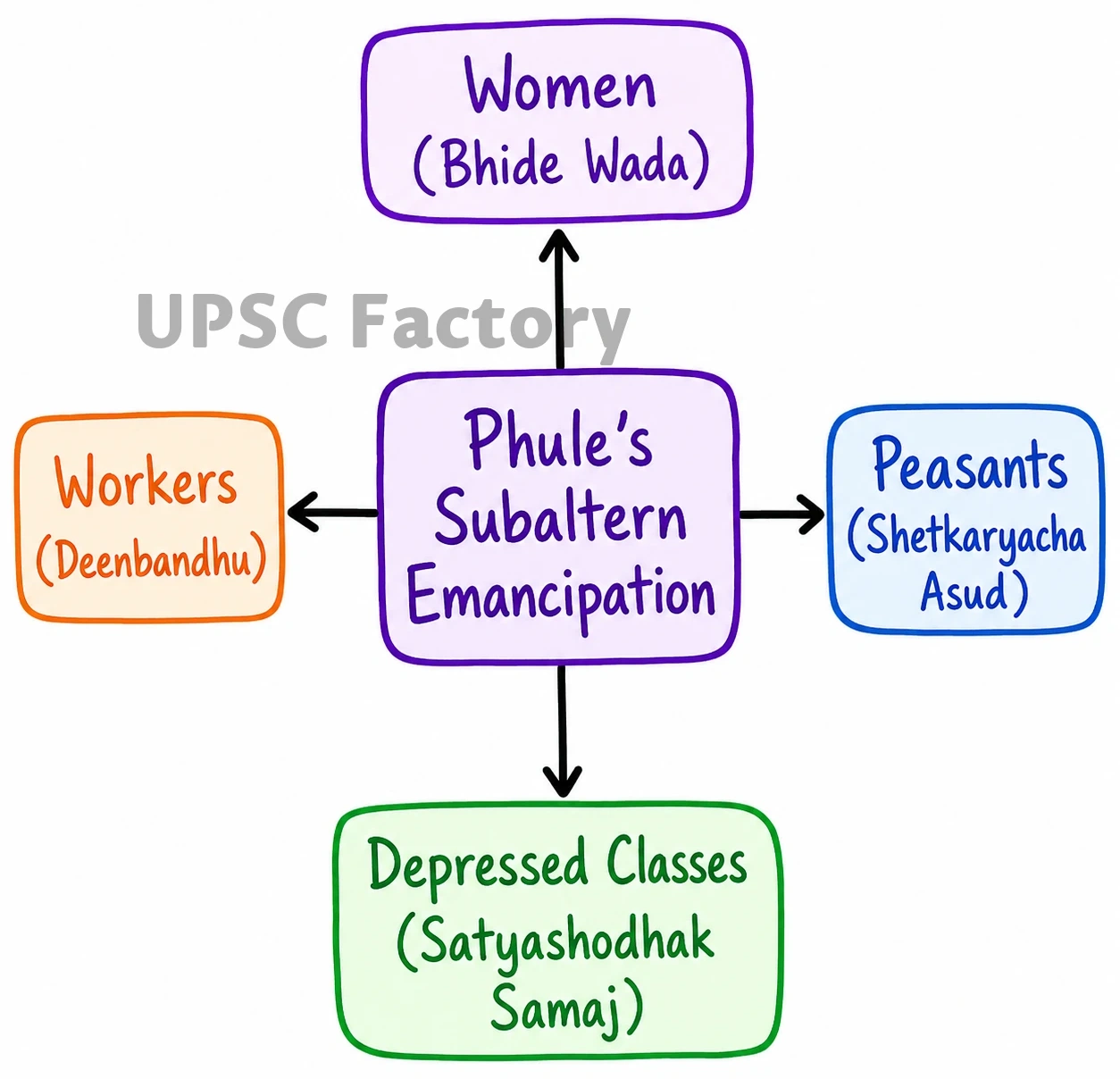
Social Reforms: Depressed Classes & Women
1. Emancipation of Depressed Classes (Shudras & Atishudras)
- Ideological Critique: Authored Gulamgiri (1873) to expose Brahminical hegemony, dedicating it to the American abolitionist movement against slavery.
- Institutional Mobilization: Founded the Satyashodhak Samaj (1873) to secure basic human rights and conduct religious ceremonies without intermediary priests.
- Eradicating Untouchability: Opened his personal water reservoir to untouchables (1868), actively defying orthodox social sanctions and caste purity norms.
2. Upliftment of Women
- Pioneering Education: Established the first indigenous girls’ school at Bhide Wada, Pune (1848) alongside his wife, Savitribai Phule.
- Protecting Vulnerable Women: Established the Balhatya Pratibandhak Griha (1863) to prevent female infanticide and provide safe shelter for pregnant, distressed widows.
- Gender Equality: Vigorously championed widow remarriage and utilized his writings to dismantle patriarchal interpretations of religious scriptures.
Economic Advocacy: Peasants & Working Class
- Exposing Agrarian Distress: Authored Shetkaryacha Asud (The Cultivator’s Whipcord, 1881), systematically detailing the exploitation of farmers by moneylenders, zamindars, and colonial bureaucrats.
- Policy Critique: Actively protested against exploitative British forest policies and rack-renting land revenue settlements that destroyed rural livelihoods.
- Labor Mobilization: Inspired and supported his colleague Narayan Meghaji Lokhande in forming the Bombay Mill Hands Association (1890), India’s first labor organization.
- Subaltern Journalism: Utilized the Deenbandhu newspaper (1877) as a powerful mouthpiece to articulate the daily grievances of mill workers and marginalized laborers.
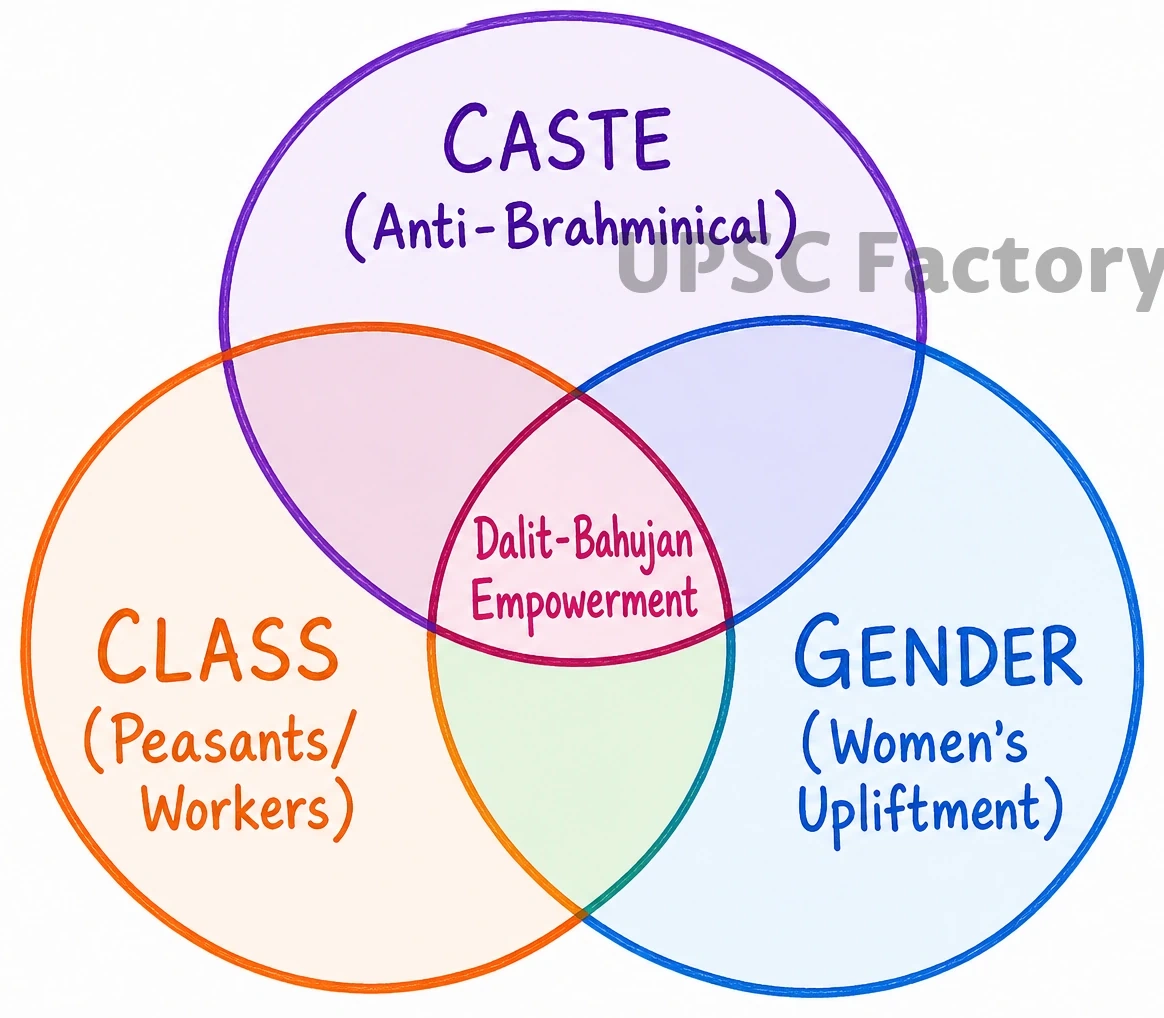
Phule’s multidimensional crusade comprehensively addressed the intersections of caste, class, and gender, laying the ideological foundation for the modern Dalit-Bahujan movement and Dr. B.R. Ambedkar’s vision of social justice.