Model Answer:
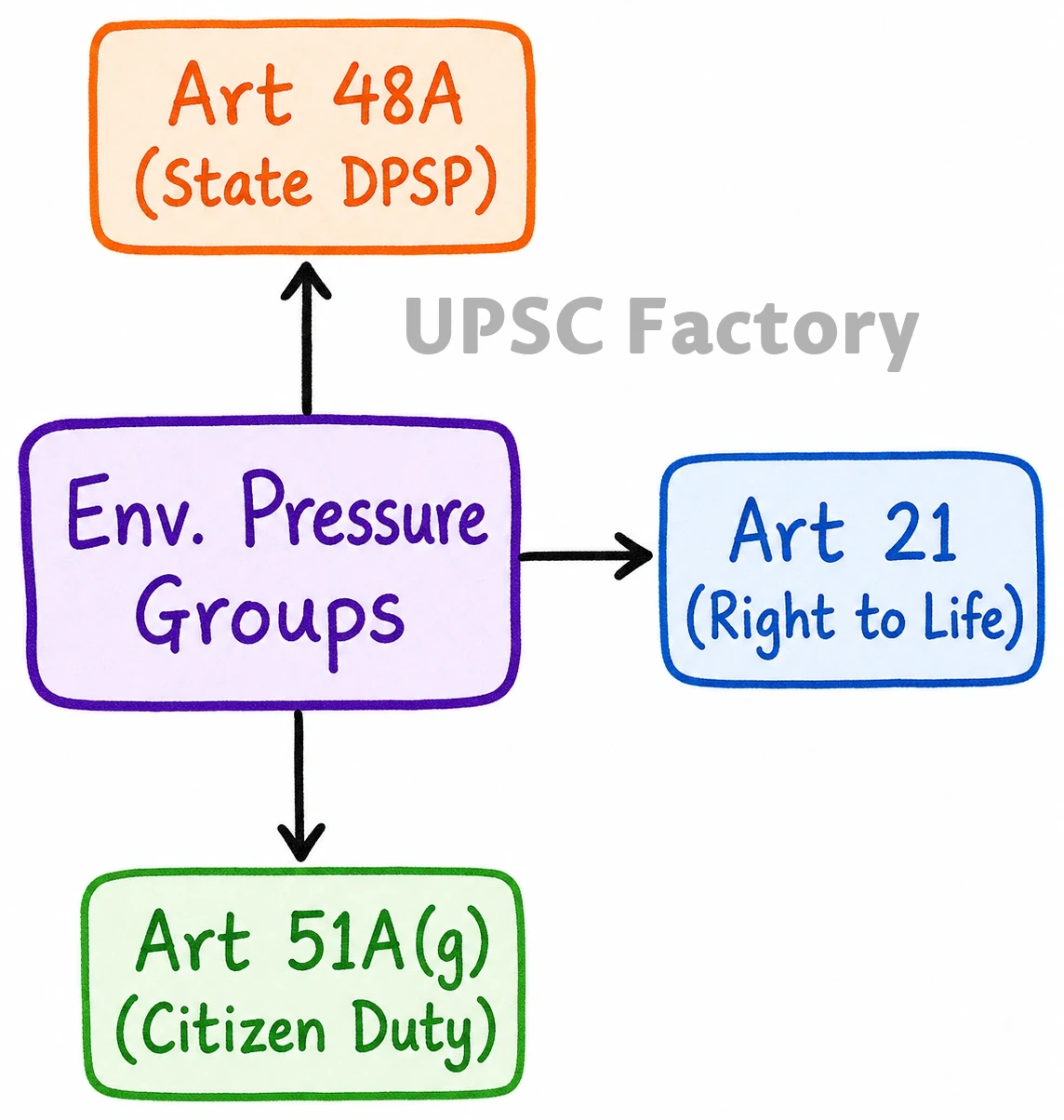
Environmental pressure groups are non-state, interest-based organizations aiming to influence public policy, corporate behavior, and governance to protect ecology, thereby fulfilling constitutional mandates under Article 48A and Article 51A(g).
1. Raising Awareness and Grassroots Advocacy
- Scientific Research & Data: Exposing ecological hazards through empirical reports to inform public discourse (e.g., Centre for Science and Environment’s findings on air pollution and pesticides).
- Mass Mobilization: Organizing grassroots movements to resist ecologically destructive projects and highlight local grievances (e.g., Narmada Bachao Andolan against mass displacement).
- Climate Campaigns: Leveraging social media and youth strikes to mainstream climate change dialogues (e.g., Fridays For Future India).
- Community Empowerment: Educating tribal and rural populations about their statutory ecological rights (e.g., driving awareness for Forest Rights Act, 2006 claims).
2. Influencing Policies and Environmental Protection
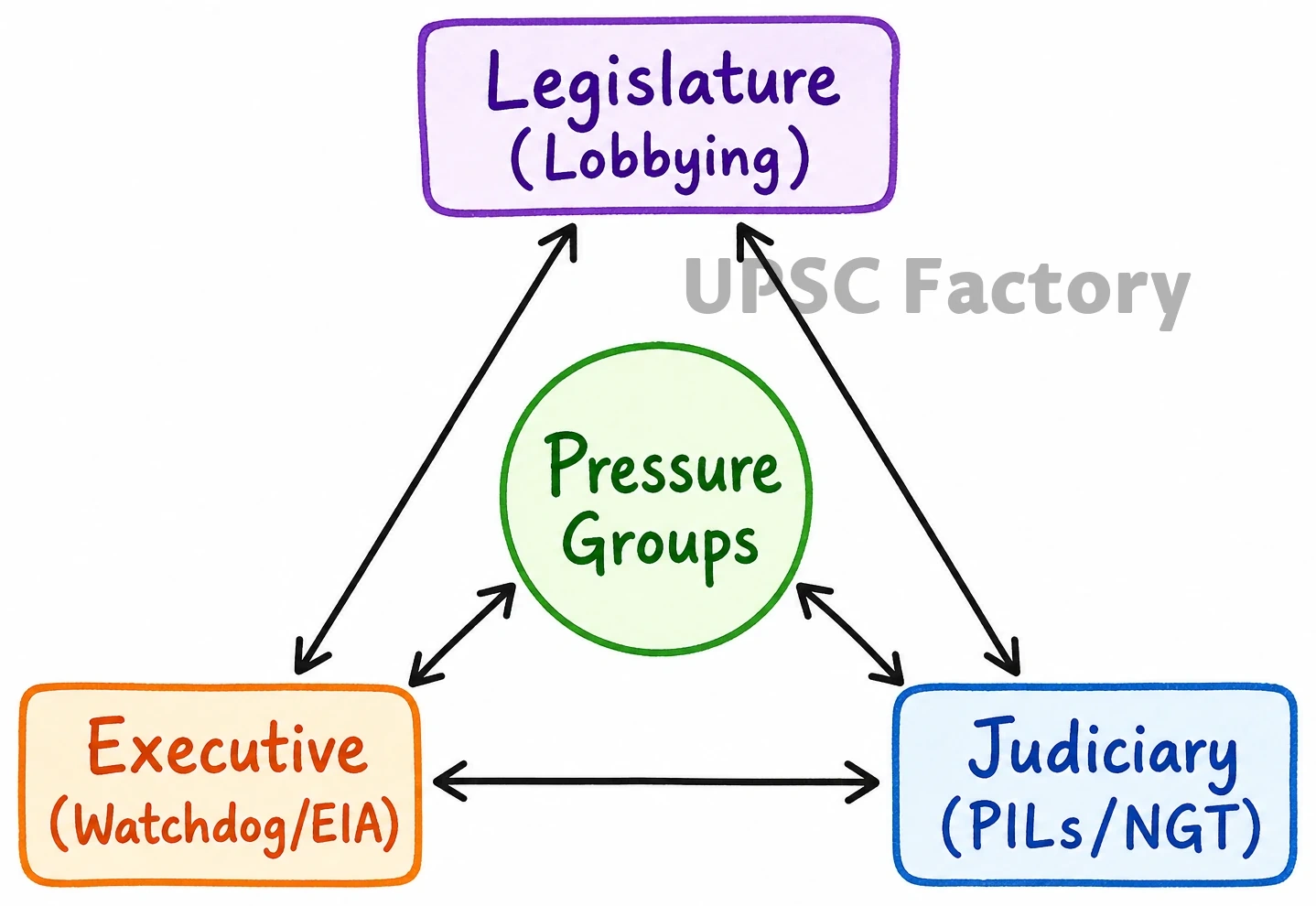
- Judicial Interventions: Utilizing Public Interest Litigations (PIL) to enforce environmental jurisprudence (e.g., M.C. Mehta cases leading to the CNG mandate in Delhi).
- Policy Formulation: Lobbying lawmakers to draft, enact, and amend pivotal conservation legislation (e.g., advocacy shaping the Environment (Protection) Act, 1986).
- Regulatory Watchdog: Scrutinizing executive actions and mobilizing opposition against regressive regulatory dilution (e.g., nationwide campaigns against the Draft EIA Notification 2020).
- Corporate Accountability: Halting unchecked industrial expansion in ecologically sensitive, biodiversity-rich zones (e.g., civil society backing the Dongria Kondh resistance against Vedanta mining).
- Institutional Collaboration: Partnering with statutory bodies like the National Green Tribunal (NGT) for prompt redressal of ecological violations.
Environmental pressure groups are indispensable pillars of a participatory democracy, ensuring that the fundamental “Right to a Healthy Environment” (Article 21) is safeguarded while pursuing sustainable, inclusive national development.