Model Answer:
Despite rising health awareness, the fast-food industry is rapidly expanding globally due to complex socio-economic shifts, urbanization, and technological advancements overriding nutritional concerns.
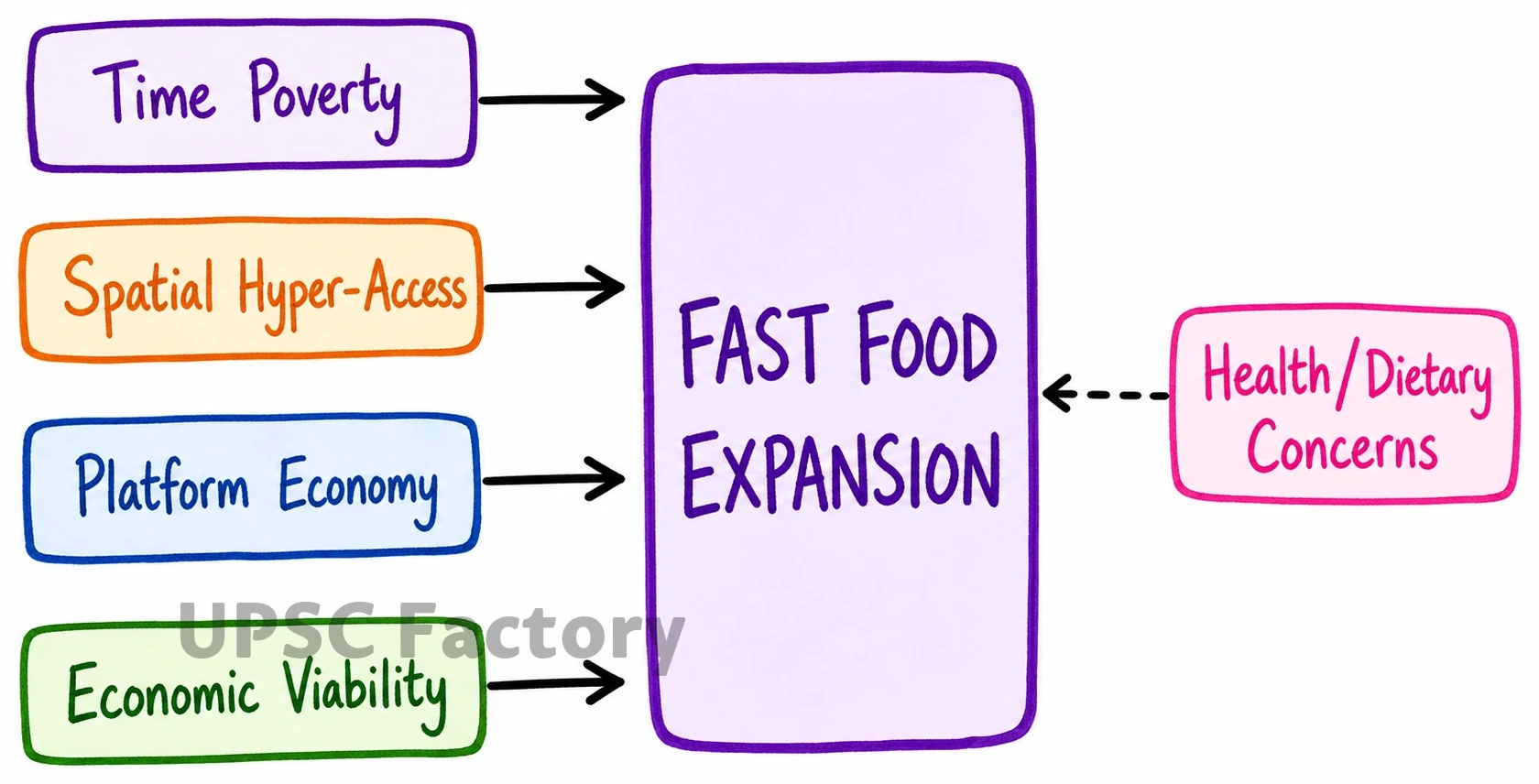
Drivers of Fast-Food Growth vs. Health Concerns
- Time Poverty: Dual-income families and long urban commutes prioritize immediate convenience over time-consuming nutrition (time-space compression).
- Spatial Hyper-Accessibility: Aggressive retail expansion creates ubiquitous access, transforming urban landscapes into “food swamps” where fast food dominates.
- Economic Viability: Economies of scale and highly optimized supply chains make fast food significantly cheaper than fresh, organic alternatives.
- Platform Economy: Delivery aggregators and dark kitchens overcome traditional geographical barriers, ensuring 24/7 doorstep availability.
- “Health-washing”: Brands increasingly introduce pseudo-healthy options to retain health-conscious demographics (zero-sugar beverages, baked menus).
The Indian Experience: Socio-Spatial Adaptation
- Glocalization of Tastes: Global chains successfully map local cultural geographies to redesign menus for regional palates (McDonald’s McAloo Tikki, Domino’s Paneer Makhani).
- Spatial Diffusion into Hinterlands: Expanding digital infrastructure pushes delivery platforms (Swiggy, Zomato) beyond metros deep into Tier-2 and Tier-3 cities.
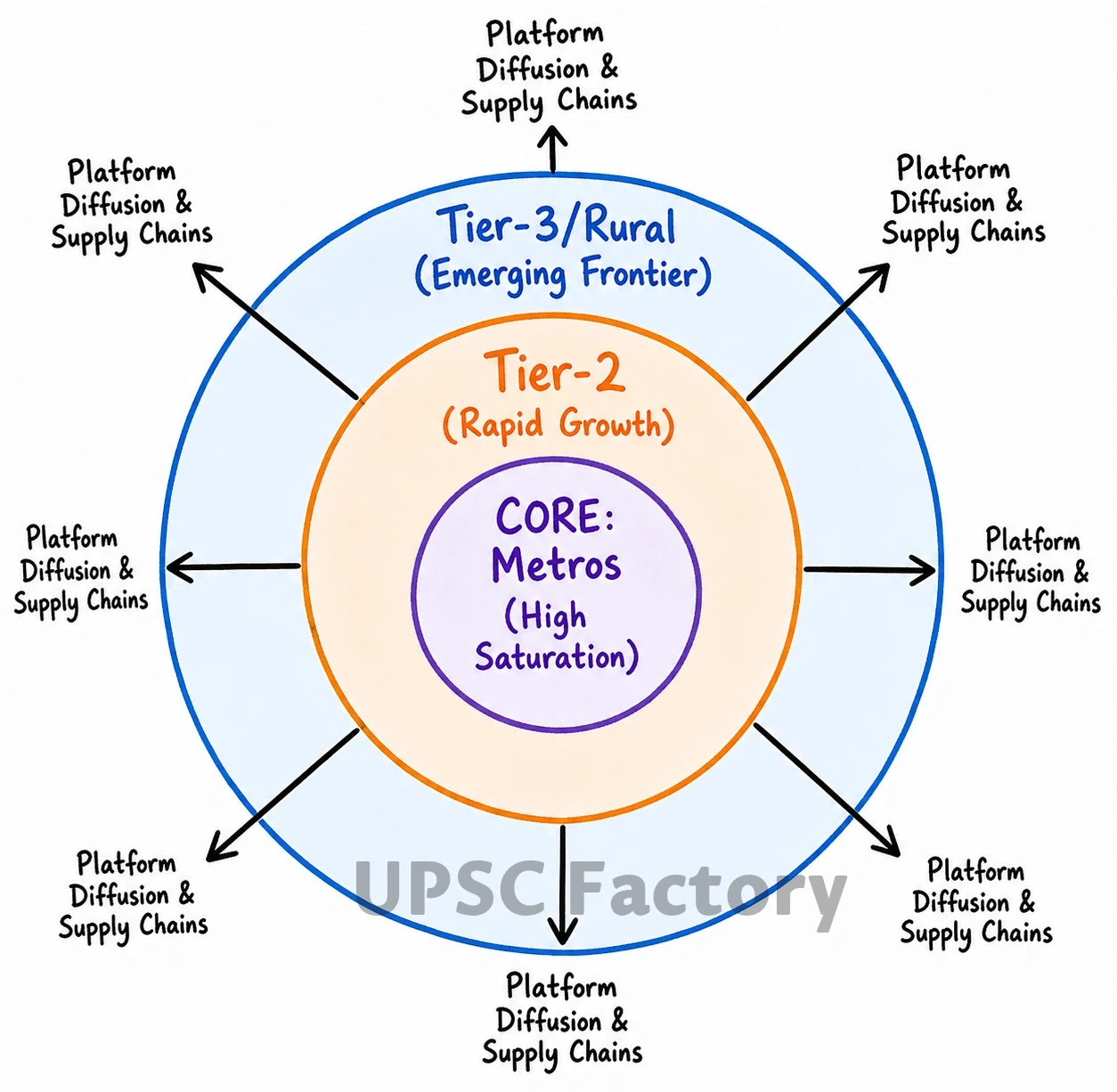
- Demographic & Migratory Shifts: India’s young, migrating urban workforce often lacks time and domestic infrastructure, driving demand for affordable, ready-to-eat meals.
- Cloud Kitchen Revolution: Bypassing expensive commercial real estate, delivery-only models capitalize on low-cost urban spaces for rapid scaling (Rebel Foods).
- Socio-Cultural Urban Hubs: In densely populated Indian cities, fast-food outlets serve as accessible, aspirational socialization spaces for urban youth.
Balancing this rapid, demand-driven industry expansion with public health mandates requires stricter spatial-regulatory frameworks and behavioral nudges, as envisioned by FSSAI’s ‘Eat Right India’ movement.