Model Answer:
India faces a complex policy trilemma: balancing rapid economic growth, poverty eradication (SDG 1), and environmental protection (SDG 13), often triggering structural socio-economic conflicts.
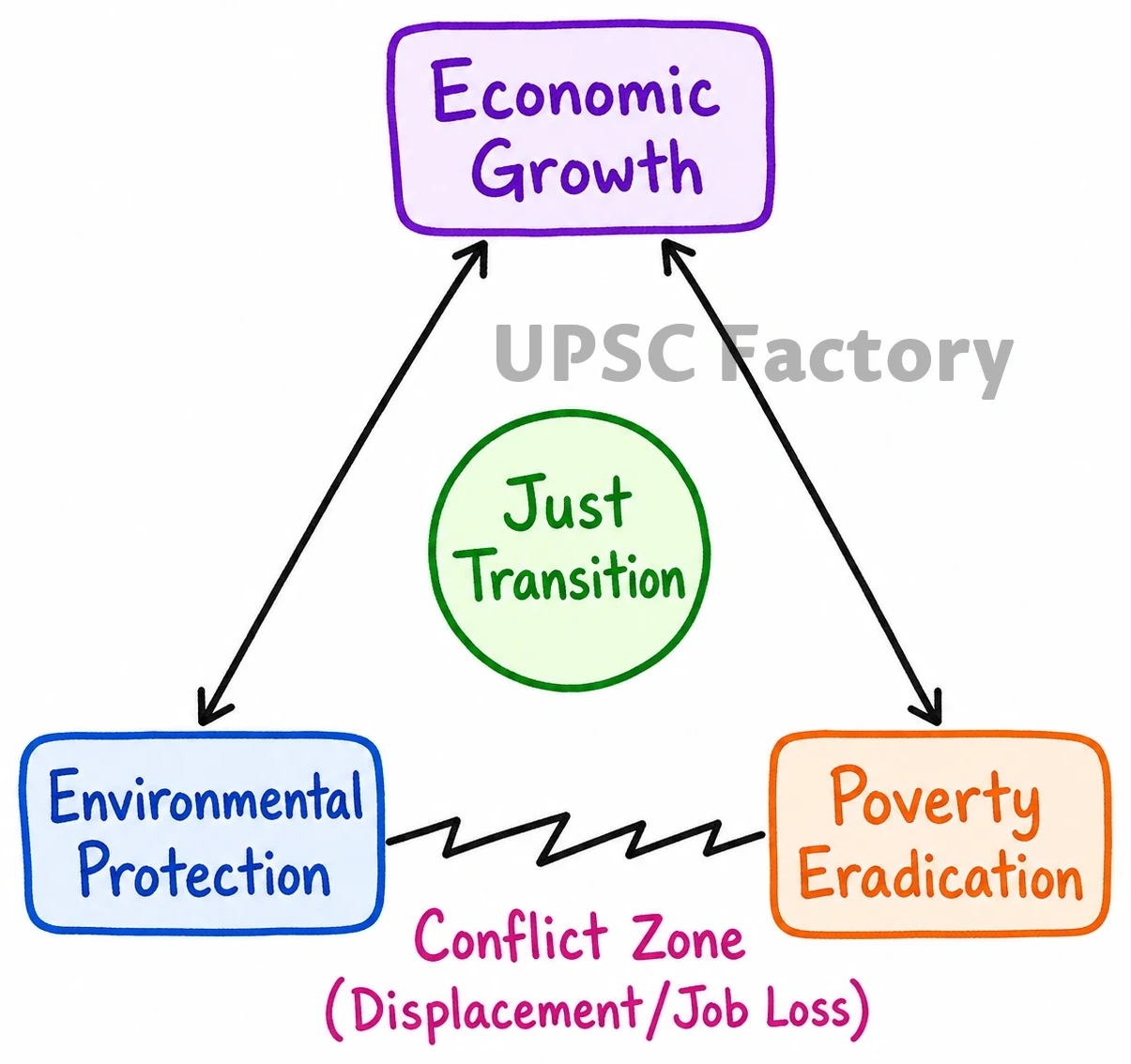
1. Environmental Protection vs. Poor’s Livelihood Needs
- Displacement for Beautification: Urban ecological restoration frequently leads to slum demolitions without adequate rehabilitation (Sabarmati Riverfront, Delhi Ridge).
- Green Expropriation: Exclusionary conservation models restrict tribal access to minor forest produce, threatening basic survival (Tiger reserve evictions).
- Informal Sector Job Losses: Abrupt pollution control measures heavily impact daily-wage workers in traditional MSMEs (Sivakasi firecracker ban, brick kilns).
- Eco-Elitism: Subsidizing expensive green technologies benefits the affluent, while penalizing traditional practices disproportionately hurts the poor (EV subsidies vs. affordable public transit).
- Energy Transition Disruptions: Phasing out fossil fuels threatens millions dependent on coal economies without providing alternative skills (Jharkhand coal belt).
- Resource Conflicts: Land acquisition for large-scale renewable projects or mining often displaces indigenous populations (Niyamgiri Hills conflict).
2. Harmonizing Ecology with Equity
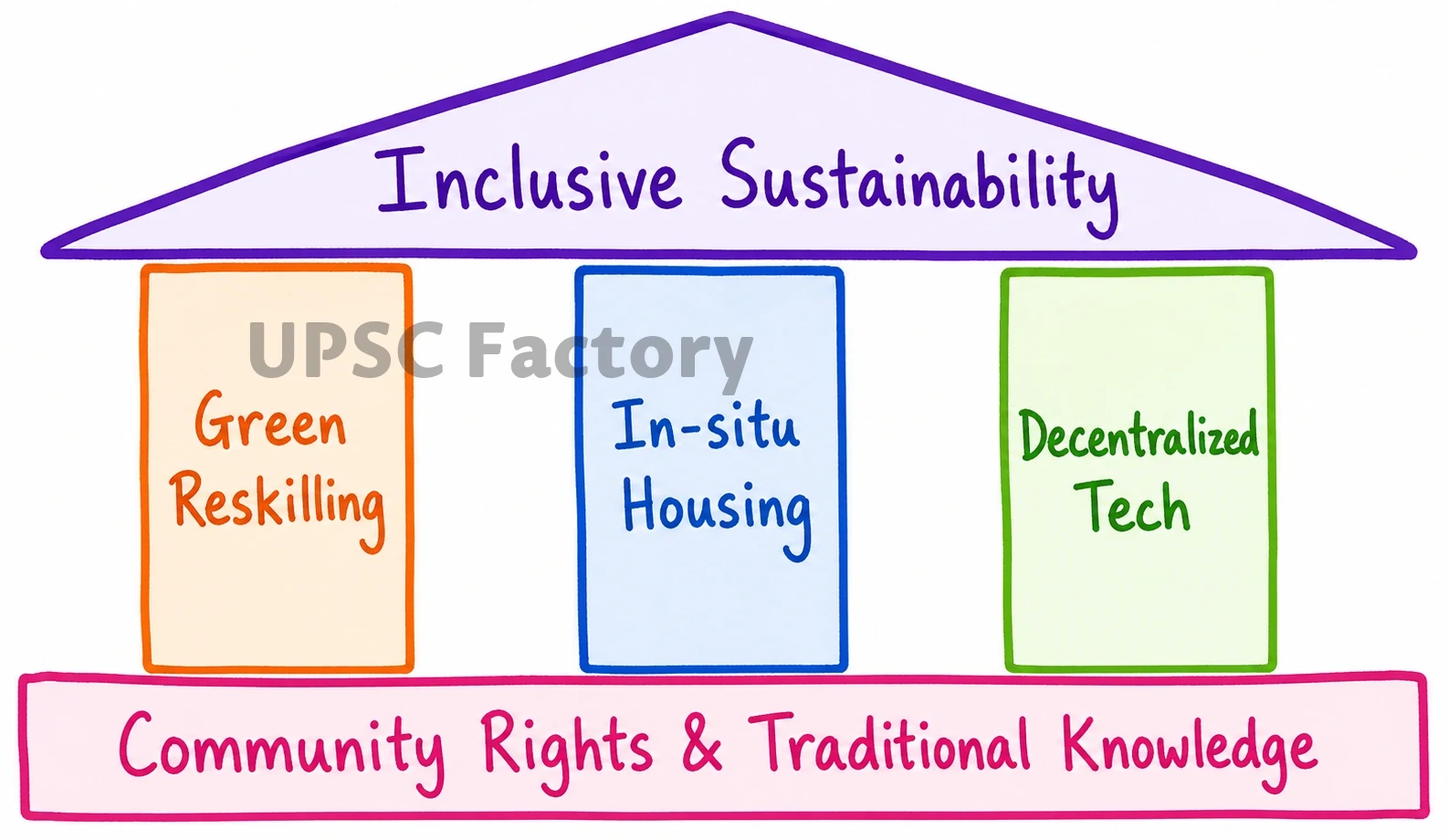
- Empowering Communities: Robust implementation of the Forest Rights Act (2006) to ensure decentralized, community-led conservation over exclusionary zoning.
- Executing a ‘Just Transition’: Reskilling fossil-fuel-dependent populations for the renewable energy sector to prevent localized economic collapse.
- Inclusive Urban Planning: Mandating in-situ slum upgradation and affordable housing quotas during environmental urban renewal missions.
- Decentralizing Green Tech: Scaling decentralized programs that directly link rural livelihoods with clean energy generation (PM-KUSUM for solar agriculture).
- Integrating Traditional Knowledge: Combining scientific conservation with indigenous ecological practices to create sustainable, localized green livelihoods.
True sustainability in India requires a structural shift from exclusionary “eco-elitism” to an “ecological democracy,” ensuring environmental policies actively eradicate, rather than exacerbate, systemic poverty.