Model Answer:
India faces a multi-dimensional terrorism threat, evolving from kinetic border strikes to hybrid warfare, threatening national security and sovereignty.
1. Manifestations of Terrorism in India
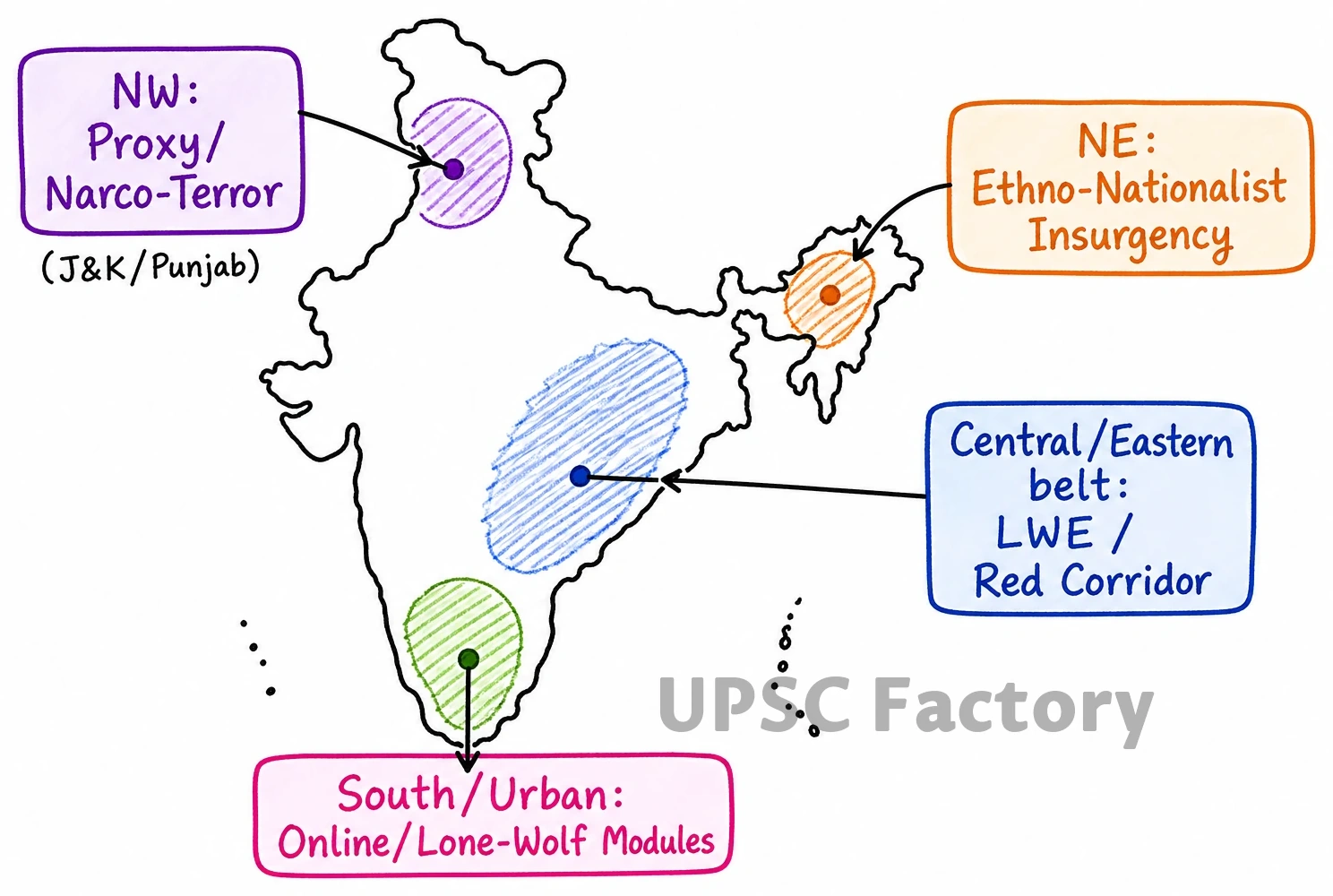
- State-Sponsored Proxy War: Cross-border terrorism funded and directed by hostile neighbors (Pulwama attack, 2019).
- Online Radicalization: Digital brainwashing leading to decentralized, lone-wolf strikes (ISIS modules in Kerala/Karnataka).
- Narco-Terrorism: Drone-dropped drug and arms smuggling to fund regional terror networks (Punjab/J&K borders).
- Left-Wing Extremism (LWE): Ideological violence targeting democratic and economic infrastructure (Dantewada ambushes).
- Ethno-Nationalist Insurgency: Persistent, though declining, separatist violence in border regions (Manipur ambushes).
2. Counter-Measures Adopted by the State
- Legal Reinforcement: UAPA (Amendment) Act 2019 enables the state to designate specific individuals as terrorists.
- Institutional Synergy: Empowering NIA with extraterritorial jurisdiction; operationalizing NATGRID and Multi-Agency Centre (MAC) for intelligence sharing.
- Tactical Responses: Proactive defense doctrines (Balakot Surgical Strikes) and smart border management systems (CIBMS).
- Choking Terror Finance: Stringent PMLA enforcement and leading global initiatives (“No Money for Terror” summit, FATF compliance).
- De-radicalization: Soft-power initiatives aimed at integrating youth into the mainstream (Operation Sadbhavana in J&K).
Eradicating terrorism requires a strict “Zero Tolerance” policy, seamlessly integrating emerging technologies (AI/Big Data intelligence) with robust global diplomatic consensus like the proposed CCIT.