Model Answer:
India’s ~7,500 km coastline faces severe groundwater salinization as excessive freshwater extraction disrupts the natural Ghyben-Herzberg balance, contaminating critical coastal aquifers.
1. Causes of Seawater Intrusion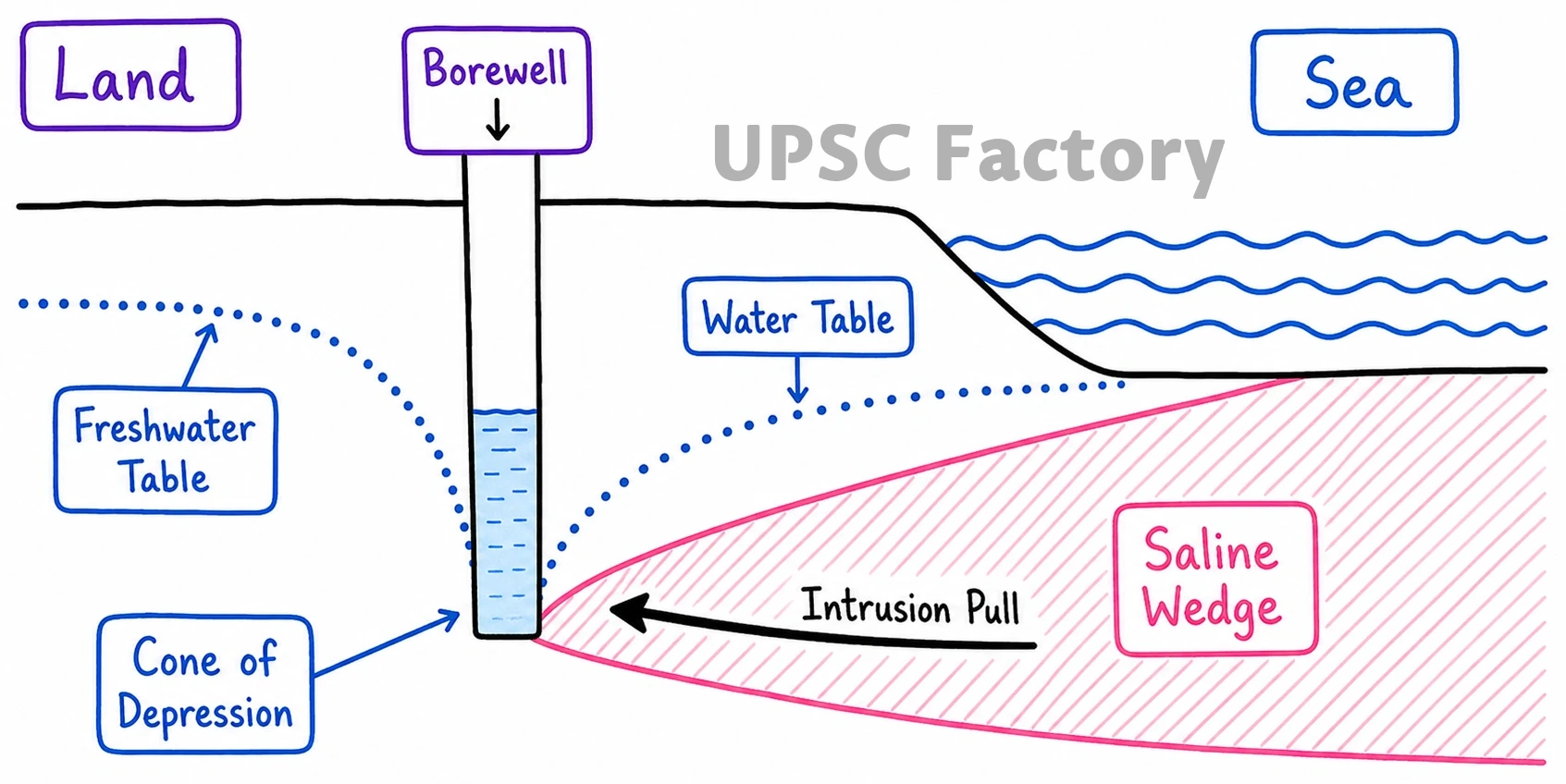
- Groundwater Over-extraction: Unregulated pumping for agriculture and industries reverses seaward hydraulic gradients, pulling saltwater inland (e.g., Minjur aquifer, Chennai).
- Climate Change & Sea-Level Rise: Rising sea levels and frequent cyclonic storm surges push the marine saline wedge further inland (e.g., Sundarbans).
- Unregulated Aquaculture: Extensive brackish-water shrimp farming leaks high-salinity water into shallow coastal aquifers (e.g., Andhra Pradesh coast).
- Reduced Natural Recharge: Urban concretization and destruction of coastal wetlands restrict freshwater percolation, preventing natural aquifer flushing.
2. Remedial Measures to Combat the Hazard
- Artificial Recharge: Pumping rainwater or treated wastewater into injection wells to build a freshwater ridge and restore hydrostatic pressure (e.g., Saurashtra recharge initiatives).
- Structural Barriers: Constructing subsurface dams, tidal regulators, and coastal embankments to physically block salinity ingress.
- Regulatory Enforcement: Strict enforcement of Central Ground Water Authority (CGWA) guidelines for coastal pumping and CRZ 2019 restrictions on borewells.
- Agro-Ecological Shifts: Promoting saline-tolerant crop varieties (e.g., Pokkali rice) and restoring mangrove bio-shields to reduce groundwater dependency and regulate coastal hydrology.
Combating coastal salinity requires an Integrated Coastal Zone Management (ICZM) approach, combining scientific groundwater budgeting with ecological restoration to ensure long-term water security.