Model Answer:
The Chandella architecture, epitomized by the Khajuraho temples (e.g., Kandariya Mahadeva, 10th-11th century CE), showcases a masterful synthesis of structural grandeur and vibrant sculptural dynamism.
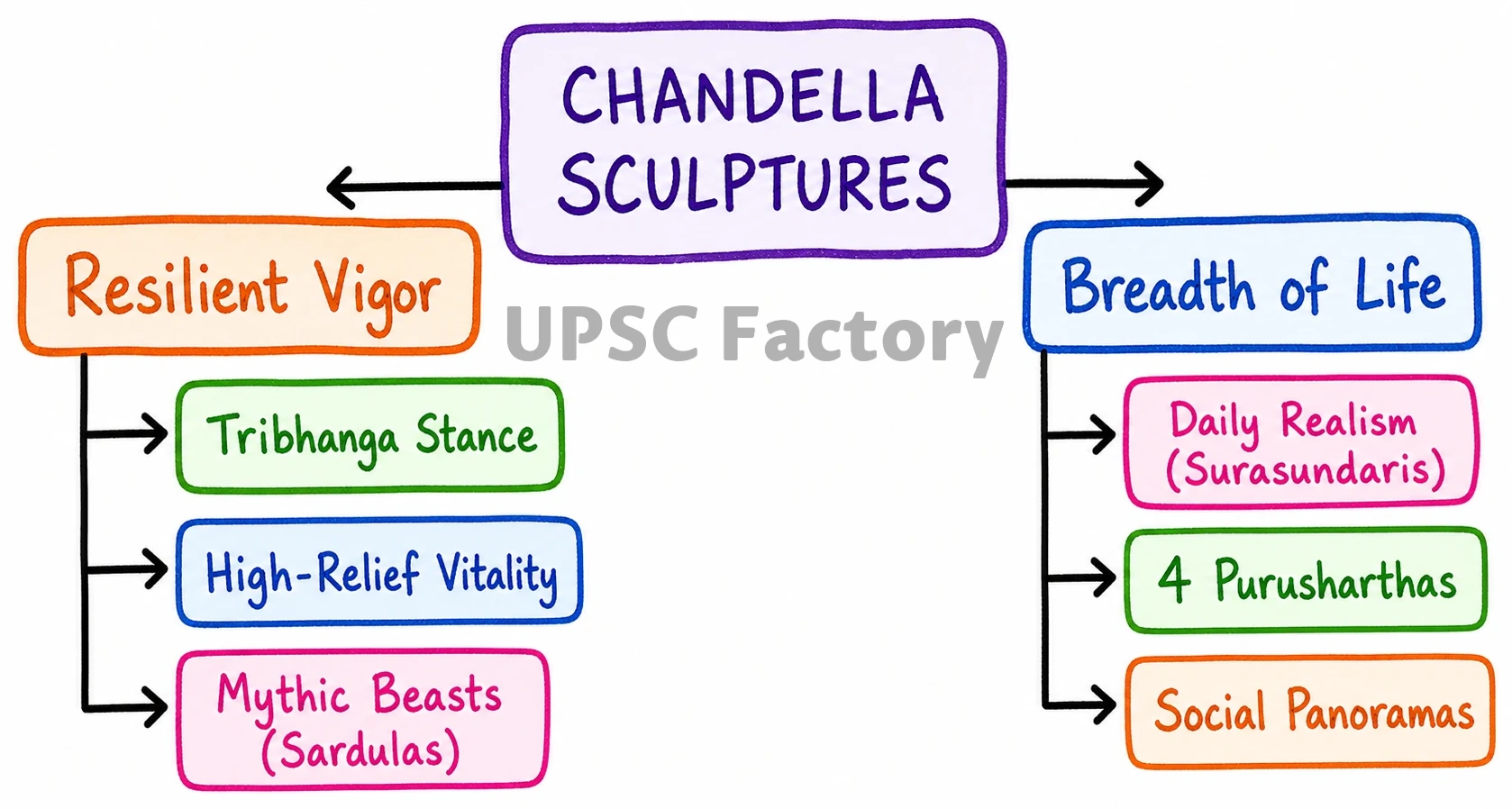
1. Resilient Vigor in Sculptural Forms
- Dynamic Postures: Masterful utilization of the Tribhanga (triple-bent) stance creates rhythmic, flowing movement within static stone blocks.
- Anatomical Grace: Deep, high-relief carving provides figures with a three-dimensional, fleshy vitality despite being sculpted from hard sandstone.
- Mythological Energy: Depictions of fierce mythical beasts (Sardulas, Vyalas) and spirited deities guarding temple walls exude raw, kinetic power.
2. Breadth of Life: Secular and Human Experiences
- Everyday Realism: Surasundaris (celestial nymphs) are intimately portrayed performing mundane human chores (applying makeup, wringing wet hair, removing thorns).
- Holistic Philosophy: The thematic panels comprehensively encapsulate all four Purusharthas (Dharma, Artha, Kama, Moksha), reflecting the totality of human existence.
- Celebration of Sensuality: Mithuna (erotic) sculptures are portrayed with aesthetic dignity, symbolizing cosmic balance, fertility, and divine union.
- Social Panorama: Intricate friezes along the temple base document contemporary society (royal processions, marching warriors, musicians, and dancers).
Thus, by seamlessly blending anatomical dynamism with profound worldly realism, Chandella sculptors breathed life into stone, making Khajuraho a timeless testament to complete human vitality.