Model Answer:
Tsunamis are massive, long-wavelength ocean waves triggered by the sudden, large-scale displacement of a marine water column.
1. Formation Mechanism and Vulnerable Regions
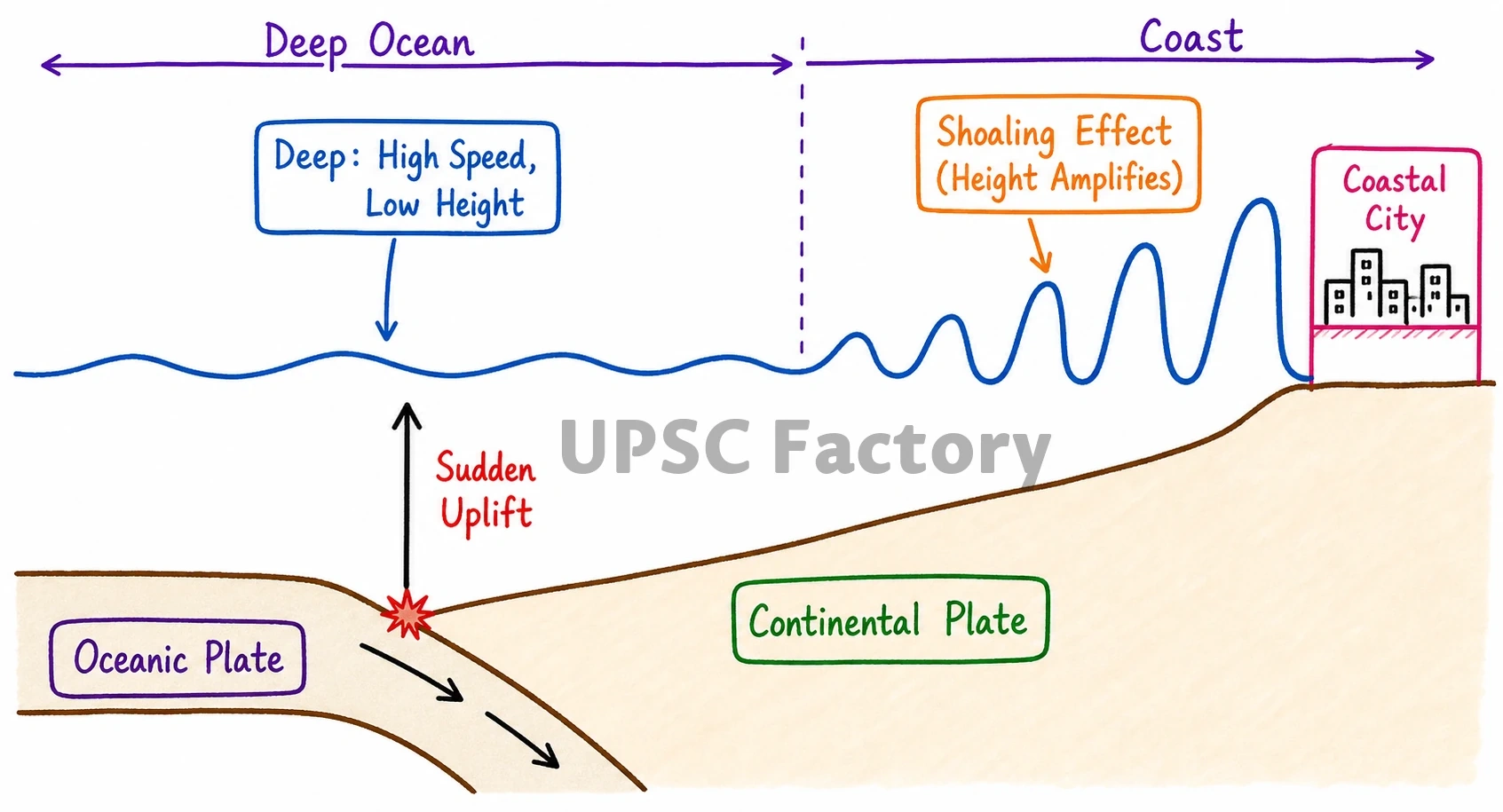
- Seismic triggers: Sudden vertical tectonic plate displacement at subduction zones upheaves oceanic water (e.g., 2004 Sumatra earthquake).
- Non-seismic triggers: Submarine landslides, volcanic eruptions, or meteorite impacts displacing water (e.g., 2022 Hunga Tonga eruption).
- Shoaling effect: As waves approach shallow coastal waters, velocity decreases while wave height amplifies dramatically.
- Vulnerable zones: Predominantly concentrated in highly active tectonic regions like the Pacific ‘Ring of Fire’ and the Indian Ocean.
2. Key Consequences
- Mass casualties: Sudden, massive coastal inundation causes immense loss of human life (e.g., 230,000+ deaths, 2004 Tsunami).
- Infrastructure devastation: Complete destruction of settlements, ports, and critical facilities (e.g., 2011 Tohoku Tsunami triggering the Fukushima nuclear disaster).
- Ecological damage: Severe coastal erosion, coral reef destruction, and the uprooting of protective mangrove ecosystems.
- Agricultural ruin: Saltwater intrusion salinizes groundwater aquifers and fertile coastal soils, destroying long-term agricultural livelihoods.
Mitigating tsunami devastation demands robust early warning systems (e.g., India’s INCOIS), proactive mangrove conservation, and resilient, well-regulated coastal infrastructure planning.